Enterprise intelligence is now a small-business tool
What took my 300-person team at Teradata to deliver to Volvo, one person with AI can now deliver to a corner shop. That collapse is the opportunity.
Ten years ago I worked at Teradata, one of the biggest data-analytics companies in the world. Our clients were giants. I personally worked on Volvo Cars and Telenor. And our product, stripped of the jargon, was one thing: a clear picture of what was actually happening inside the client’s own business.
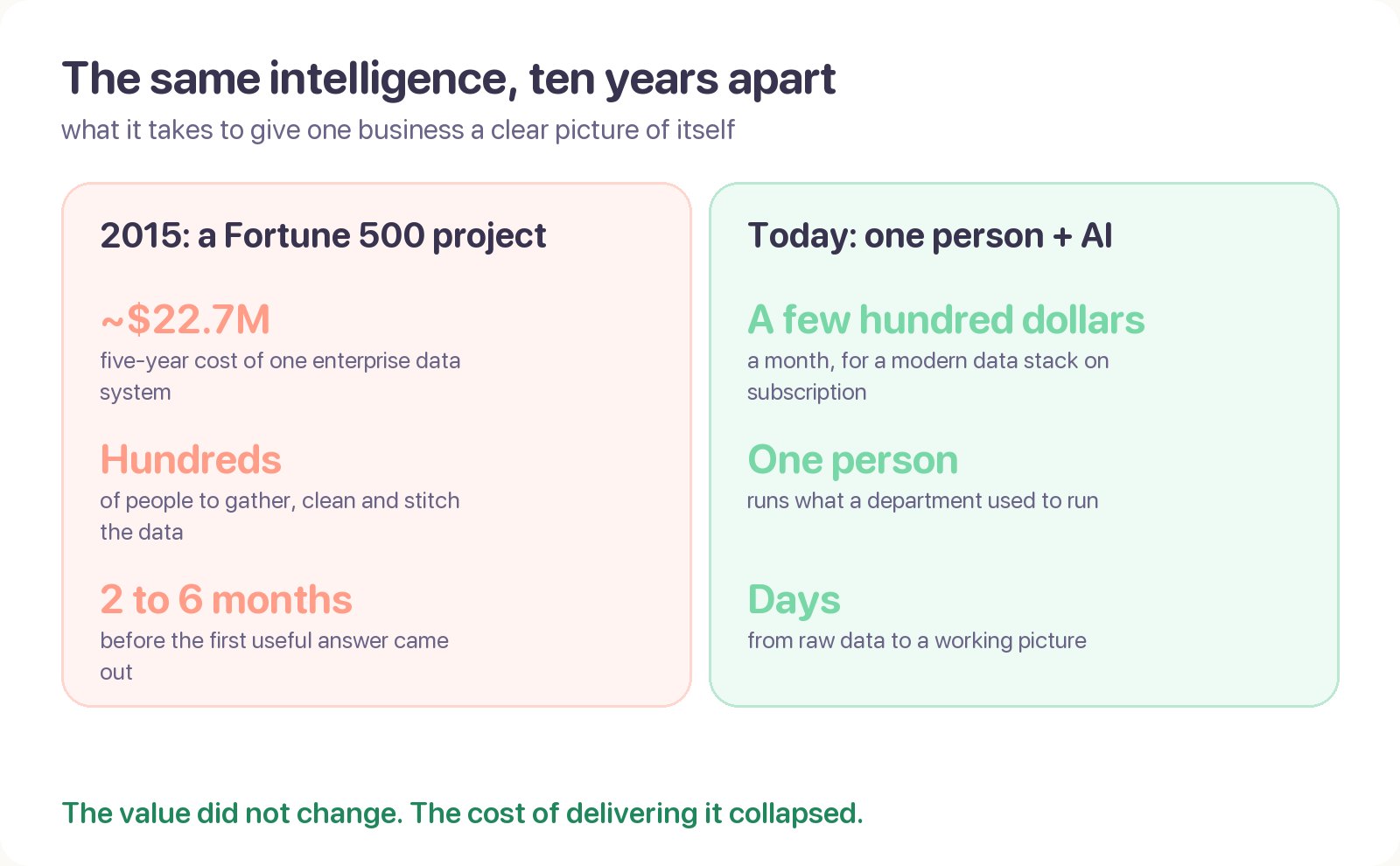
Delivering that one thing took armies. Hundreds of people to gather the data, clean it, stitch it together, build the reports, and pull out the insights. Independent studies put the five-year cost of a serious enterprise data system around 22.7 million dollars, and a single year of support on one public contract ran 4.6 million. It took two to six months to get a first useful answer.
Today, one capable person with AI can deliver the same kind of picture in days, for a few hundred dollars a month. I know because I did it this year: I built a team of AI agents that reads my own company’s data, content performance, costs, pipeline, and hands me a daily picture of the business that no analyst ever gave me. Standing it up took days, not months. The most valuable capability in business just fell from a Fortune-500 budget to a corner-shop budget, and there are 36 million businesses in America alone that never got it. That collapse is the biggest quiet opportunity of the AI cycle, and this essay is about how it works.
What did enterprise business intelligence actually cost?
More than most small businesses earn. The hardware alone for a Teradata-class system ran into the millions before a single consultant walked in, and the all-in five-year cost of one enterprise data programme was measured in the tens of millions, per WinterCorp’s cost study (commissioned by Teradata itself, so if anything it is flattering).
And that price bought something genuinely valuable. The biggest companies on earth did not spend that money for fun. They spent it, year after year, because knowing what is happening in your business, in numbers instead of gut feel, is the single biggest advantage in commerce. The value was never in question. The only question was who could afford the delivery.
That was the wall. Enterprise intelligence was not gated by secrecy or genius. It was gated by cost.
What changed with AI?
Every expensive step in that chain was human labor, and AI eats exactly that kind of labor. The gathering, the cleaning, the stitching, the report-building, the first-pass analysis: each was a job for a team, and each is now a job for a model plus one person who knows what they are doing.
The modern stack that replaces the old machinery runs on a subscription, and the AI layer on top of it replaces most of the hands. What took my team of hundreds and months of effort compresses into days. The department became a person. The millions became a monthly bill.
Who needs it now?
Almost everyone who could never afford it. The United States alone has 36.2 million small businesses, which is 99.9% of all its businesses (SBA, 2025). And here is the number that should reframe the whole opportunity: about 29.8 million of them, roughly 82%, have no employees at all. One person, running everything, blind.
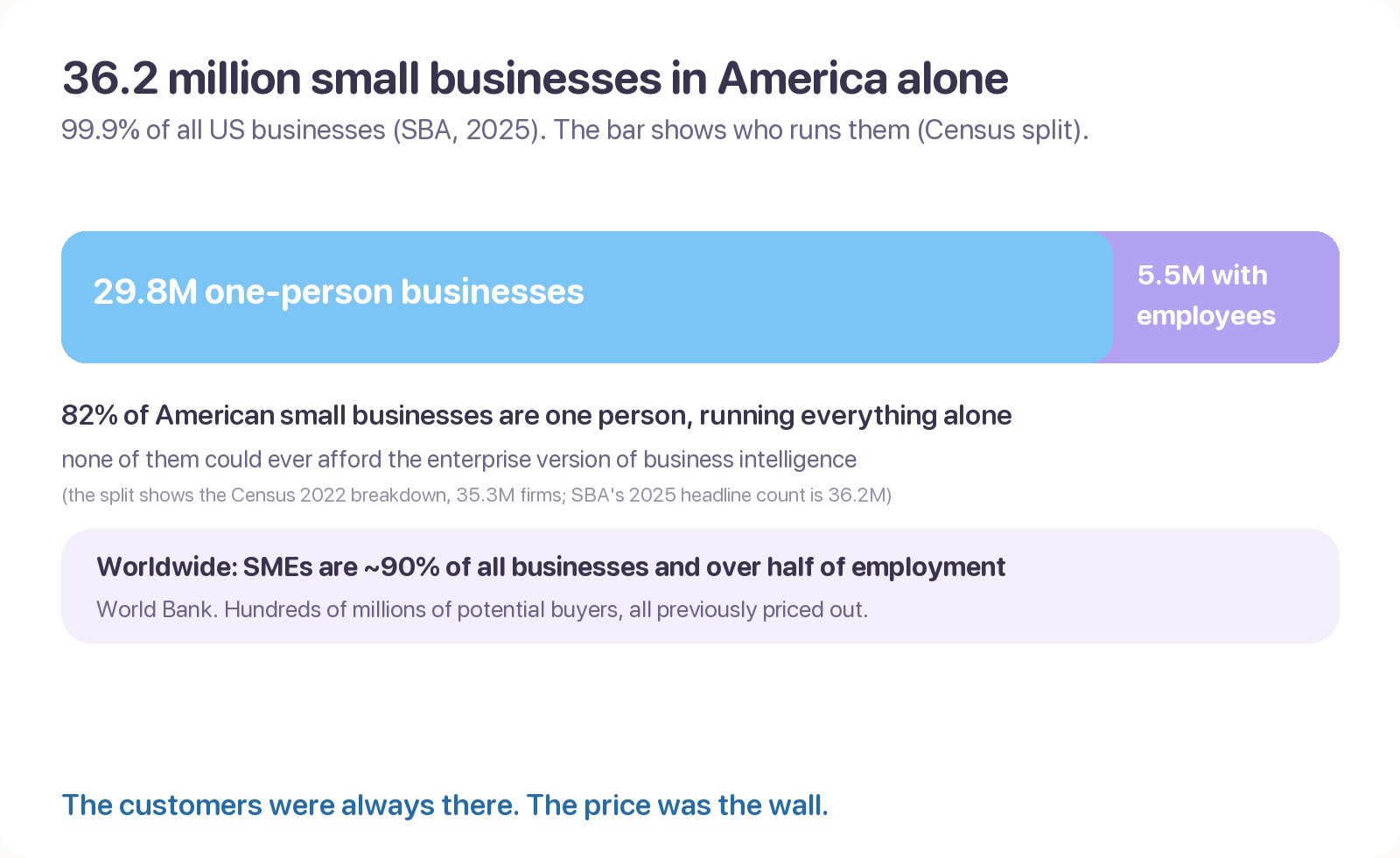
Worldwide the pool is deeper still: SMEs are roughly 90% of all businesses and more than half of employment (World Bank). Every one of these businesses generates data every day, sales, stock, customers, cash, and almost none of them can see into it the way Volvo could.
They also know they are behind. Only about 41% of small firms use any AI at all, against more than 60% of large firms (WTO and ICC, 2025), and the gap is widening. And most of that 41% is someone asking a chatbot questions, not the business seeing itself in numbers. The demand is real, the money is real, and what they are buying is not yet the thing that matters.
How big is this really?
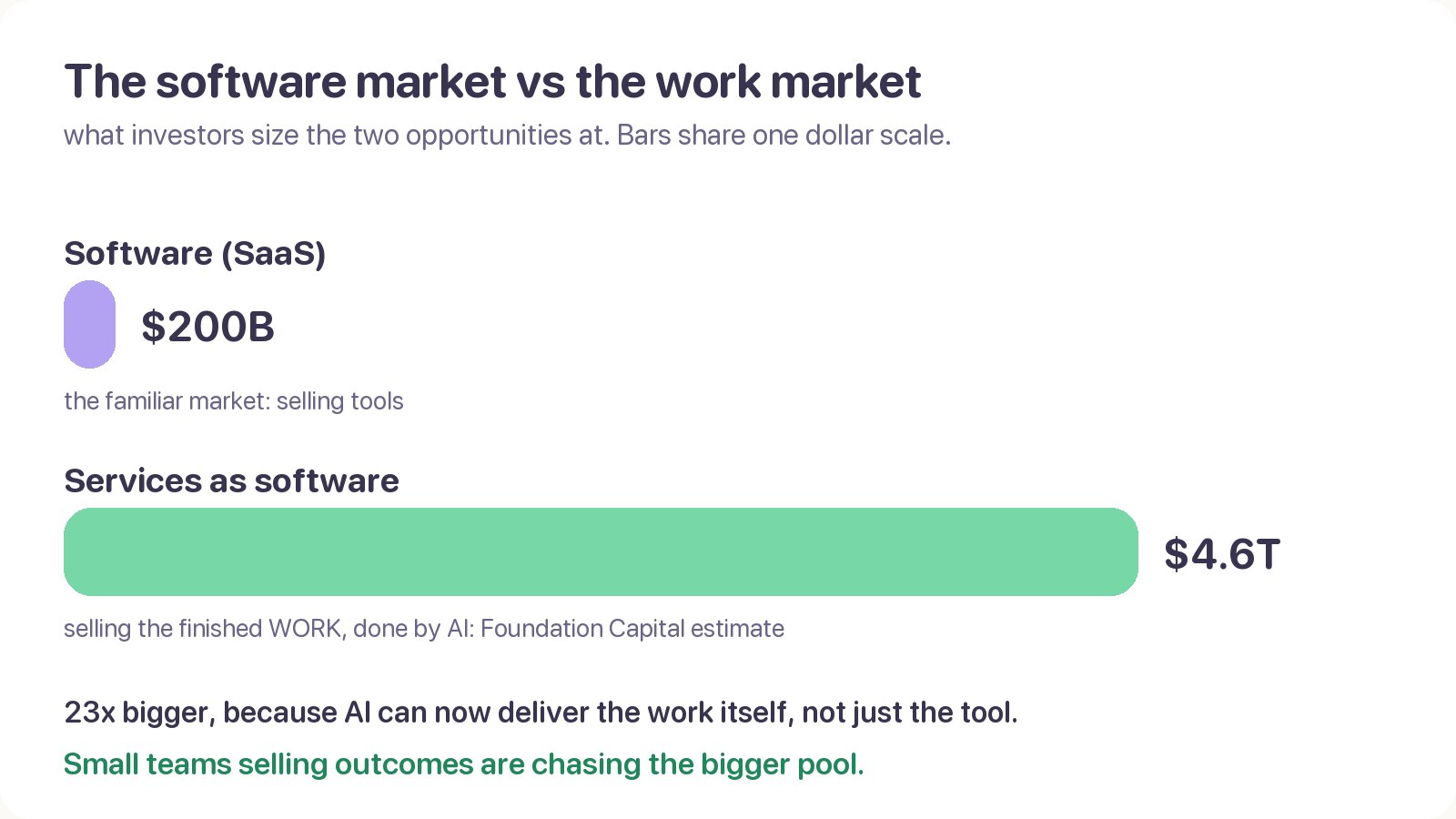
Bigger than software, and you do not have to take a venture capitalist’s word for it. Start with what already exists: Harvey is doing lawyers’ work, Sierra is doing support teams’ work, Clay is doing sales teams’ work. Small teams, delivering what used to be departments. Then, yes, the investors have put a number on it: Foundation Capital sizes this “services as software” market, work delivered as a finished outcome rather than a tool, at 4.6 trillion dollars against the 200 billion dollar SaaS market. The people quoting that number have every incentive to inflate it. Fine. Cut it in half. Cut it in half again. The direction, and the gap, still hold.
And all of that famous competition is happening at the top of the market. The same collapse is available at the bottom, where nobody famous is competing, and where 36 million buyers were never served at all.
What is the honest catch?
The data is a mess, and that mess is the job. Small businesses run on thin, scattered, half-missing records, and AI amplifies bad data instead of fixing it. The hardest part of my Teradata work was never the reports; it was the plumbing, getting clean, connected data out of a business that had never organised it. That is still the hard part.
But read that correctly. The plumbing being hard is not the flaw in this opportunity. It is the service. The person who can walk a small business from messy records to clean signal, and then hand its owner the clarity a Fortune 500 pays millions for, has a durable business with almost nobody competing for it, because everyone else in AI is chasing the glamorous top of the market.
I wrote about the layers underneath this in Your AI isn’t broken. Your business is., and about why the timing matters in the three cycles essay. The wider frame, that as building gets cheap the scarce things protect you, is my thesis. If you are building in this space from Pakistan or anywhere else, tell me what you are seeing.
The first move is smaller than you think: pick one business you know personally, get its numbers into one clean place, and hand the owner one insight they did not have. Charge for the outcome, not the hours. The giants got their clarity a decade ago. Somebody is going to deliver it to everyone else. It might as well be you.
Sources
- Small business counts, SBA Office of Advocacy, 2025
- Non-employer businesses, US Census Bureau
- SMEs worldwide, World Bank
- Enterprise data warehouse total cost of ownership, WinterCorp
- AI adoption gap between small and large firms, World Trade Report 2025, World Trade Organization and the WTO-ICC business survey on AI use in trade
- The $4.6 trillion services-as-software estimate, Foundation Capital, 2024
- AI turns capital into labor, Andreessen Horowitz
- Services: the new software, Sequoia Capital
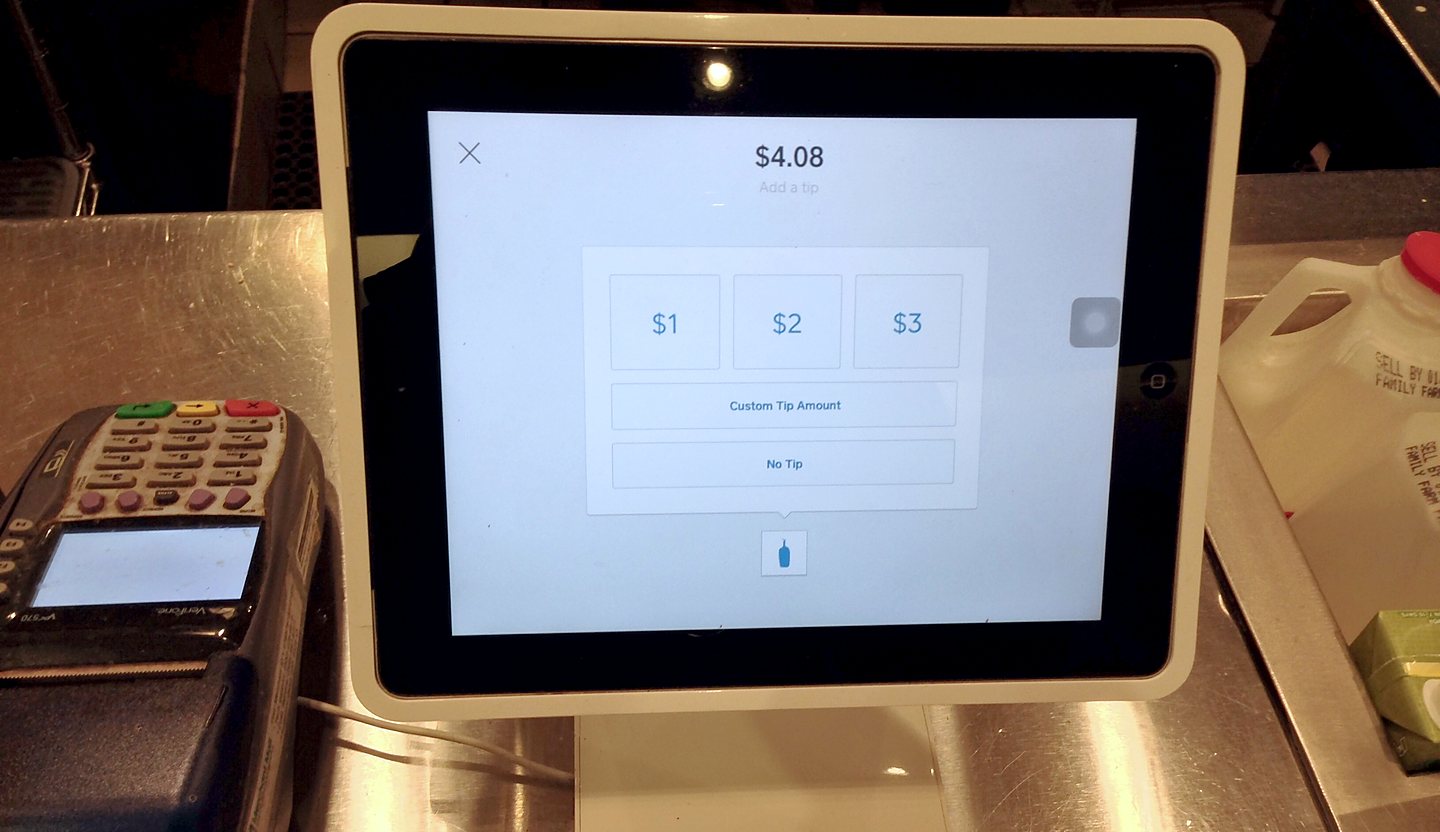
Hero image: Square Stand point-of-sale at a coffee shop, by Z22, CC BY-SA 4.0, cropped and color-adjusted.

Keep reading with me.
One signal-dense read each week on the AI shift: narrative, taste, and distribution. No hype, no spam, no pitch.