Thought Behind Things
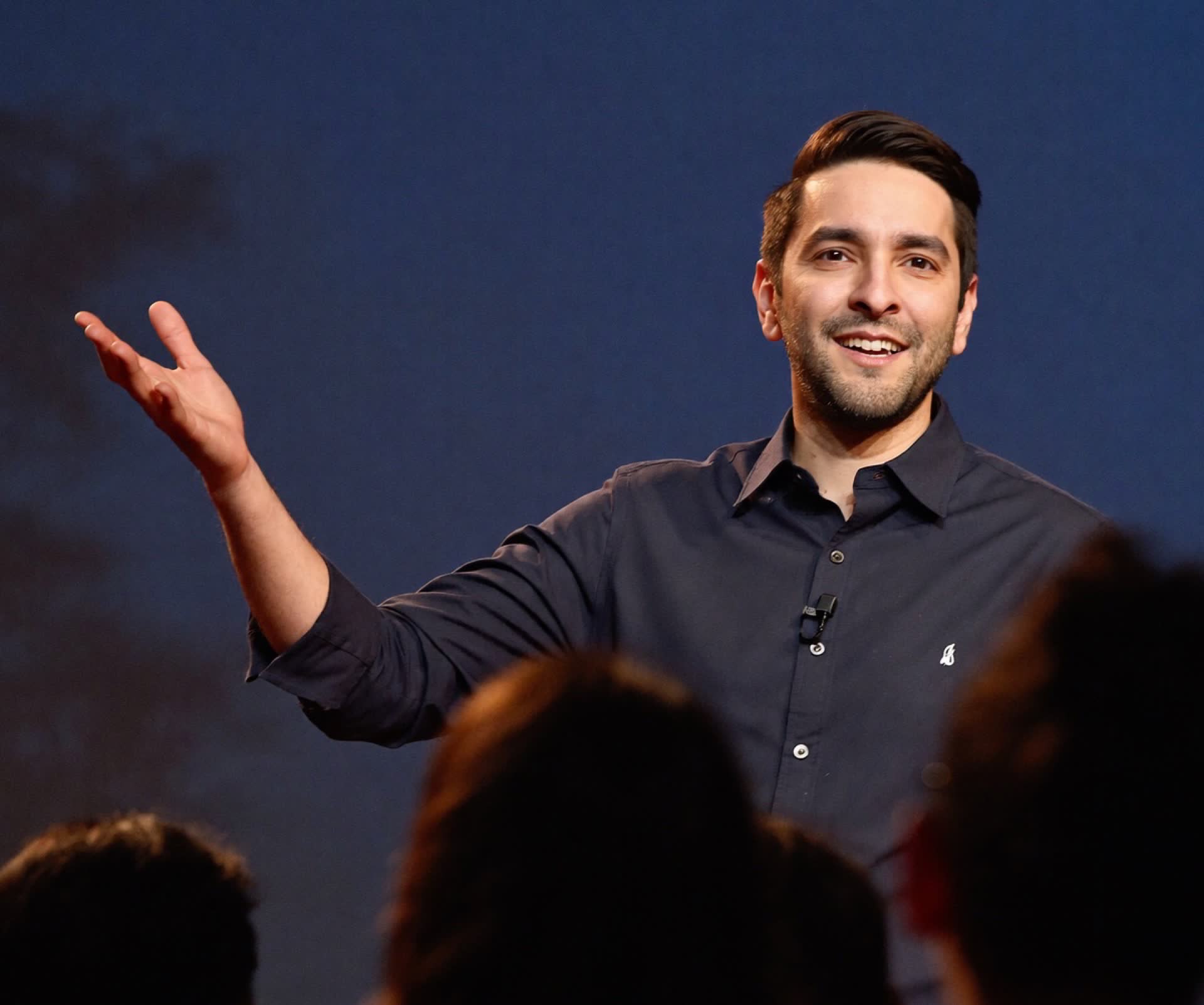
Ahmad Awais: 400 million coders won't afford AI
Ahmad Awais, founder of Command Code, argues an average person will soon need $1,000-$2,000 of AI inference a month — and 400 million of the future's 500 million coders won't afford even $200. He explains why open-source models, token repair, and the death of traditional software engineering are the fault lines nobody is talking about.
The Multani engineer Muzamil chased for five years
Muzamil opens by admitting he has been trying to book Ahmad Awais for five years — since the podcast began. His interest is that Ahmad occupies a lane very few Pakistanis do. Not the standard FAST-NUCES-to-Big-Tech pipeline, but the “unconventional route” of open source, startups, and, in Muzamil’s phrasing, being “a certain level of delusional to even begin to think about doing such things.”
Ahmad’s own account is dense. Born and raised in Multan, from a family “of very highly educated people” — with multiple PhDs across both paternal sides, and thirteen electrical engineers from UET Lahore in his extended family before him. The path was pre-written: UET, electrical engineering, forget everything else.
What he ended up doing instead reads like a small industry: Google Developers Advisory Board, Linux Foundation governing board, MCP spec contributor, involvement in React’s open-sourcing at Facebook twelve years ago, author of the Shades of Purple VS Code theme used by roughly seven million developers, and a contribution to NASA’s Mars Ingenuity Helicopter mission. He dropped out of a Harvard MS-MBA programme to become VP of Engineering at Rapid API, which grew into a billion-dollar unicorn in four and a half years.
“I have gone from this confused kid to telling Google,” Ahmad says, describing the shift from someone who couldn’t reliably get a US visa to someone AWS, Netflix and Airbnb were all trying to hire.
Why he kept saying no to being a founder
A recurring thread in Ahmad’s telling is how often he passed on things that later exploded. OpenAI offered him stock in 2020 when they were “a non-profit open-source company.” He refused. “I said what will I do with the stock of a non-profit open-source company?” He now runs a bot that reminds him weekly what that stock would be worth — his estimate is around $20 million. He was later offered Rapid API stock at a higher valuation and hesitated there too.
The turning point was a Corona CLI tool he built in early 2020, before the WHO had classified COVID as serious. When San Francisco’s mayor asked Twitter and Google for a tracker overnight, they had nothing. Ahmad’s CLI was already running, and got mounted on hospital displays in San Jose. “I called my mother from San Jose hospital. My CLI is running on their LEDs. I said I have made it.”
Sam Altman then messaged him. Ahmad ignored it — “I have no idea who that guy is. This is 2020.” Greg Brockman followed up and gave him GPT-3 access. Ahmad ran an OpenAI-hosted workshop in the Bay Area where he demoed sentiment-reactive emojis rendered live from the API — the font and emoji shifting as attendees typed feedback. “I don’t need to train it. It just understands,” he told the room. That, he says in hindsight, was one of the earliest coding agents on record — “I would admit I didn’t know myself that it is a coding agent.”
The founder of GitHub, Tom Preston-Werner, spent three years pushing him to start a company. Ahmad kept refusing. When he finally agreed, Preston-Werner wrote him a cheque with the line: “You don’t even have to return the money. See what he can do in six months.”
The pivot from Langbase to Command Code
Ahmad is direct about the previous company. Langbase raised money, built a memory engine, ran around 2 billion agents a month across roughly 900 terabytes of vector data — and it didn’t land the way he wanted.
“By the end of last year I kind of gave up,” he says. “What is happening? Now anybody can write software.”
The problem was that engineering itself had collapsed as a moat. His response was to bet on something he calls taste. “Taste is the opposite of slop,” he tells Muzamil. His analogy: comedy. “The moment he tells that joke anybody can now tell that joke. So copying a good joke is very easy. That is the world we live in right now with software.”
His first attempt was a model called Test-1, a neuro-symbolic model that learned developer preferences. It didn’t scale — because by late 2024, developers were writing only around 20% of their own code. There was less and less human behaviour to learn from. So Command Code flipped: instead of learning from developers, it started learning from AI models themselves.
Seventy-two days before this recording, Command Code launched. Ahmad says it now processes over 200 billion tokens a day, ranks in the top three coding agents on OpenRouter, and top two on Vercel’s gateway. Elon Musk has reposted their work. Alexandr Wang, whose company Meta paid roughly $14 billion for a 49% stake in, has posted about them.
The DeepSeek repair discovery
The technical breakthrough — the piece that went viral to around 2 million developers — is conceptually simple. Ahmad’s claim is that closed models like Claude and GPT don’t just return raw outputs. He believes there is a repair layer fixing the response before it reaches the user. Open-source models don’t have this layer, which is why they appear worse.
“You send DeepSeek something, and it tries to call a tool, and the format doesn’t connect with its learning, and it breaks,” he explains. In Claude Code’s harness, these errors are hidden from the user while DeepSeek quietly retries. “If I stop you from doing that 50 times… your work quality will go down.”
Command Code built the repair layer for open models. Ahmad says they are now repairing at least one million issues per trillion tokens, running around 5 trillion tokens a month. His analogy: “Think of it like your little brother is learning to drive and he is about to hit a truck. You will not let him hit, you will stop him first, then tell him — you were doing this wrong.”
Then something odder happens once you repair the tool call. “All of a sudden it repairs itself. I have no way to explain that. All of a sudden its quality goes up. It stops making the same errors. Models are a black box. We don’t really understand how they take these decisions.”
The theory that Anthropic is just renaming its models
The most provocative section arrives when Muzamil presses on token economics — whether a $200 Claude Code subscription is real value or subsidised burn. Ahmad shares his screen and draws it out.
His claim is that Anthropic has not been shipping genuinely new frontier tiers. They’ve been renaming them and raising prices. “The latest Haiku is so good that now it is called Sonnet. The latest Sonnet is so good that now it is called Opus. And the latest Opus you don’t get — it is called Fable or Mithos.”
He estimates the effective price increase at roughly 10x under new brand names. “They are pulling the prices of their models out of thin air.” His technical evidence: when he tried switching Opus 4.8 from x-high to medium reasoning the night before, Claude warned him the cache would be wiped. Caches only wipe when the underlying model in VRAM changes. “So Opus 4.8 x-high and medium are different models. What?”
He is careful — “correlation is not causation” — but the implication is clear. The pricing you see is not a market price. It’s a story.
The 400 million who won’t afford it
The central claim of the episode arrives when Muzamil asks about the bubble. Ahmad refuses the framing. “AI is not a fad. There is no bubble. This is my belief. You don’t have to believe me. But my belief is not a joke. I have literally lost like $2 million while building this belief.”
His actual thesis is starker. “A normal human being will probably use $1,000 to $2,000 worth of AI usage per month. Think of it like this. Just because you are alive today you need to spend $300 to $400 on your car maintenance. 100 years ago this problem did not exist.”
Then the punch: “In near future 500 million people will be coding. Out of which 400 million people will not know what they are doing. And 400 million of them won’t be able to afford even $200 per month.”
This is who Command Code is being built for. Not Silicon Valley engineers. The 400 million who need thousands of dollars of inference value and can only pay tens or hundreds. Ahmad describes their current small-scale offer: “If you buy a $1 account on our company you get $10. That’s 10x value. In near future if you do $100 we can give you $10,000. That is the goal we are after.”
Muzamil pushes back hard here. He draws the dot-com parallel — infrastructure gets overbuilt on subsidy, value migrates upward, and eventually inference becomes a utility like broadband. Ahmad partially agrees but resists the tidy framing. “I was not old enough to be able to analyse it very well. So I am not going to take a stab at it.”
What he does insist on is that inference cost is misunderstood. “You are actually just paying for cache. Input and output cost don’t really matter… the deeper you go the more you find out — it’s all cache.”
What killed Cursor, and why Command Code is going open source
Ahmad is unsentimental about Cursor. “Cursor is gone. Their bad time is running these days. They have been found uploading users’ data… Cursor became such a big company. A $60 billion company could not survive. Because they didn’t know what they were doing. Nobody knows what they are doing.”
His diagnosis: Cursor was a wrapper. They didn’t own the model, the database or the harness. They forked VS Code, they resold Claude at a subsidised $20 plan giving away roughly $500 of inference, and when the subsidy math broke they couldn’t raise the $5 billion they were reportedly trying to raise. He says they burned through around $3.6 billion.
Command Code, Ahmad tells Muzamil, will go open source by the end of the month. Matt Mullenweg, founder of WordPress, invested when he heard. The bet is that owning the harness — the layer between the developer and the model — is the only defensible position in a market where models are commodities and wrappers die.
The Pakistani problem Muzamil brings up at the end
By the end of the conversation, Muzamil pivots to something personal. He tells Ahmad that the reason he’s been trying to book him for five years is that Pakistan doesn’t celebrate its global operators. “Pakistanis are very inward looking. They will celebrate a lot of people who are doing great work — but that’s very focused on the local. And Pakistan’s problems are global.”
Ahmad extends the point. “Cursor’s Sualeh was one of four founders. He was from MIT, was a kid when he went abroad. He is a Pakistani. It’s worth celebrating. Satya Nadella was a kid when he came out and now he is CEO of Microsoft. They are celebrating him. They own him. We did not own him. Indians own their second-generation kids. That 1.4 billion population becomes his strength.”
His closing argument is that Pakistan has a branding problem more than a talent problem. Peshawari kebab gets sold as Indian food abroad. Founders get ignored until a valuation number briefly trends. “A lot of people are… not celebrating everything, and the more communities support each other — America is built around building and building fast. We don’t build, we don’t support, we complain a lot.”
“If we can start fixing that,” Ahmad tells Muzamil, “even if we are just copying how others do it — that will create a culture of support which a young kid needs to be able to take a risk to do things out of the ordinary.”
Muzamil closes by asking for a round two focused purely on the technicals. On the evidence of this conversation, there is more than enough left to fill it.


Never miss a conversation.
New episodes and the thinking behind them, straight to your inbox. No hype, no spam, no pitch.