Thought Behind Things
Health AI built on Western data can fail Pakistani patients
Dr. Fahad Umer, a dentist at Aga Khan University, on phone-photo screening, free X-ray AI and why Pakistan needs its own health data.
A score of 89 and a dentist working on AI
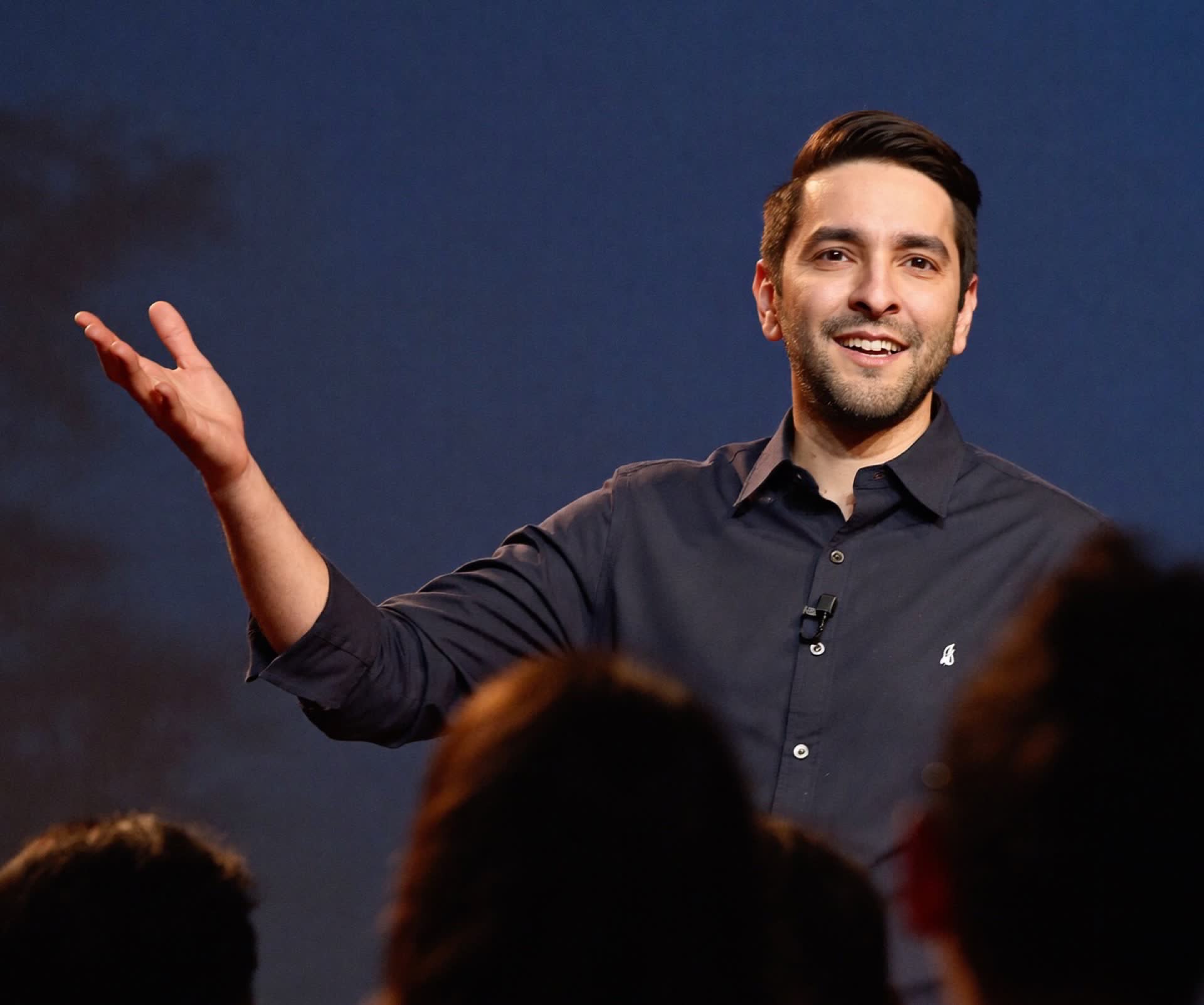
The episode opens with Muzamil Hasan explaining why this conversation stood out. Applicants to the show are researched, vetted and scored, and this one came in second highest, at 89 out of a hundred. Muzamil admits he first wondered what a doctor was doing in a technology series at all. After twenty minutes of talking off camera, he says, what impressed him was the “clarity of thought” about the problem being solved. He also credits Dr. Fahad Umer with upgrading himself “radically” and not being intimidated by a technical field. That, Muzamil says, is what stops many people in non-tech domains from ever walking in.
Dr. Fahad Umer is a dentist at Aga Khan University. He says part of his work involves clinical research, teaching and academics, and that he is sometimes spread very thin across the time he has.
The pitch: dental care that reaches beyond the city
Asked for a ninety-second pitch, Dr. Fahad Umer starts from a Pakistani fact: dental care is concentrated in urban communities. The biggest obstacle to reaching rural areas is human resources. So his team wanted AI models that lady health workers, or even polio workers, could use.
The picture he paints is simple. A worker takes photos with a smartphone, and the data shows which diseases are common in a community. That allows public-level, preventive interventions. As he puts it, instead of “just treating 1 individual or 1 patient at the time,” these models help expand the scope of the work so that whole communities are served.
Mithi: the model that did not generalize at first
On screen, Dr. Fahad Umer shows the first field deployment, set up in schools in Mithi. His team had already trained and published models. The question was whether they would hold up in a real community or reveal problems nobody knew about yet.
They did not generalize well at first. The team started pushing newer models every few weeks. In the end, he says, the AI “was as good as a general dentist in the field.” The app has a login, lets the dentist take pictures, record patient demographics and mark where disease and caries are.
The Mithi visit also shaped later work. The team found a lot of oral cancer there, with different kinds of lesions and patients who did not know their risk. That led to work on estimating risk and judging whether a patient needs a biopsy.
From a lockdown paper to a team of engineers
Later in the discussion, Muzamil asks how long this has been going on, noting that many people first heard of AI through ChatGPT. Dr. Fahad Umer says language models arrived in November 2022, but his team started during COVID. With the clinic disrupted, he wanted to do something productive and read a paper on AI and oral cancer, written by a Pakistani based in the UK. He wrote his own paper in response and it was published in a top-tier dental journal.
He was not satisfied with writing alone. He wanted to build a model himself. He tried to learn Python and coding, even spending family trips on it, before concluding that “this is something that should be done by a professional.” The effort was not wasted. It improved his communication with the engineers he works with.
Graduate students helped with the first project, which tested whether AI could detect teeth on OPG X-rays. It was published in an international journal of computerized dentistry. After that he decided it was time to take the work seriously and build a team of AI engineers and dentists.
Why medical AI needs experts to label the images
Muzamil asks whether this works like a large language model fed enormous amounts of data. Dr. Fahad Umer explains the difference. Language models learn patterns on their own from huge volumes of data, which is unsupervised learning. In health care, he says, diseases are so nuanced that “you need subject level experts” to tell the model what to look for. That is supervised learning, and most of his work uses convolutional neural networks.
This is why the team hired dentists as well as engineers. The dentists annotate the images, marking where the disease actually is, and the engineers build on those labels.
A free OPG tool and what the paywall was hiding
Muzamil presses on sustainability. Does the team charge, raise venture capital, or give the service away to collect data? Dr. Fahad Umer first notes that all their papers are peer reviewed. He then describes the product: a site where anyone with an OPG X-ray, whether dentist, patient or student, can upload it without friction. The AI detects findings, a language model explains them, and the output downloads as a PDF to take to a dentist.
Other people were already working on X-ray analysis, so the team removed the paywall to see who the users were. They expected dentists educating patients, students learning, and patients checking their own films. They also wanted to find product market fit. Data gathering was a secondary outcome.
The third lesson was geography. Users arrived from 131 countries without any advertising, mostly from the Middle East, India and Pakistan, places where the barrier to paying for such a service is high. Someone told him people were searching for the brand name itself. Within three months, more than 2000 OPGs were uploaded from around the world.
Why not leave it to the frontier labs?
Muzamil raises the hard question. Trillion-dollar labs are attacking general problems, including health care and computer vision. Aren’t you reinventing the wheel with far fewer resources?
Dr. Fahad Umer says that is exactly his motivation. Health care models developed in the West are trained on Western data. Research has shown that models trained on white patients did not generalize well to black patients. His line is blunt: “there are biases in AI too.” A model only tells you what it was trained on.
He uses an analogy from language models, which produce Hindi output because they see a lot of Hindi transcripts. The lesson is that a country has to look after its own data. He also asks the government to think about it, praising the ministers who produced Pakistan’s AI policy and saying he tries to make the case for health care AI policy too. As a low-income country, he argues, focusing AI on education and health means “AI can actually leap frog us” toward the sustainable development goals.
Data, annotation and where Pakistan’s edge lies
Muzamil argues that the biggest bottleneck in AI today is access to high-quality data. Pakistan may not have money or Stanford-level PhDs, he says, but it has data and cheap talent. He adds that annotation is boring, repetitive work and asks whether Pakistan can do it at scale.
Dr. Fahad Umer says yes. People constantly ask him to share his data, and he declines, because that is his biggest advantage. For annotation, the team first learned the work themselves, then trained dentists, whom he finds reliable. The quality control is explicit: two people look at each image, and a third, more senior person reviews it. Your model, he says, “will only be as good as the data you provide along with the annotations.” He also praises his AI scientist as “top notch.”
He adds a point about energy. AI is hungry for both data and energy, and with solarization Pakistan has electricity to spare.
On sourcing, he says: “I have been in dentistry for 20 years,” and that clinicians from Karachi to Peshawar know him. Some give him OPGs freely, some want authorship on papers, and some imaging companies share their own data when he asks. He does not see data gathering as a big bottleneck.
Telemedicine, trust and the missing middle
By the end of the conversation, Muzamil turns to health care in general. He sees most Pakistanis stuck between a weak public system and quacks, with no standardized middle layer of clinics. He notes that telemedicine has repeatedly failed in Pakistan and asks whether a hybrid could lower costs and raise quality.
Dr. Fahad Umer says dentistry is harder still, because care sometimes has to be delivered in person. Through the Meri Muskan teledentistry project, he learned that “the care seeking behavior of the patient is still maturing.” Older generations prefer visiting a clinician, much as his grandfather or father would rather go to the bank branch and have tea with the manager than use an app. Newer generations will be more open.
Trust is the other gap. In online consultations, patients were reluctant to turn cameras on or share X-rays openly. He wants government policy with safeguards for patient safety, security and data privacy. “We are not there yet,” he says, “we are getting there.” Muzamil notes that a data protection law is expected, though questions remain about turning this into a product.
Muzamil closes by calling the foundation layer “absolutely incredible” and asking dentists to try the product and give Dr. Fahad Umer feedback.



Build with me in the Inner Circle.
You don't need to code. You need a problem you know well, and a room of people building beside you.