Thought Behind Things
The startup building loyalty tech for restaurants
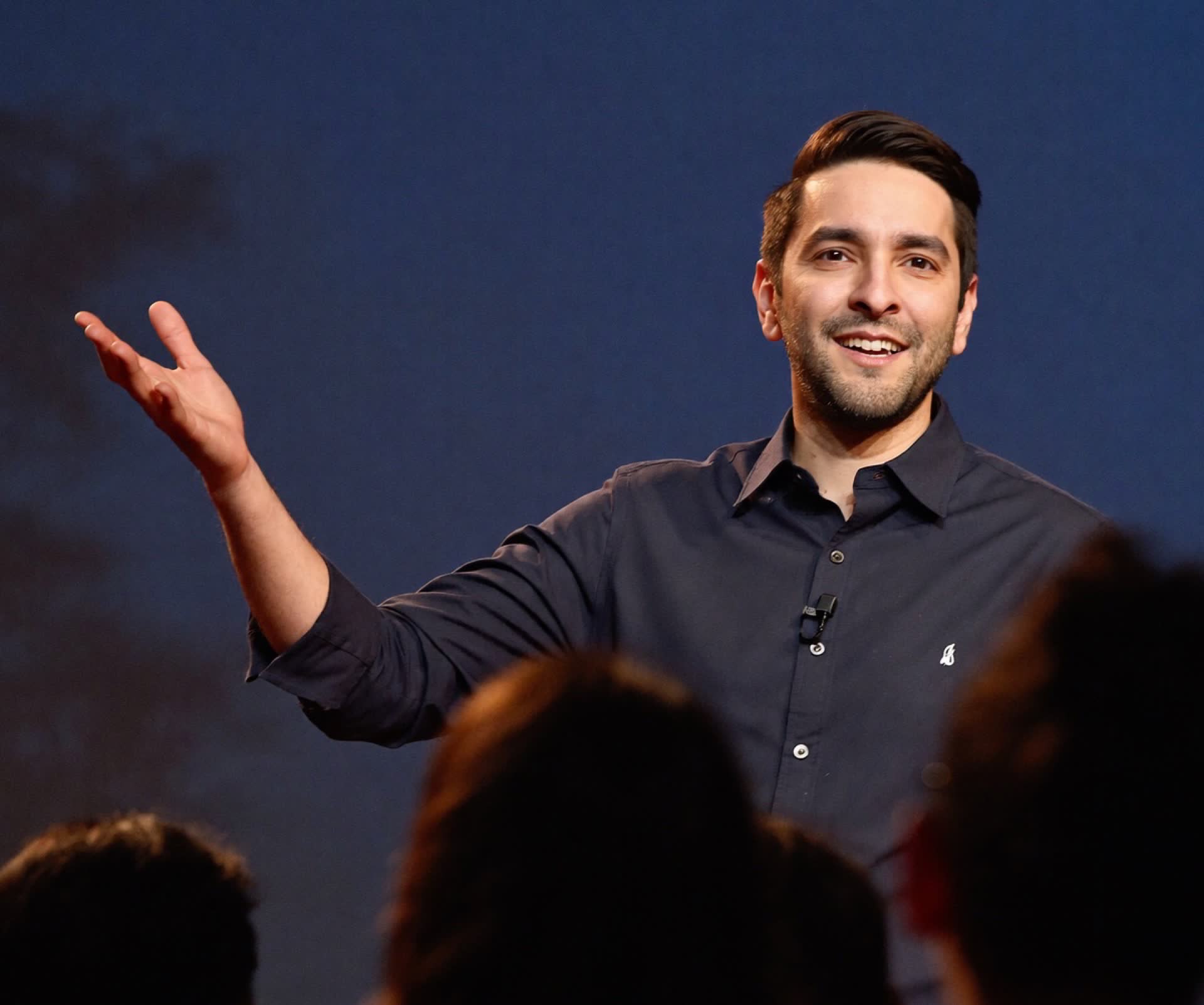
Yahya Humayun, co-founder and CEO of Pattern App, walks through his journey from EY to Airlift to Dastgyr — and why he left a rocket-ship B2B startup to build loyalty and discovery technology for brick-and-mortar restaurants in Pakistan.
From Multan to management consulting: the long road before Pattern
The episode opens with Muzamil explaining why he agreed to feature a consumption-driven startup at all — something he had publicly avoided given Pakistan’s economic conditions. His reasoning was simple: food is the one industry that survives any macro environment. “Dunya tabah ho jaye, log khana khate rehte hain,” he says. That framing sets the tone for a conversation that is less about hype and more about whether a specific model can hold up under pressure.
Yahya Humayun was born in Multan in 1994, moved to Lahore in grade five when his father expanded a website development business, and completed his A-levels before heading to UCL’s international program in Lahore for a bachelor’s in business management, graduating in 2016. The post-graduation period was, by his own account, disorienting. “Graduation se expectation yeh thi ke acha so jab university se graduate hote phir sab samajh aa jaati hai,” he says. That expectation collided with reality fast. He tried selling mobile accessories, gave interviews in Dubai, and came back to Pakistan without a clear direction.
His first real job was at EY, in a division focused on performance and process improvement advisory for government and private clients — Lahore Transport Company, NTDC, and WABDA among them. The work was intellectually interesting but exposed a structural problem he would encounter repeatedly: the gap between proposing a solution and actually seeing it implemented inside a large, change-resistant institution. “Impact kab karna hai, right?” he recalls thinking. After a year and two months, he moved to Bank Alfalah, drawn by a role focused on consumer experience design as the bank tried to modernise. The pattern repeated — interesting problem, slow execution, prolonged feedback loops. He stayed ten months.
Centimeter, Metro, and learning what brick-and-mortar actually needs
The next stop was Centimeter, a sister company of Arbisoft, working with Germany’s Metro on a customer experience measurement product for their Pakistan stores. The setup was more agile — private clients, faster iteration. The core product captured phone numbers at the point of sale as unique identifiers, then sent tailored surveys based on what a customer had purchased. Item-level data flowed back to manufacturers; store-level scores went to Metro’s headquarters. It was Yahya’s first real exposure to the data problems of physical retail — problems that would later become the foundation of Pattern.
He was genuinely happy there. Then multiple people in his network told him about Airlift, a mass transit startup that was growing fast and building something that had never existed in Pakistan before: a bus you could book from a mobile app, that would actually be on time, for sixty to eighty rupees.
Airlift, COVID, and the 100,000-rides-per-day target
Yahya joined Airlift after a rapid-fire hiring process — a LinkedIn post, a cold email, a case study submitted within five hours, an interview the next day. The goal when he joined was 100,000 rides per day, a number he describes as “insane.” His role was operational: ensuring that across drivers, buses, apps, and logistics, nothing broke as the company scaled.
Muzamil pushes on why Airlift’s transport operation ultimately failed. Yahya’s view is that COVID was a genuine disruption, not just a convenient excuse. “Woh bahut achi trajectory par the,” he says. The utilisation playbook had been figured out, the data was pointing in the right direction, and international investors were backing subsequent rounds. COVID broke the momentum before the model could prove itself at scale.
The conversation then turns to Swvl, Airlift’s regional competitor. Muzamil argues that the B2C mass transit model was fundamentally complicated — booking a seat on a bus that was going to move anyway made little intuitive sense — and that a B2B model targeting companies with large workforces might have been more durable. Yahya acknowledges the logic but explains the venture-backed rationale: to attract financing at scale, you needed consumer numbers first, and then you could layer in B2B verticals once you had the brand and the data. “Agar main aaj ek nayi company hoon aur main Nestle ke paas jaoon aur jaake boloon ke you know I am gonna do this — like, who are you?” The B2C scale was the credential. The model was working in other markets. The variable nobody had priced in was a global pandemic.
Dastgyr: zero to one, then knowing when to leave
When Airlift’s transport operations shut down during COVID, Yahya found himself at a crossroads. He had already invested his savings into Dastgyr, the B2B e-commerce marketplace being founded by former Airlift colleagues Zohaib and Owais. He spent three months at Byte, a cloud kitchen startup that got into Y Combinator — the first consumer internet startup from Pakistan to do so — before the Dastgyr team convinced him the timing was right to join full time.
He joined in September 2020 when the team was around eight or nine people. By the time he left in February 2022, it had grown past 250. The experience was, in his words, “an experience of a lifetime.” But the zero-to-one stage was over. “Woh zero to one wali jo stage thi woh chali gayi thi,” he says. The culture at Dastgyr actively encouraged people to think about the next problem they wanted to solve. And in February 2022, something clicked.
The brownie experiment that became Pattern
Post-COVID, restaurant owners were struggling with a specific problem: they had built delivery habits during lockdowns, but as dine-in returned, they had no tools to understand or retain their on-premise customers. They had no data on who their customers were, when they came, or why they stopped returning.
Yahya and his co-founder — who had also been at Dastgyr — started talking to restaurant owners. One told them about fresh brownies that weren’t selling. The team made a few calls to people nearby, brought them in, and the brownies moved. “We realized ke on-premise user ko store ke andar aane ke liye they need a motivation. The restaurant is willing to do that. The consumer is also looking for exciting opportunities like that — but koi bridge nahi hai.” When they asked the restaurant owner what he would pay for that bridge, he offered four thousand rupees a month at fifty rupees per transaction. The business case was immediate.
Pattern launched in Lahore with 100 restaurant partners. The model is straightforward: restaurants list their storefront on the app, consumers follow them and enroll in a membership program, and the restaurant controls what rewards, cashbacks, and promotions flow to which customers. The platform is asset-light — costs do not scale with the number of orders or users. “Jab do restaurants hamare platform ko use karte hain tab bhi wahi cost thi aur jab 100 karein tab bhi wahi hai.”
Discovery, Yelp, and the missing map of Pakistan’s food scene
Later in the discussion, Muzamil walks through the app live on screen and raises what he sees as the bigger opportunity: not just loyalty, but discovery. He describes being in Lahore recently with no idea where to eat, and argues that Pakistan has never had a Yelp equivalent — a trusted, review-driven map of the city’s food scene, including the legendary hole-in-the-wall places in old Lahore’s galis that have never been captured anywhere digitally.
“Food blogging jo hai woh chalti hai because it’s all about discovery,” Muzamil says. “Discovery humne aaj tak us par rakhi hui hai ke you know got like pretty pictures and people will fall for that. It has to be a bit more human.”
Yahya agrees and walks through the consumer-side vision: discovery of restaurants, social signals from your network about what people are eating, ratings, pre-ordering, table booking, and exclusive rewards — all in one place. He gives a concrete example: a coffee shop partner whose pistachio latte had sold zero units in ten days. Pattern featured it in a “popular around you” section targeted at users likely to enjoy it. Within three days, 100 drinks had sold. It became the shop’s top seller.
The review product is being rolled out carefully — currently visible only to restaurant owners, not consumers, because early restaurant partners were worried about competitor-driven review bombing. Verified reviews will only be possible after a confirmed transaction on the platform.
POS integration, the Pakistan-specific psychology of cost, and what comes next
Muzamil raises the question of POS integration — if Pattern can eventually see 100% of a restaurant’s transactions, not just the 30% flowing through the app, the data becomes dramatically more powerful. Yahya is candid about the sequencing challenge. Building a full POS is a different product entirely, and the willingness to pay for pure POS infrastructure in Pakistan is low. “Ek acha quality ka product ke liye jisme sirf receipt nikalti hai, aap ek certain amount mujhe mahine ki dein — there is willingness itni kam hai.” The psychological barrier is that a POS feels like a cost, while a tool that brings in new customers and increases revenue feels like an investment. Pattern entered through the revenue side deliberately.
The likely path is partnerships with established POS players rather than building from scratch. Yahya confirms those conversations are already underway.
On delivery, he is equally clear: Pattern will not build its own logistics. The focus is on-premise, brick-and-mortar, in-store. Delivery partnerships with existing players are possible and already happening in a limited way — some restaurant partners accept delivery orders through the app using their own fleets.
Short-term paranoid, long-term optimistic: surviving the startup winter
By the end of the conversation, Muzamil puts the macro question directly. Pakistan’s consumption economy is contracting. Startups built on consumer spending are in a difficult position. How does Pattern survive the next three years?
Yahya’s answer is structured around a principle he calls “short-term paranoid and long-term optimistic.” In the short term: stay focused on the single most important problem, iterate without ego, and make sure the business model makes sense today — not in some projected future. Pattern’s model is already profitable at the unit level. No money is burned on orders. The restaurants fund the rewards. “Jab do restaurants hamare platform ko use karte hain tab bhi wahi cost thi.”
In the long term, he is genuinely optimistic — and specific about why. The 2020–2022 boom, despite its failures, produced a generation of operators who now understand what doesn’t work. “Woh jo hai na, woh in hindsight aaj se das bees saal baad nazar aayega ke that was the most important part for the genesis of the successful startup ecosystem.” His prediction: the founders who survive 2022 to 2025 will be the ones who build Pakistan’s next wave of durable companies, in the same way that Careem’s alumni seeded hundreds of subsequent startups.
Muzamil adds his own framing — one he says he has stated on record multiple times — that the real wealth creation for Pakistan will come through exports and services, and that consumption-driven startups will only thrive once that external money is flowing in. The boom of 2025–2027, when it comes, will vindicate the founders who stayed the course through the difficult years. “Cyclical hoti hain cheezein. Down aata hai, up aata hai.”
Pattern is currently live in Lahore with 100 restaurant partners and expanding to two more cities. A seed round announcement is expected before the end of 2023.


Never miss a conversation.
New episodes and the thinking behind them, straight to your inbox. No hype, no spam, no pitch.