Thought Behind Things
Why Pakistan's fintechs are failing the masses
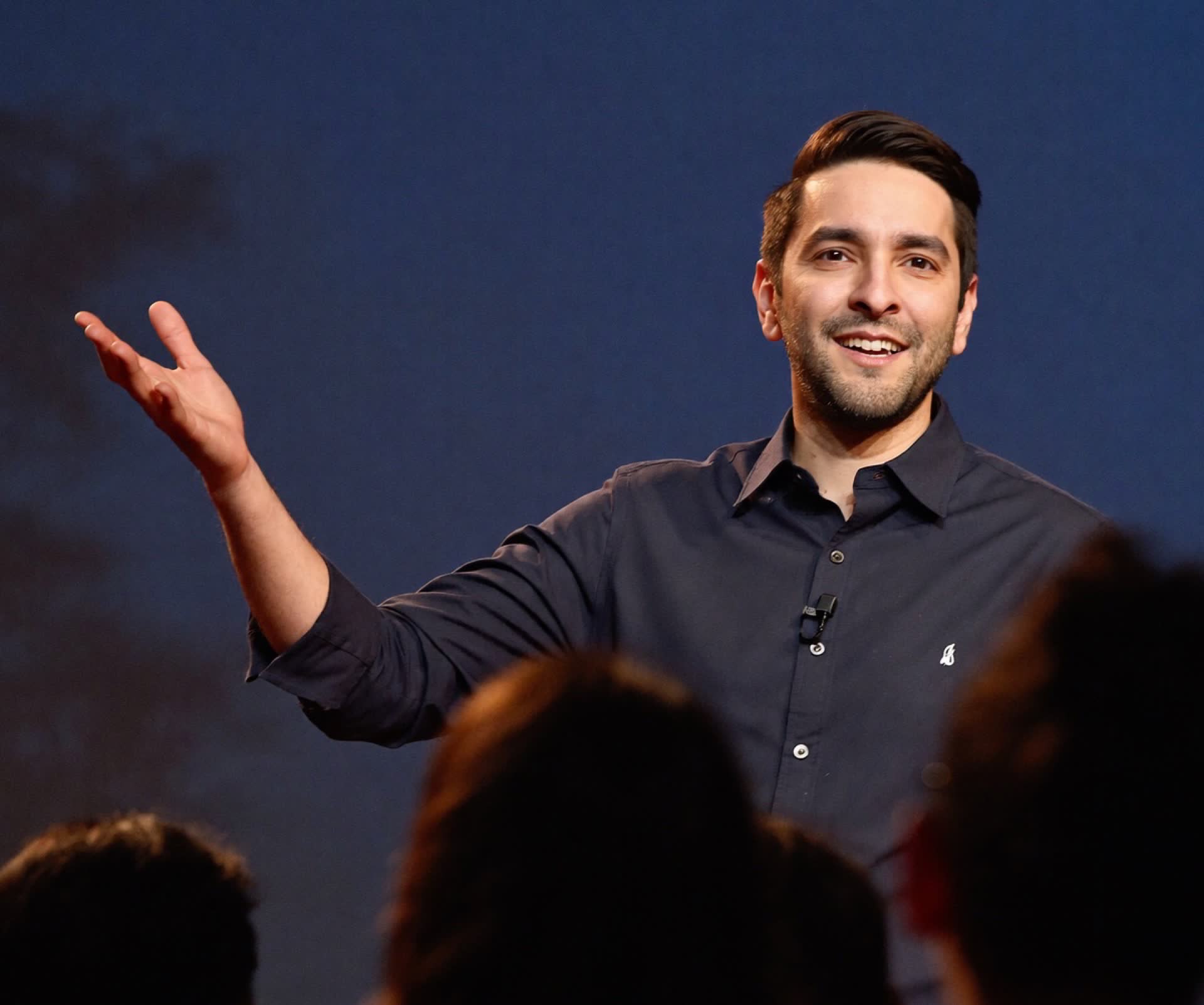
Atyab Tahir — former CEO of JazzCash and country head of Mastercard Pakistan — sits down with Muzamil to diagnose why Pakistan's fintech revolution has stalled, who is really to blame, and what a genuinely inclusive digital financial system would look like.
Born in Libya, shaped by transition
The episode opens with Muzamil establishing why this guest matters. He had recently recorded a conversation about fintech with another founder and come away frustrated: the industry’s most celebrated players were still primarily targeting urban, educated Pakistanis. “The rest of Pakistan, which is the majority of Pakistan, which constitutes maybe at least more than half the GDP — that has consistently been kept out of the system — how do you target them?” That question is the thread the entire conversation pulls on.
Atyab Tahir’s own biography is a study in transition. He was born in Libya while his father was on an Air Force deputation, spent two of those early years there, then moved base to base across Pakistan as a military child. At twelve, the family began immigration proceedings to the United States. His father had retired from the Air Force and wanted a better life for his youngest. They landed in Boston — “one of the most expensive cities in The US, the worst place to go as an immigrant,” Atyab notes with a laugh — and eventually settled in Belmont before he went to college in New Hampshire.
He studied management information technology but loaded his schedule with philosophy, economics, and political science courses. “There was an immigrant pressure that, son, you need a job-worthy degree,” he recalls. Grades were mediocre. Conversations with his father every three months were tough. He made it through.
From Wall Street to 9/11 to Pakistan
Right out of college, Atyab joined Fidelity Investments in fixed income trading — “what any average person would do and found an opportunity based on where I was making the most money.” Then September 11 happened. On September 16, a close friend of over a year called to say they could not be friends with someone who “looked like a terrorist.” Atyab initially thought it was a joke. It was not.
“That was like a knife to the heart,” he says. The incident put him on an entirely different path. He came to Pakistan for what he intended to be a three-month break, ended up staying three years, and worked on Pakistan’s Poverty Reduction Strategy Paper with DFID and the Asian Development Bank. One of the outputs was a water resource management policy for Balochistan that recommended switching from water-intensive apples to olives and building delay-action dams — small mud structures that slow floodwater and allow it to seep into the ground, raising the water table. “This olive recommendation we gave in 2003,” he says. “What the floods have done — a lot of that damage might have been reduced” had the dams been built.
He used the experience to get into Babson College for his MBA, graduated in 2007, joined Johnson & Johnson in New Jersey on a leadership development track aimed at sending him back to Pakistan — and then Benazir Bhutto was assassinated. J&J pulled the deployment. He pivoted to a risk consulting firm, spent two and a half years in Kuwait, then returned to the US and joined Elsevier, the 400-year-old publisher, where he got his first real exposure to digitization through a product called Scopus.
Tameer Bank: learning risk by doing it
His mother-in-law’s cancer diagnosis brought him back to Pakistan. He found an opening at Tameer Bank — a small microfinance bank that had just created a chief strategy officer role. The founder, Nadeem, gave him thirty seconds to decide on the offer. Atyab asked for time to consult his wife. He called back the next day and accepted.
He joined intending to stay three years. Those three years became eleven. At Tameer he moved from strategy to chief risk officer — a role he had no formal background in. “I don’t know anything about risk,” he told Nadeem. “You’ll figure it out,” came the reply. He was trained in part by Saleem Raza, the former State Bank governor, who sat on the board. When Atyab joined, the bank’s profits were around 200 million rupees. By the time he left, they were close to 1.3 billion, and Telenor was buying the full stake.
From there came HBL, where he led digital from 2016 for about three and a half years. “A 75-year-old bank thinking that digitization is just a hobby,” he says. The team did not start with the app. “App was just the outcome. We started with the processes. We looked at what needed to be fixed on the backend.”
Mastercard’s Pakistan playbook: 26 points of market share in two years
Atyab took over as Mastercard’s country head six weeks before COVID lockdown. For two years he worked from his study. The timing, counterintuitively, was ideal. “That’s where the requirement just sort of went through the roof.”
He explains Mastercard’s revenue model clearly for Muzamil: the merchant discount rate — typically around 2.5% in Pakistan — is split three ways between the acquiring bank (which owns the terminal), the issuing bank (which issued the card), and Mastercard’s own scheme fee, which is a flat amount per transaction rather than a percentage. “Mastercard gets flat. Whether it’s a hundred dollars or ten thousand dollars, it’s flat.” Volume therefore matters more to the acquiring and issuing banks than to Mastercard itself.
During his tenure, Mastercard grew its Pakistan market share by 26 percentage points — from the mid-twenties to the high forties — and nearly doubled revenue. More importantly, he helped build four regional verticals specifically for emerging markets like Pakistan, Egypt, and Nigeria: SMEs, freelancers, mass lifers (people earning under two to two-and-a-half lakh rupees a month), and youth. “Pakistan they see as a scale market,” he says. A structural win he highlights: multinationals began realigning Pakistan from Asia Pacific — where it is the fourth or fifth most populous market — to MENA, where it is the largest. “All of a sudden all the products’ focus comes here.”
The disintermediation super cycle and what it means for banks
Muzamil pushes on a harder question: in an age of real-time rails like Raast, what is the long-term utility of a legacy switch company like Mastercard or Visa? Atyab calls it “the disintermediation super cycle — where all incumbents are at risk of losing their primary source of income.”
His answer is that the smart incumbents saw it coming. Mastercard bought Vocalink, which powers the UK’s Faster Payments system and the Oyster card. Visa partnered with Binance. Both enabled crypto-backed cards. “They have a war chest and they are going and investing into these technologies.” Central bank digital currencies, he adds, are the most significant wildcard — they could eventually allow the central bank to lend directly to consumers, bypassing the traditional bank intermediary layer entirely. But he does not expect the central bank to go into consumer servicing directly. “I expect the central bank to give discounts on that rate so that the customer can be serviced by front-end players.” Banks, fintechs, and EMIs, in his view, will all become front-end players competing on customer experience rather than on control of the rails.
Pakistani banks and telcos, he notes, have not yet started this diversification journey. “Our incumbents — telcos — have maybe not started that journey.”
Why telcos failed at fintech
This is where Atyab is most direct. Muzamil frames the frustration from his own experience: he opened an Easypaisa account in 2013, sent an SMS to activate a mobile account in 2014, and spent five years unable to resolve a data transfer failure between Telenor and Easypaisa. Even going through a brother-in-law inside the company produced only a ticket that went nowhere.
Atyab’s diagnosis is structural. Telcos entered fintech as a “me too” move — they saw M-Pesa succeeding in Kenya and assumed they could replicate it. But M-Pesa was built from first principles: it started by letting people send airtime to each other, solving a real cash problem. Pakistani regulation does not allow airtime transfers, so the model required adaptation that was never properly done. “They never understood their customer. They said, whoever buys a SIM will open an account.” In many cases, mobile accounts were opened without the customer’s knowledge because franchisees were paid commissions on numbers. “As much as 30% of franchisees’ commission comes from the financial services business, whereas financial services has no incentive to pay those people.”
The deeper problem is the cash-in, cash-out funnel. “Digital business requires digital cash. If somebody is still taking money out of your wallet to buy groceries, you are not a digital business. You are just a custodian of their money for a very short period of time.” He points to models in Tanzania, Ghana, Cambodia, and Colombia where central banks subsidized cash-in commissions and eliminated cash-out fees entirely, forcing the funnel toward digital circulation. Pakistan’s telco-owned fintechs have instead become too big to fail, using their scale to resist regulatory pressure. “They dangle the sword over the central bank’s head by saying, if you don’t do this, we won’t grow our agent network.”
“I have very little hope,” he says plainly, “that unless they change their thinking and unless they change the way they approach their business by truly being a financial services business — understanding the 220 million Pakistanis as their customer — it is only then that they are able to build a business that is based on first principles.”
Collaboration over competition: the four C’s of ecosystem development
Later in the discussion, Muzamil raises the data silo problem — every player hoarding their data, every startup hiring its own data scientist in a country where data scientists are scarce. Atyab frames the solution around what he calls the four C’s of ecosystem development: compete, complement, collaborate, and capitulate.
“The competing mindset has to be put aside. You have to understand how you complement each other first, then figure out how you collaborate. If you don’t find yourself in any of those three, you will either capitulate to the incumbents or capitulate to the problem.”
He is specific about what banks bring and what fintechs bring. Banks have trust, regulatory understanding, and customer bases. Fintechs have product innovation, agility, and digital-native thinking. “Open your trust, your regulatory understanding, your customer base — take their product, their innovation, their digitization — and make something that works for your customer.” He cites the example of a bank wanting to offer mutual funds: instead of building the front-end itself, it should integrate with a fintech that has already solved that UX problem, while the bank retains the license and the fund management. “We cannot continue to try to build walled gardens. We have been trying for ten years.”
He is equally critical of the regulator’s reputation as a blocker. “Your regulator is a very progressive regulator. If you go to them with a new idea and say I want to try this, they will give you limited permission. Come back with results. The effort is not being put in.”
TikTok onboarding and the dignity of the unbanked
By the end of the conversation, Muzamil and Atyab arrive at what is perhaps the most practically useful section: how do you actually bring a first-time user into the financial system? Atyab’s answer draws on TikTok’s product design. When you open TikTok for the first time, content plays immediately. The app waits five to eight seconds, then sends a ping to create an account. When you try to comment or interact, you are gently locked out — and that friction is the moment of conversion. Account creation itself is almost entirely auto-filled: auto-set username, auto-set password, drop-down menus for the few fields that remain.
“Banks have to start thinking like content companies,” Atyab says. Give first-time users a limited account with no documentation — Pakistan’s Asaan account already allows this via USSD with just a CNIC and phone number, with a 25,000-rupee limit that covers most people’s needs. Use a personal assistant, voice-driven, in Urdu, to walk them through the app. Celebrate every micro-action with dopamine-triggering feedback. “Your plumber, your carpenter — they are the ones running our economy. We should be going to them and saying, how do we make your life easier? Not waiting for them to come to a branch where everyone is wearing a suit and they feel like third-rate citizens.”
He closes with a vision for 2050: a Pakistan of 220 million people, 64% under 35, that has no direction to go but up. “A country that is self-reliant, where middle-class consumption is so strong that the government does not have to go begging to the world, where organic tax collection exists, where data is used at the government and private sector level to service customers.” He is careful to attach responsibility to that optimism. “How long will we continue to live in the hope of a better Pakistan and not work towards building a better Pakistan? You have a responsibility, I have a responsibility, and everybody who lives in Pakistan has a responsibility.”
Muzamil closes by noting that many educated Pakistanis have recently lost the will to stay — and expressing hope that the future Atyab describes is one their children can choose to remain for.


Never miss a conversation.
New episodes and the thinking behind them, straight to your inbox. No hype, no spam, no pitch.