Thought Behind Things
O Donuts runs 55 locations without operating a single one
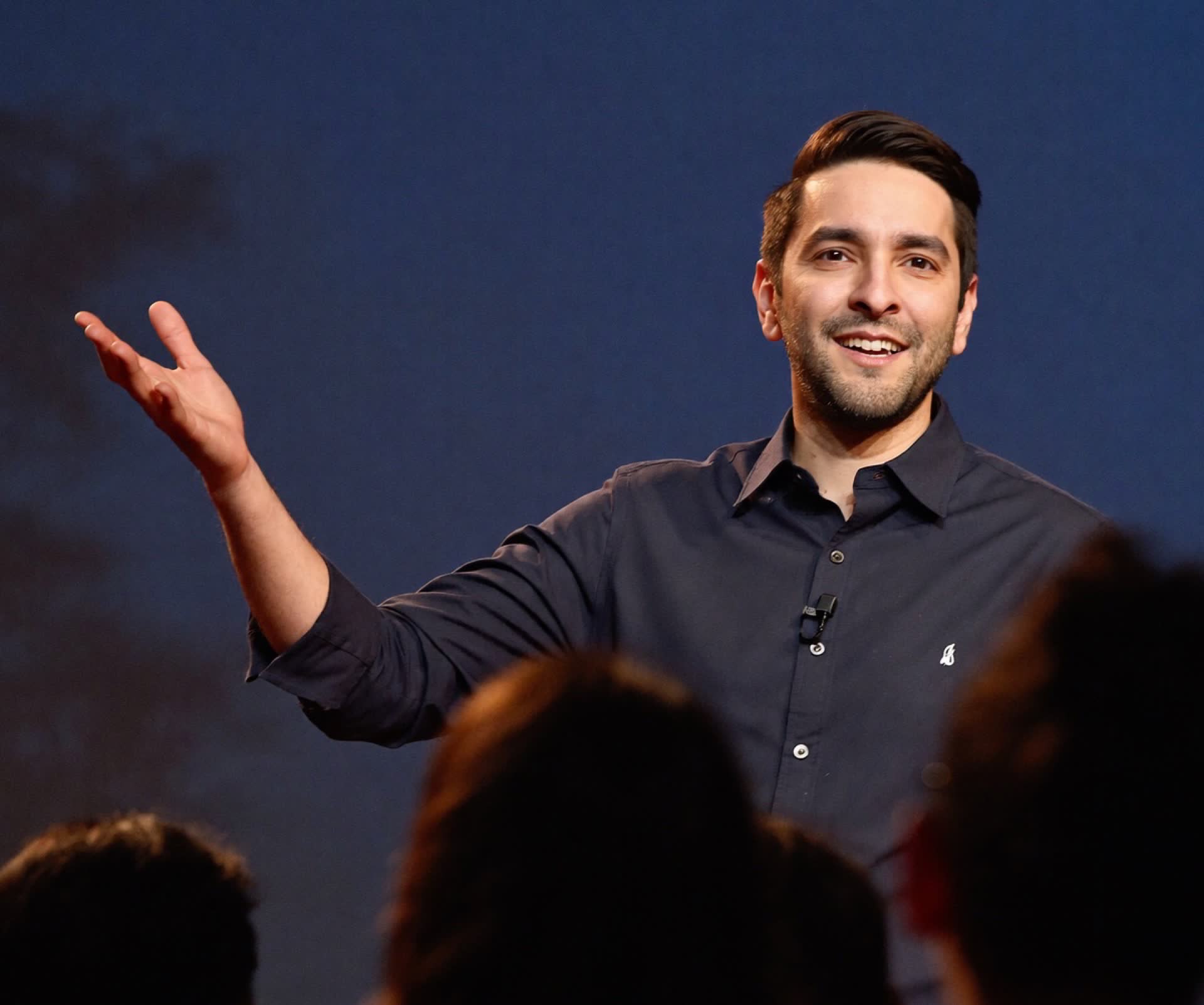
Rayyan Sohail sold his first restaurant brand, reinvested everything, and rebuilt around one product and a central factory. Now O Donuts spans 55 franchised locations and 800 people.
Why Muzamil keeps returning to food
Muzamil opens with the trap every Pakistani daydreamer knows: sit in a busy chai spot, multiply the tables by the bill, and conclude you should open a restaurant. Extra cash in Pakistan rarely goes to stock markets; it goes into food, and 97 to 98 percent of those ventures close. Yet in the last decade a handful of local brands became genuine chains, the way American restaurants did in the 60s and 70s. His guest built one of them: Rayyan Sohail, founder and CEO of O Donuts, which started as a single donut shop and now has 56 locations across 10 cities.
Hafiz at eight, exporter at seventeen
Sohail was born in Karachi and never left. His parents put him in a madrassa as a young boy to memorize the Quran, a two-year stretch of 8 a.m. to 5.30 p.m. days that he refuses to dramatize: “I think I was too young to even realize” what the outside world was, he says, and being the eldest meant being the family’s first experiment. The discipline surfaced later as grit rather than tidiness. “I don’t see myself as disciplined, to be honest,” he says, but falling and getting back up became reflex. School grades collapsed in college, where two years of suppressed mischief came out at once, and in the middle of that his father took him for a drive and handed him a new export venture: jacquard fabric beddings for American buyers. At 19 he was running it alone, with zero employees, doing vendor payments, DHL runs, customs standoffs, and midnight container loadings himself, and managing the household’s entire cash flow through the business, down to knowing whether tomorrow’s K-Electric bill could clear. University became an obstacle course; he once got an F for finishing an urgent buyer email under the desk in psychology class, and graduated from CBM in five years instead of four.
Vintage: the first brand, and the first hard lesson
The food itch came from the 2012 Facebook-bakery boom and a simple commercial insight: variable cost in food runs 30 to 40 percent, so the gross margin is real. With his friend Shahrukh he opened Vintage Cafe and Bake Shop on 4 July 2014, in Ramzan, on a DHA strip where every neighbour was a shisha cafe and every passerby predicted death without shisha. Sohail led taraweeh prayers that Ramzan, then sat at the restaurant until midnight. They had never even costed the menu; he priced it on instinct, below market. A family that came for iftar got a free box of cupcakes and posted in a food group, and by day twelve a 40-seat room was turning away half of its 80 daily reservations. Vintage grew to about seven locations across three different models, and that is exactly where it broke. Nobody counted stock or variances, focus divided with every branch, and the honeymoon math failed. “Scale ke jo masail hain, woh to aap ke zehen o guman mein bhi nahin,” he says of the assumption that four locations of 10 rupees each simply make 40. By 2018 the choice was inject money they did not have, or exit. They sold the whole brand in May 2019, in the low-to-mid eight figures of rupees, eight months before COVID shut down every dine-in room in the country.
OD is born in a lockdown
The sale money went into a merger with the acquirer, a 25 percent stake in their bakery company, and the partnership chafed almost immediately; after a life answering only to himself, “there’s a lot of interference coming,” he recalls. He stepped out of operations, and in the empty space O Donuts was conceived: one product, made in one centralized facility, distributed out, the exact inverse of Vintage’s per-location kitchens. Umar bhai, a partner with 40 years in the bakery industry, owned the product science. The first market test was a school pop-up at Lyceum: 200 donuts, sold out in half an hour. They launched publicly at Karachi Eat in January 2020, took a kiosk in Naheed supermarket on 24 February 2020, and then COVID hit. It turned out to be free marketing: with everything closed except supermarkets, the kiosk sold its whole daily production in two or three hours. When the merged company wavered on what OD even was, Sohail was voted in to run it, closed every bakery, sold the equipment, and bought out the remaining 75 percent, raising the money by selling the first franchises. His partners thought he was mad to pay for a brand with near-zero asset value. “There was always this: if ten other people are doing it in the market and a thousand other people are doing it in the world, why can’t we do it?” he says.
A factory with a brand on top
What O Donuts actually is, Muzamil draws out, is a manufacturing and distribution company wearing a retail brand. Production starts at midnight so donuts leave fresh by morning. Pre-mixes made in Karachi keep the recipe identical in Lahore. Croissants are baked and meats prepped and portioned at the factory, so a store only assembles. Retail is 100 percent franchised, but the leash is short: HR is centralized down to payroll checks, supply chain ships everything from donuts to tissue paper, the POS reports back, and a franchisee who wants to replace a resigning branch manager emails head office for a trained replacement. A new cafe is a turnkey project, scoped, built in roughly 90 days, staffed a month before opening, everyone trained and in uniform on day one. “The franchisee, till the branch opens up, is practically an investor,” Sohail says. The current footprint: around 21 full dine-in cafes, 16 or so express locations, a dozen kiosks, and about 800 people in the system. Donuts are now only 40 percent of revenue; at the Islamabad I-8 cafe they are 20 percent, which is why breakfast arrived in 2023 and an all-day menu is rolling out now, with OD Express being shaped for small-city and GT Road sites where one big cafe is the ceiling.
Two forecasts for 2050
Muzamil closes with his standard question, and gets a split answer. As individuals, Sohail is an optimist: “Whatever happened yesterday happened. Can it be better tomorrow? Yes, it can be better tomorrow.” As a society he is not, because the gap between the haves and have-nots starts at access: a driver’s son without schooling or basic healthcare cannot rise, so brilliance will stay individual rather than national. Muzamil pushes back with the numbers he finds hopeful, including a Profit magazine data point that literacy among Pakistanis under 15 is 93 percent, a generation that will hold power in 25 years, and his own observation of Punjab’s blue-collar families sending children to university while a rising GT Road consumer class waits for brands exactly like this one. Both agree on the diagnosis Sohail’s whole career embodies: Pakistan’s local businesses fail not for lack of talent or demand, but for lack of processes, and whoever builds the systems gets to build the chain.


Never miss a conversation.
New episodes and the thinking behind them, straight to your inbox. No hype, no spam, no pitch.