Thought Behind Things
Pakistan has the capital. It does not yet trust itself to invest it.
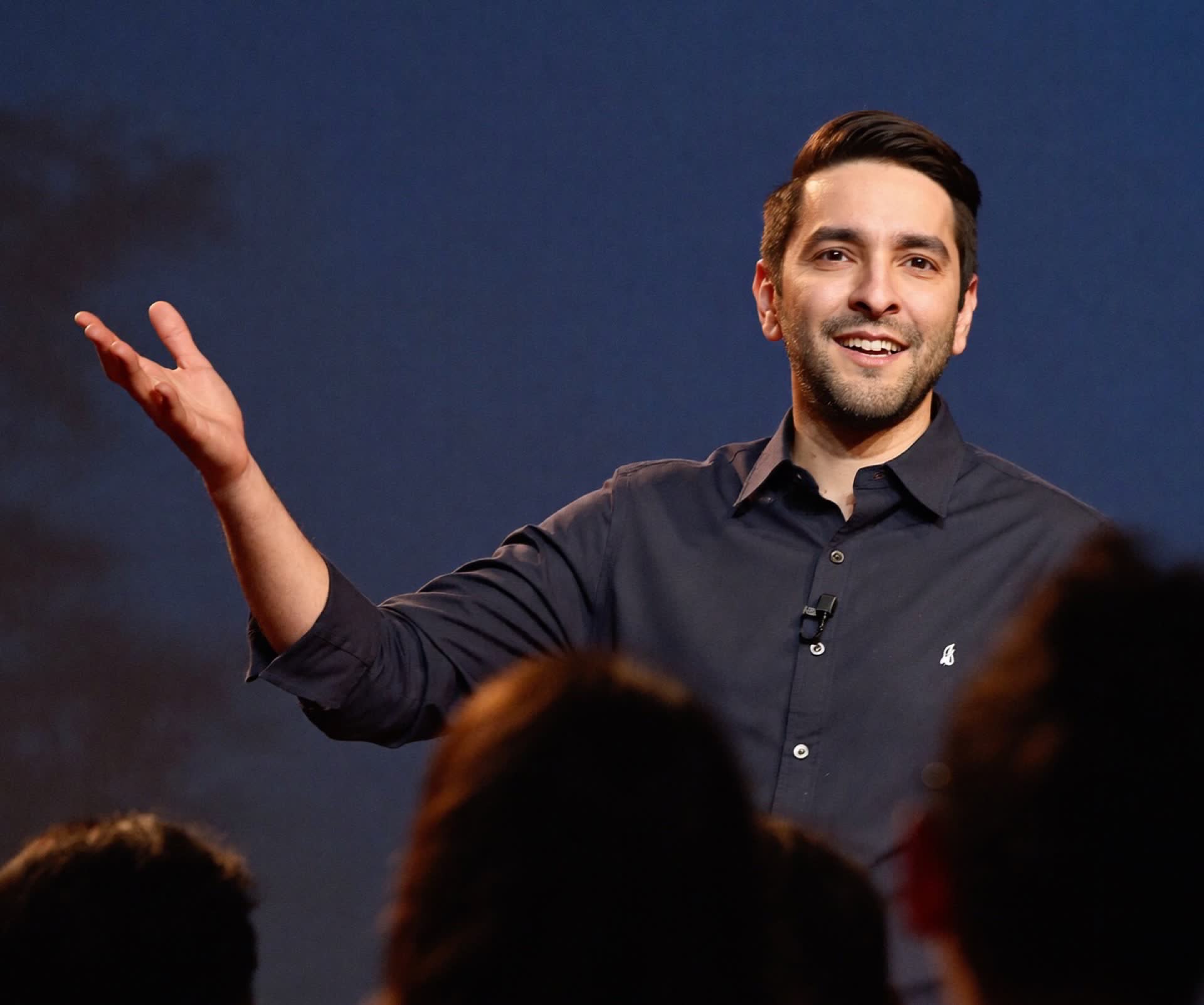
PakLaunch founder Aly Fahd on why Pakistani family offices are starting to invest, why trust still blocks deals, and who is backing the data center rush.
From a WhatsApp group to a conference circuit
Muzamil opens with the questions on his own mind. Geopolitics is shifting, and in technology nobody seems sure where the next opportunity lies, or whether AI will take everyone’s job. He finds answers by talking to people building in the trenches. One place he has met some of the most powerful Pakistanis in technology and business is PakLaunch. He says he has counted more than ten billionaires in its community, along with venture capitalists, founders and large business groups, at closed events where deals get made. With its biggest annual conference coming up in New York, he asked the founder, Aly Fahd, to explain what is happening.
Aly says PakLaunch started in 2020 as a small WhatsApp group. Its members helped startups raise money and reach different markets. It was the COVID period and everything was virtual, so the group decided to meet in person. Global investors found it hard to travel to Pakistan, so PakLaunch brought Pakistani startups and top Pakistani minds to the big tech hubs instead.
The first event was in Palo Alto in 2022. Since then there have been two in Palo Alto, two in Riyadh, two in Dubai, one in London and one in Islamabad. The events run every six months, and New York, on October 19 and 20, is the ninth edition. Aly expects almost ten unicorn founders from around the world. He says about 10,000 people have filled in the form, and 20 to 25 people are coming from Pakistan, with startups such as Abhi, Bookme and BusKaro. The goal is to put them in front of global investors, mostly from the US.
The format is deliberate. “Instead of pitching, build a relationship,” Aly says, “and that’s how the investment happens.”
From free money to profitability
Muzamil remembers a lesson about patience. In January 2023 he was at a PakLaunch event in Dubai about investment coming into Pakistan, the day before the rupee crashed against the dollar. He admits he was “freaking out” at the time. He has since learned to keep building with a long-term view. He asks Aly where things stand after the cheap money of 2020 to 2022, the crash that followed, and the recovery he now sees.
Aly calls it a maturation cycle. Early on, a lot of free money came into Pakistan, and the focus was on showing growth and top line whether or not there was profit. Today, he says, companies such as Abhi and KraveMart are more mature and much more focused on profitability.
He also sees a push from the top. He describes himself as apolitical, but says every minister and ambassador he speaks with seems to have KPIs around bringing money in and connecting with the diaspora. In his lifetime, he says, Pakistan has never had as good a relationship with the US. This year, he says, at least ten non-Pakistanis got visas and travelled to Pakistan through PakLaunch.
A diaspora pulled closer to home
Aly believes geopolitics has pulled the Pakistani diaspora closer to Pakistan. He points to news in the US about visas and passports being taken away over what people say. Overseas Pakistanis, in his view, now feel that if they are pushed out from anywhere, Pakistan is the one place they can always go.
The change he likes most is in Gen Z. PakLaunch has more than 100 student chapters at top universities. When he visits them, he says, it makes him proud. “They’re more Pakistani than even my generation was,” he says. They are unapologetic about it, and they wear it on their sleeves.
Local money, low trust
Muzamil raises the question he keeps returning to. For years the hope has been that US or Middle East venture capital would fund Pakistan. He recently spoke with Maha of KraveMart, who is fundraising, and asked her why a profitable, rupee-based company does not raise from local capital instead. He describes the pitch to foreign investors bluntly: “Give us dollars, we’ll earn in rupees, and then eventually when the dollar five years later is at 500, we will try to return it.” On paper, he says, that return is horrible.
Aly says the local picture is improving. He knows of a Multani family office that invested in a non-Pakistani fund in New York through PakLaunch, and a family office from Pakistan that invested in an AI fund based in San Francisco. “So I think there is definitely capital,” he says.
He sees two obstacles. First, many wealthy Pakistanis do not know how to invest, and do not know venture investing is an option open to them. Second, he says: “Historically, I feel Pakistanis don’t trust other Pakistanis.”
He describes how much money is sitting idle. Look at the houses in Islamabad, he says, worth crores of rupees. An early-stage startup raising a million dollars is not out of reach for many of these families. When PakLaunch announced one of its own investments, people messaged straight away to ask how they could invest and whether there were companies in Pakistan. PakLaunch now runs events with family offices in Karachi and elsewhere. Aly names Abrar of National Foods, Anis Khawaja and Ali Tareen as people open to investing, and says Hussain Fazal of Hussain Mills in Multan has invested in several companies through PakLaunch.
Foreign money has not gone away either. Some funds have mandates to invest in emerging markets to spread risk, and for a fund of a few billion dollars, 50 million dollars in Pakistan is easy. The companies doing best, he says, are the ones going after international markets.
Muzamil agrees that dollar revenues justify dollar investment. His concern is the local market. He cites Airlift as the lesson: investing dollars into a shrinking consumer market does not add up, and many people did not see that five years ago.
Weak systems, and why investors now ask for audits
Muzamil turns to the other side of trust. Many Pakistani companies, he says, through no fault of their own, lack proper systems, structures and books, so much of the business runs on jugaad. “No one is your cousin,” he says. Transparency has to come from systems, so that nobody needs to ask for trust. Out of every 100 founders he speaks with, he estimates 99 lack proper underlying systems and legal setup. He has heard that many deals announced on Shark Tank fell through in due diligence.
Aly agrees the systems are weak, and adds the legal system. People do not trust it, he says, which is why investors want the DelCo model and ask what happens if a dispute goes to arbitration. He also points to timing. In the US, early venture money goes back to the 1970s and before. In Pakistan, he says, the startup scene has only really taken off in the last five to seven years.
He sees maturity trickling down from the top of the funnel. Most universities now have accelerator programs. Grants are coming in. MoITT wants to set up its own fund. He gives the NICs credit for raising awareness. You can question the quality, he says, but everyone now speaks the same language.
The weak companies will not survive. “Startups that don’t have the processes and systems, they will die,” he says. He was an investor in some of the companies that failed, and he says people have learned from them. Investors now ask for monthly and quarterly updates, audited reports and the name of the auditor. They want board seats and independent auditors. A small lifestyle business may not face those questions, he says, but any startup raising money now does.
He adds that small teams can now build very large companies. He cites Temporal, which he says reached 12.5 billion dollars in six years.
AI: nervousness, LUMS students and local versions
Muzamil compares Pakistan to India in the 1990s, a hard decade that also placed Indians in key positions around the world. Then he turns to AI. A well-known Pakistani VC told him to expect a slump within a year and a recessionary environment, and many people fear for their jobs. Muzamil asks whether AI lets Pakistan move from services to products, or whether hyperscalers and frontier labs will take the whole market.
Aly says there is real nervousness even in the US. Big companies are laying people off, and processes are being automated. He compares the shift to the industrial revolution: painful for many people while it happened, and then a source of new jobs. Companies and people who adopt the tools early will do very well, he says.
He sees Pakistan getting on that bandwagon. AI conferences seem to happen every day, and universities are starting to offer programs. Aly, who went to Cornell, says that every summer they host LUMS MBA students in the US and invite people from Nvidia, Facebook and Google to talk about their work. This summer, a Facebook guest watched 20 to 25 students ask about the tools they use. Afterwards, Aly says, the guest told him: “I’m blown away.” Aly admits it is a small sample from LUMS.
He sees the AI money differently from Muzamil’s framing. Most of it, he argues, goes to industries using an existing tool, and very few companies are disrupting AI itself. That leaves room for localised versions. He points to NADRA’s work and to medical billing, and says they have made three investments in AI companies and are discussing how to take them to Pakistan. When Uber arrived, he says, there was still a need for Careem. In his view, local versions will create high-paying jobs, while lower-paying jobs slowly shrink.
Data centers are the hottest bet
Muzamil says Sky47 is coming to the New York conference. His research found three or four groups building data centers in Pakistan, including Gul Ahmed and Nishat with Huawei. He has long criticised family offices and once called them degenerate gamblers, but he sees a vision of sovereign intelligence in this move. If Pakistan keeps buying AI tokens in dollars, he argues, its growth stays capped by the dollars it has. Infrastructure has to come first, and only large players can build it. Applications can come later, from anyone.
“I think it’s very, very hot right now,” Aly says. At the UN General Assembly in New York two weeks earlier, he met a Saudi group that has pitched another data center in Pakistan and has met senior people in the country. That plan is not public yet. He knows of a group from San Francisco that has been working on a Pakistani data center for a few years. Much of the equipment and chips, he says, would come from China, a close ally. He calls Sky47 the highlight of the last few years.
East, West and the case for both
Muzamil asks whether Pakistan is too focused on the West. Its educated diaspora is largely in the West and the Gulf. But thinkers such as Ray Dalio and Faisal Aftab argue the next 20 years belong to the East. Muzamil points to ASEAN, a five to six trillion dollar economy, and to China’s rise as a superpower.
Aly lists PakLaunch’s events across Canada, the US, the UK and the Gulf, from Muscat and Doha to Riyadh and Dubai. It has also held events in Singapore, Kuala Lumpur and Hong Kong. Communities modelled on PakLaunch have started in Bangladesh, Vietnam and South Korea. “I’m not a political guy,” he says. Everyone, in his view, is just trying to feed their family.
He compares the diasporas. Singapore’s is more educated and stronger, and he notes that Coinbase’s head there is Pakistani. Hong Kong’s is older and smaller, with many blue-collar workers. Kuala Lumpur’s is more professional, but less influential.
Then he makes the case for the US. He worked at Amazon and for about ten years travelled to China almost every month, watching even its tier two and tier three cities transform. But China’s tolerance for failure is low, he says, while in the US SpaceX can lose three rockets and Elon Musk can take on the government. AI, EVs and blockchain did not start in China. Of the 27 unicorn founders of Pakistani descent he knows of, more than 20 are in the US. Language is still a barrier with China, and culturally, he says, Pakistanis are closer to the US.
Muzamil says it was never a choice between the two. Pakistan cannot afford to take sides, he says, and could be more like a Switzerland of the world. His point is about timing. Forty years ago, he argues, Pakistanis looked to the UK while Indians saw the opportunity in the US. EVs and solar did not start in China, but China controls both today. If Pakistan builds connections in the East now, it may help enable tomorrow’s unicorns.
Aly adds a trade angle. China and much of the Far East are protectionist, he says. Buying from them is easy and selling to them is hard. Pakistan has sold yarn through Hong Kong for years, but no company has grown past a certain scale. He recalls a PakLaunch session on Pakistan’s semiconductor policy, which Muzamil moderated. Pakistan cannot build fabs, but China’s labour cost for design and assembly is rising. An average engineer in China costs about 60,000 dollars a year, he says, and much less in Pakistan, which is close by. Pakistan could design and sell into China. PakLaunch has not yet held an event in mainland China, he says, but it plans a first meetup in Korea in November.
Muzamil closes the section with Jibran Niaz, who will also be in New York. As Muzamil understands it, Jibran is building a new 150-acre industrial park, partnering with Chinese companies to set up in Pakistan and export to the US, because tariffs and costs in China have become a problem. To Muzamil, it shows how a smart businessman can work around Pakistan’s familiar problems and build in brick and mortar.
A top 10 ecosystem, on a longer clock
Muzamil’s last question is about 2030. Aly says PakLaunch’s mission is to see Pakistan among the top 10 tech ecosystems in the world. Around 2017 to 2020, he says, the rankings put Pakistan somewhere between 60 and 90. Will it reach the top 10 by 2030? “Probably not,” he says. Aspirational goals are meant to stretch you. By 2035, he believes it absolutely can.
His reasons are the talent and hunger he sees at student chapters across Pakistan’s top schools, which he says only need to be channelled. He compares it to cricket: one good leader, and the team wins the World Cup. He credits Bilal bin Saqib and others for the marketing that put Pakistan into the blockchain conversation, which he saw himself at UNGA.
What Pakistan needs now, he says, is to stick to the plan and keep policy consistent through changes of government and political turmoil. The potential is there. “If we mess up, it’s because of us,” he says.



Never miss a conversation.
New episodes and the thinking behind them, straight to your inbox. No hype, no spam, no pitch.