Thought Behind Things
Scents N Stories let five years of online orders choose where its shops go
Saad Afridi on bootstrapping Scents N Stories to 40 outlets, opening shops where online orders came from, and what really separates a local perfume from Dior.
A perfume brand built for the middle class
Muzamil opens with a point about who Pakistani startups are usually built for. Most founders come from the upper middle class, he says, and build for their own peers without realising that this group is about three percent of the country. If Pakistan is going to change, businesses have to reach the 50, 60 or 70 percent in the middle.
Fragrance is one of the few places where he sees that happening. For a long time imported perfume served a thin upper slice of the market. Now it is moving into the middle class, and he calls that truly disruptive. Scents N Stories stands out to him: 40 outlets across Pakistan and more than 300 people.
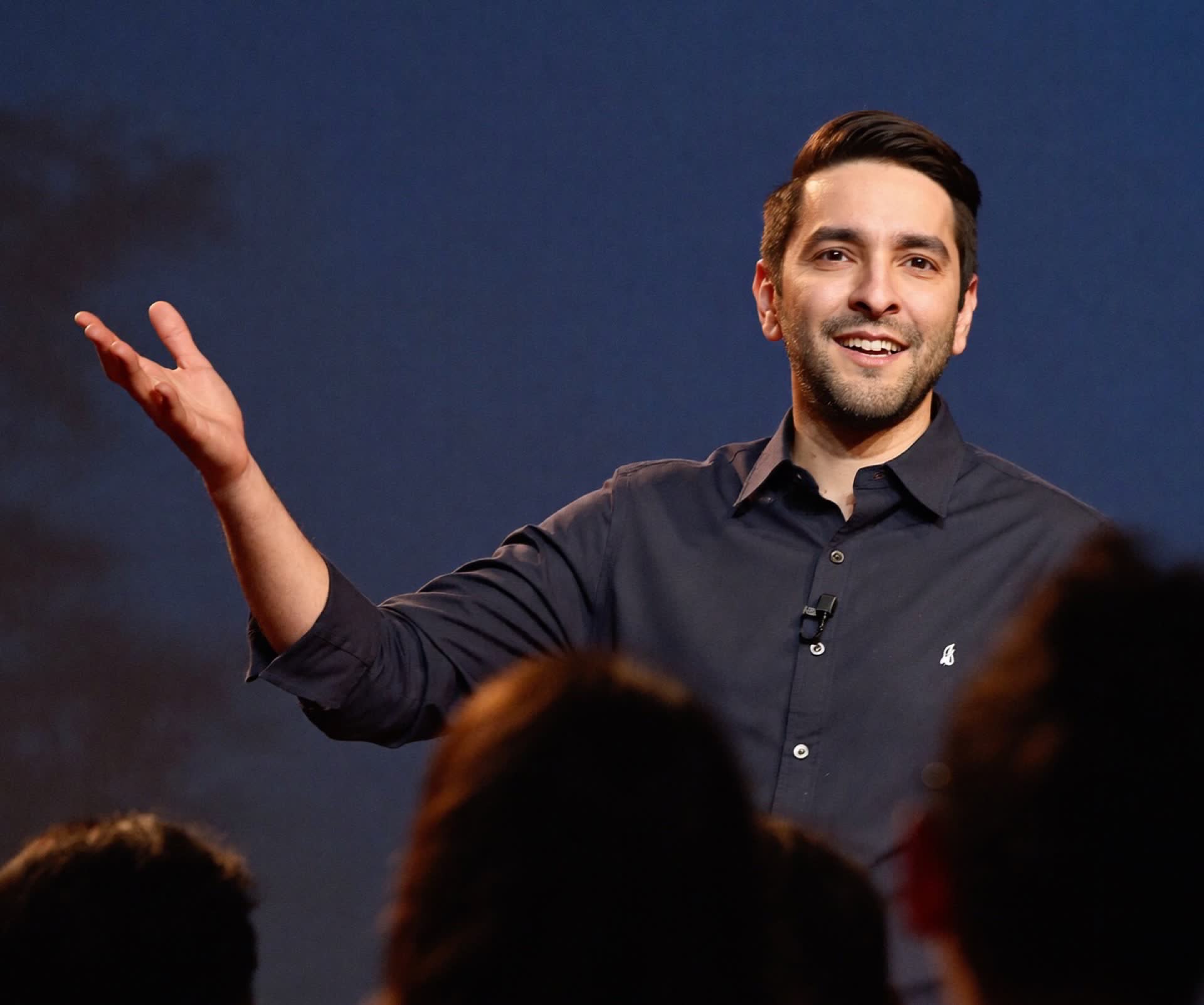
The episode is part of the Thought Behind Things series with Endeavor Pakistan, which is looking for the country’s 50 most exciting startups and businesses. Muzamil also thanks Kickstart, the coworking space in Karachi, Lahore and Islamabad, for the venue. His guest is Saad Afridi, founder and CEO of Scents N Stories.
A flight engineer’s son who read instead of watching TV
Saad was born in Karachi. His father was a flight engineer with PIA, the third person in the cockpit, and free tickets meant the family travelled widely. He studied at the City School, calls himself a very average student who preferred sport to study, and was surprised to get into IBA.
His family was very religious and kept no TV at home, but there were plenty of books. He grew up on Ishtiaq Ahmed, Naseem Hijazi and Tariq Ismail Sagar, then moved to Harry Potter and Dan Brown. All that reading, he says, built the writing he still uses on LinkedIn.
Muzamil asks how an only son, from a family with no business background, got the freedom to take risks. Saad credits his father, who came from real poverty, rose through scholarships and never pushed a career on him. There was also trust over money. “My money is your money,” is how Saad describes it, and he calls that a big early advantage.
At IBA he leaned into marketing and business plan competitions. He worked as an assistant to Dr. Shahid Qureshi, who pushed him toward entrepreneurship, and spent time at the Center for Entrepreneurial Development, where several of today’s startups began in the same room. After graduating he got into Meezan Bank, took advice to avoid banking, and joined a freight forwarding company instead. About a year in, he knew he belonged in his own business. He liked HR, marketing, finance and accounts equally, and few jobs let one person do all of it.
Three small businesses before the big one
Saad graduated in 2013 and started Scents N Stories around 2018. In between he ran three businesses. The first imported foldable water bags of the kind pilgrims use for zamzam water, an idea from an Umrah trip. He calls it a 100 percent failure. The second, around 2016, was a men’s grooming brand called Wabbies. He got stuck on product and could not scale it, so he calls it a partial success. The third was Aroma Pharmacy, an essential oils brand sold on Daraz. By 2018 it had five to seven people and was doing good business.
Manufacturing ran through all of it. Saad had limited capital and knew importing finished goods ties up more of it, so he chose products where he could add local value. Beard oils, essential oils and fragrances share almost the same process: bottles, blending and packaging. He remembers a room full of oil jars and endless mixing. “I was a kind of mad scientist,” he says of those first three or four years. Local vendors also meant credit lines and longer credit cycles.
The push into fragrance came from a senior at IBA whose family had long been in the trade. Saad doubted he could compete when one supermarket stocked hundreds of perfumes. The senior’s answer was that everyone sold in retail and nobody sold online. He offered to guide Saad and supply fragrance oils. Saad imported bottles, blended, filled, labelled and boxed, then put around 100 ads on Facebook.
The orders came in the first month. “I have uncovered a golden pot,” he remembers thinking. He had played too safe with family money in the earlier ventures and let competitors catch up. This time he put everything into one business. Orders grew from 10 a day to 20, then 50, then 100. At 20 people he hired an HR manager, which he says most Pakistani companies do not do even at 300. His reasoning came from the management books he read at IBA: “The only comparative advantage you have is from people.”
Forty outlets and no outside money
Today Scents N Stories has around 40 outlets and around 300 employees. Saad believes it is among the top five players in fine fragrance and says it has grown about 50 percent a year. The range covers about 80 fragrances, each in up to five forms: a 50ml bottle, a 100ml bottle, perfume wax, alcohol-free roll-ons and 5ml sampler sets. Reed diffusers and candles have been added recently.
The business is bootstrapped. Profits were reinvested and no outside investor came in. The first 12 outlets were franchises and still run that way. New outlets are company-owned. Saad puts EBITDA at around 12 to 15 percent.
The last two years were hard. Import problems and talk of a default slowed growth, and Saad thinks the brand would have grown 80 to 100 percent a year in a healthy economy. At the time of recording, 10 to 15 branches were in flood and rain areas, and water had entered the Gujrat outlet the day before. The fourth and first quarters usually go well. The second and third are a struggle.
Muzamil points to the price. Most products sit around 1,500 to 1,800 rupees, and in his experience anything under 3,000 opens up a very large market.
Making it in Pakistan to keep the cash
Muzamil asks how free shipping above 999 rupees can work when last-mile delivery costs 250 to 300 rupees. Saad says gross profit is around 55 percent, largely thanks to localisation. Ethanol, a key raw material, is made in Pakistan as a by-product of the sugar industry. Machinery adds economies of scale.
Behind the website sit around 200 SKUs, handled by about 15 people. An order management system runs 50 to 100 flows: merging duplicate orders, confirming with customers whose last parcel came back, fixing incomplete addresses, chasing unpaid checkouts. About 20 people work in customer service and operations and 10 to 15 in dispatch. AI now handles part of customer service, and a new loyalty program gives points in store and online.
Saad is proudest of the ERP. The company runs ERPNext, an open-source system, across about 1,000 inventory items. Most e-commerce owners he meets have no ERP, he says. With it, inventory stays three to four months on average, which keeps the cash cycle healthy and pays for new products and outlets.
Online now makes up about 30 percent of sales and retail about 70 percent. At the start it was all online. The shift brings its own problem: it is hard to tell how much online advertising drives sales in the shops.
The outlet next to the office
Saad was sceptical about retail. An e-commerce operator is obsessed with optimisation, and a shop looked like waste: the air conditioning runs whether customers come or not. He tried anyway, because of a rule he keeps. “My principle in life is that you don’t form an opinion until you have tried it once.”
The chance came by accident. The new office, on a second floor, had an empty space next door, and people kept asking in the comments on Facebook ads where the outlet was. So the team opened one there. Within three to four months it was so crowded there was nowhere to sit. That small prototype gave him the confidence to take on the upfront costs of retail: fixtures, security deposits, advance rent, and a new chapter of inventory, spillage and theft.
Advertising made the difference. The brand had spent heavily on Facebook, Instagram, TikTok and Google, so shoppers knew it before a shop opened. Saad would watch people in malls stop and say they had seen it online. His advice is that once an online brand does around 100 orders a day, it can open an outlet. The channels then feed each other. Shops make online buyers trust the brand, and ads fill the shops.
Muzamil notes that many outlets are mall kiosks rather than full shops. A kiosk, Saad says, is ready for about 1 to 1.5 million rupees. Positive cash cycles, vendor credit and the healthier margins of three or four years ago paid for expansion. Speed to profit mattered most. Saad says 80 to 90 percent of outlets were profitable in their first month, which funded the next one.
He estimates that about 60 percent of mall buyers were new customers, though almost all had seen the ads. The other 40 percent already bought online. He stresses this is a hunch, not hard data.
The next step is omnichannel. A courier parcel from Karachi to Lahore or Islamabad can take four to six days. With enough shops, orders can be filled locally. His rule of thumb is that once one rider can deliver 25 to 30 parcels a day in a city, hire a full-time rider. A rider in a Scents N Stories shirt can upsell and hear complaints. Elsewhere, couriers still carry about 80 percent of parcels.
Letting the orders draw the map
Muzamil reads out the cities beyond Karachi, Lahore and Islamabad: Faisalabad, Hyderabad, Peshawar, Multan, Gujranwala, Quetta, Sargodha, Gujrat, Sialkot, Mandi Bahauddin, Jhelum, Bahawalpur, Wah and Phalia. Saad says sales split roughly 50-50 between the three big cities and the rest.
The plan has two parts. Pakistan has about 264 brand clusters, Saad says, the stretches where Servis, Bata, Ideas and the other big retail names sit together, and he wants to be in all of them. Malls come first, because they offer security, air conditioning and lower setup costs.
The order of expansion comes from five years of e-commerce data. Most orders came from Karachi, then Lahore, then Pindi, and the shops opened in that sequence. Faisalabad, Sialkot and Gujrat followed. In five years the brand had received 10,000 orders from Gujrat alone, which made the case for a shop. The team extrapolates from city to similar city, and each launch comes with local influencers, billboards, mall branding and offers.
Saad also makes a claim about the market. He studies Indonesia and Bangladesh and says neither has a fragrance market as developed as Pakistan’s. Compare the top brands’ websites and ads in Bangladesh with Pakistan’s, he says, and the gap in scale, photography and packaging is like earth and sky. He has no data to prove it, but he thinks Pakistanis love fragrance. He links it to an idea from Michael Porter he learned in economics: strong local demand makes companies competitive enough to export, as happened in Japan.
What a bottle of perfume really costs
The company runs from five sites: a materials store, a factory for filling, labelling and boxing, a finished goods warehouse, a lab for R&D and quality testing, and a head office. The R&D team has five or six people. Saad says his own nose is not good enough, so he leaves the notes to them.
Boxes are made in Pakistan. Bottles and spray pumps are imported, though the company has localised the cap. A fine fragrance contains on average 60 to 70 aroma chemicals. That first mix used to be done mostly in France by expensive, highly trained perfumers. The concentrate is still 100 percent imported, but the mixing now happens in Pakistan, where suppliers hold 5,000 to 10,000 aroma chemicals and blend to order. The second stage, blending that oil with ethanol, is done in-house. Very few global brands do the first stage themselves, Saad adds.
Muzamil asks the question many listeners will have. Dior Sauvage costs around 90 to 100 dollars, roughly 25,000 rupees, and some men’s fragrances cost far more. Against a local perfume at around 2,000, the gap is 20, 30 or even 50 times. Is that brand power or quality?
Saad says it is about half and half. Houses such as Chanel, Gucci and Tom Ford spend heavily on research into what people will like. Brands like his follow global trends instead, which lowers cost. Ingredients vary hugely too. Oud can cost from 10,000 rupees a kilo for a synthetic to 50 lakh rupees a kilo. Naturals feel smoother, and synthetics harsher, because their molecules have been isolated. Give a supplier a brief for something like Sauvage and it will send samples from 50 to 500 dollars a kilo. The brand chooses. A perfect match is very hard, he says, but a normal nose will not notice, and the best practice is to add your own twist.
The local edge is concentration. Scents N Stories sells at 25 to 35 percent, while famous brands usually use 15 to 20 percent, according to Saad. In Pakistani heat and humidity, buyers are obsessed with how long a scent lasts. It is the first question in the shop. “It is like walking into a car showroom and asking which of your cars runs fastest,” he says. Lasting comes from the base notes. Top notes fade in 5 to 10 minutes and middle notes last half an hour to two hours, so a citrus scent with heavy top notes will not last however much it costs.
Faith, money and the book he is writing
Muzamil turns to Saad’s LinkedIn, where he writes often beyond business. Most business owners in Pakistan, Muzamil says, try to stay under the radar. Does Saad worry about speaking out?
Saad starts with the East India Company, which came to trade and left the subcontinent enslaved. Businesses are a strategic asset for a country, he says. “I see our businesses as an asset for the ummah.” A good reputation in business brings influence, so he thinks people with a platform should speak, especially on the economy. He brushes off negative comments. His mother and sister worry about five critical replies, and he points them to the 200 people who liked the post.
He is compiling his writing into a book with the working title “Economy as my Jihad”. Its argument is that making money is a noble cause within religion. People have split faith from worldly life, he says, so prayer counts and business does not. Business done with vision and to please God is also worship. He ties this to Pakistan’s problems, citing his figures of half of children out of school and 35 to 40 percent stunted, and says businessmen and governments both think too small.
Muzamil shares his own frustration from years of interviews. He has seen billionaires drive themselves to the studio and corporate managers arrive with twelve cars, and the guests with the most show often drew the biggest audiences. He sees a system built on short-term extraction, where trust for long-term partnerships is scarce. Saad’s answer is that he sees no solution outside faith, which asks a person to set selfish interest aside. He takes hope from the idea that God rewards the process, whatever the outcome. “My KPI is: am I doing my best?” he says.
Muzamil offers a framework of his own. He reads religion as a kind of supervised learning, a term from his university course in evolutionary computing. A simulation can test square, triangular and round wheels, but if you already know round works, you start there. Religion, in his view, gives humanity that head start toward its full potential. Saad says he has never heard it put that way, and links it to Allama Iqbal’s idea of khudi.
Muzamil describes leaving a tech job and starting the podcast in 2019 because he could not see the value he was adding. “I want to be rich,” he says. “But I want to be value-driven rich.” Saad says the larger duty falls on people who grew up with full stomachs, including the IBA students he tells are in the top one percent of the country. Muzamil adds advice on the book: people learn more from stories than lessons, and readers want the vulnerable version. Saad agrees and says the book will have chapters on 20 to 30 people who inspired him. He hopes to finish it in about a year.
What comes next, and Pakistan in 2050
International expansion is closest to Saad’s heart. IBA graduates used to dream of joining a multinational, so he would like to be in at least two countries and call his company one. He was planning a trip to Bangladesh in October. The range is also moving up, from 1,500 to 2,500 rupees toward premium lines up to 6,000, and splitting into sensory, executive and poetic sub-brands. He estimates about 90 percent of car diffusers sold in Pakistan are imported, and wants to offer a local one.
Muzamil closes with his usual question: extrapolate what you see today and describe Pakistan in 2050. Saad points to an article in Profit that tied electricity consumption per person to growth. Once a country crosses that level, he says, it unlocks a decade of growth, and he finds that story realistic. He does not think Pakistan’s power holders mean the country harm. They are making mistakes from their own angles, and with so little financial room left, he expects things to return to an equilibrium. If that wave comes, it will make many millionaires and billionaires, as it did in Indonesia and Malaysia. His last advice is to keep the horizon broad and add value wherever you can.


Never miss a conversation.
New episodes and the thinking behind them, straight to your inbox. No hype, no spam, no pitch.