Thought Behind Things
The ed-tech founder who started in a slum at 19
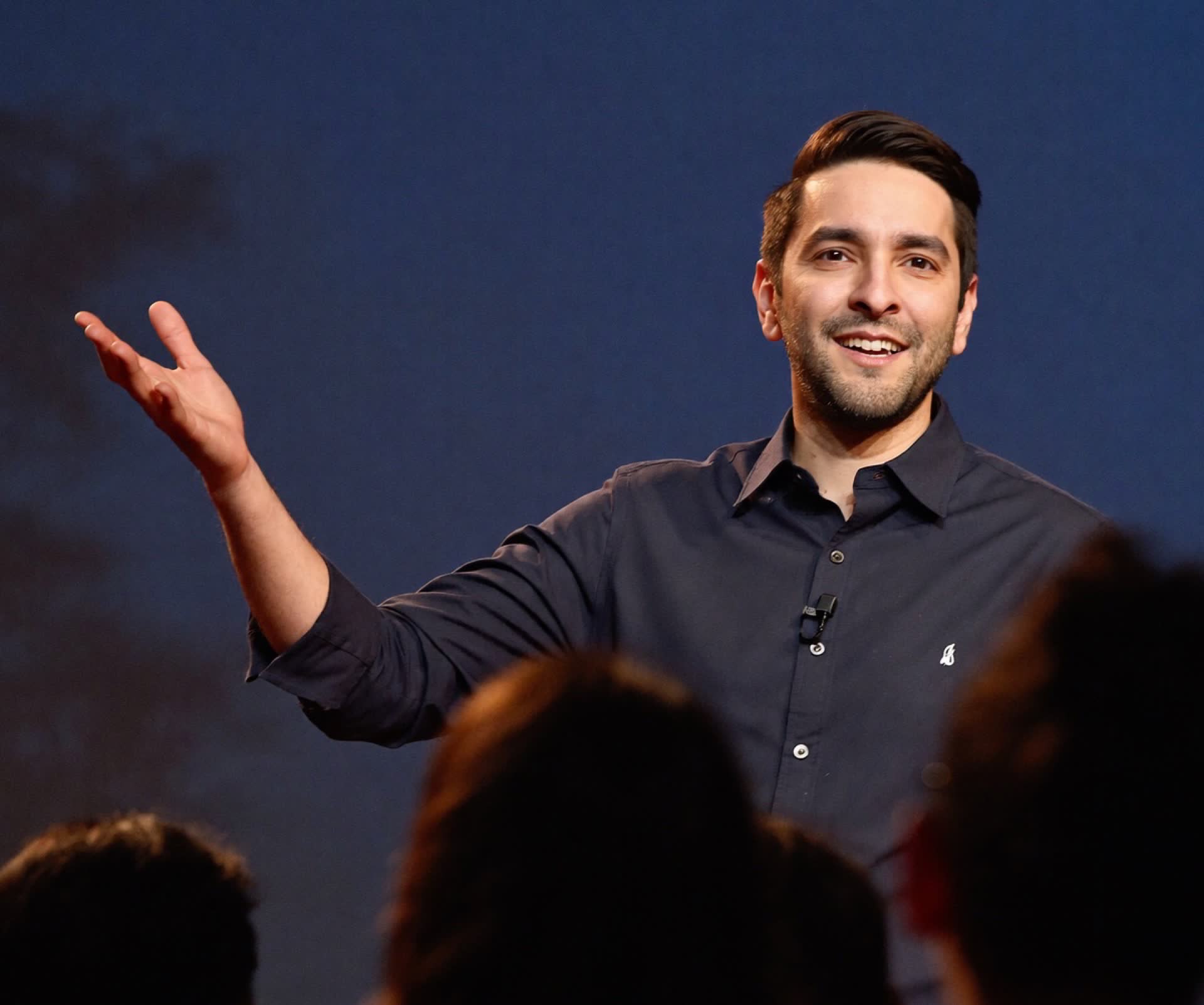
Haroon Yasin dropped out of engineering in Canada, came home, and opened a daycare in a kachi abadi with his textbook money. Twelve years later, Taleemabad reaches 1.5 million learners through an app, a PTV broadcast, and a growing network of low-fee private schools.
Failing grade six and the root of an obsession
The episode opens with Muzamil introducing Haroon Yasin as someone he had been trying to get on the show for over a year. The conversation moves quickly into Haroon’s early life — born in Saudi Arabia, raised in a middle-class Islamabad family, enrolled in Beaconhouse because his father, an accountant earning 80,000 rupees a month, spent thirty to thirty-five thousand of it on school fees for five children.
The early years were fine. Then grade six arrived, and Haroon failed both English and maths. He describes the moment with unusual clarity: “I think just generally I think I needed a lot more stimulus. When I loved the class I absolutely loved it.” The shift from primary school, where teachers made some effort to engage, to middle school, where algebra was delivered as a set of procedures with no explanation of why, killed his interest entirely. He remembers pulling the arm hair of the student next to him in class just to stay awake.
By A levels, he had taken so many subjects trying to find something he cared about that his result sheet, as he puts it, “was a fruit chart that nobody could decipher” — one distinction buried in a mess of grades. His parents pushed him toward engineering. He Googled which type of engineering earned the most money, found petrochemical engineering at the top, and got admitted to the University of Waterloo. His father sold whatever savings he had to send him.
Dropping out in a Canadian winter
The pivot that defines everything that follows happened during the first winter break at Waterloo. Most students flew home for Christmas. Haroon did not have the money. He stayed alone in the dorms for five days. “On the fifth day I remember I was like, you know what? I don’t think this is working.” He went to the registrar’s office, left post-it notes on his friends’ doors returning borrowed calculators, and boarded the next flight home.
His father was standing on the front step when he arrived, expecting a short holiday visit. Haroon told him it was a long leave. The conversation does not dwell on the fallout. What it dwells on is what happened next: Haroon, nineteen years old, with time on his hands and a kachi abadi visible from his neighborhood, walked in and met some of the children there. Some had been to school and dropped out. Some were working at traffic signals. He had 21,000 rupees from selling his engineering textbooks at an old bookshop. He used the money to rent two rooms in the settlement, painted them, put up lights, and told the community it was a safe space — a daycare, not a school.
On the first day, November 2011, a hundred people showed up with their children asking about curriculum, syllabus, and teachers. “I was like, school nahi hai, school nahi hai. Main nahi padhaana chahta.” They told him: you’re here, try to teach them. He did. And in those children he saw his own reflection — kids who would walk out of the classroom the moment the lesson stopped being interesting. “If I didn’t deliver like a killer killer killer session for them, if I didn’t turn fractions into the most wonderful thing in the world, they would simply lose attention.”
Georgetown, a Harvard professor, and the North Star
Haroon ran the school for two years before being accepted into Georgetown University in Qatar, later spending time at the DC campus. The program was the Bachelor’s in Foreign Service — economics and political science. There he met Dr. Thomas Cassidy, a director at Harvard’s Graduate School of Education, who was researching what genuinely separated elite schooling from underserved environments and had worked with multiple Pakistani governments going back to Zia and Bhutto.
Haroon describes sitting in a class full of children of congressmen and future presidential candidates while thinking about his school back home, which had closed because there was nobody left to run it. He finished the four-year program in three years and landed back in Pakistan in 2015. “As soon as I landed, that was it. Taleemabad was born at that time.”
Two years on a motorcycle across rural Pakistan
Before any product existed, Haroon and a colleague spent the better part of two years travelling rural Pakistan — first by rent-a-car, then by motorcycle, then by renting local bikes for sixty rupees in each town and riding into surrounding villages. They taught in schools every morning from seven, spent full days with children, and slept where they could, sometimes deliberately removing the hotel budget from their plans entirely.
Muzamil asks what that experience was actually like — whether they were welcomed, how they found places to stay. Haroon is direct: “I think there is a lot of male privilege.” Two men arriving dusty and clearly not wealthy were received differently than a formal organization would be. He pushes back on a common assumption: “Ek aam aadmi, koi ghareeb aadmi ko taleem ki fikr nahi hai — this is an absolute myth. They have been cheated out of what they should be gaining in the system.”
The fieldwork produced two core insights. First, education only lands when it is contextualized. Teaching division to children near a drainage canal, he used the canal itself — water backing up, flow rates, simultaneous linear equations — and the concept clicked. Second, technology was not a luxury. PTV, he discovered, still reaches 54 million viewers compared to Geo’s 8 million. “The majority of Pakistan watches PTV.” If the goal was to spread great teaching, broadcast was the most powerful conduit available.
Building the content: 4,000 pieces destroyed
Back in Islamabad between field trips, Haroon and his team built their first iteration: a puppet show, inspired by Sesame Street’s documented success. They would take tablets into schools and villages, sit children in front of the content alongside Tom and Jerry, and measure two things — whether the child watched to the end, and whether the child could apply the concept afterward without a teacher present.
The balance was brutal. A child who loved a science video about photosynthesis wrote the answer on an exam in Punjabi dialect — describing how plants eat sunlight the way a car eats petrol — and no examiner would accept it. Engagement without transferable learning was useless. Learning without engagement meant the child left the room. “We trashed about four thousand videos, content pieces, in those two years — built them and destroyed them.” Eventually they found the format where a child would watch to the end, sometimes rewatch independently, and then pass the assessments. That became the foundation of the app.
The app — also called Taleemabad, available on Android and lightly on iOS — covers K to grade five, ages three to twelve, across maths, science, English, Urdu, Islamiyat, social studies, and general knowledge. Each topic has a cartoon, followed by gamified assessments. Muzamil asks Haroon to show it live; the Urdu imla feature — floating letters that make sounds when held, guided by a character called Chacha Batoon — demonstrates the design philosophy: Urdu taught with the same visual richness that English fonts always had in Microsoft Word. The app has been downloaded 1.5 million times and has around 160,000 monthly active users.
PTV and the broadcast deal
Simultaneously, Taleemabad pushed PTV hard to run the content. When Fawzia Shaukat Khan became information minister, Haroon got a meeting. His pitch: “Agar aapne ek poori qaum ko mohabbat karani hai parhne se, this is one of the ways to do it.” PTV authorized a slot — 7 AM and 5 PM on PTV Home, the children’s prime time. The broadcast fed the app and the app fed the broadcast; parents who missed an episode called in, and the team used those calls to understand viewing patterns.
When the government ran its teleschool experiment during COVID, a World Bank committee reviewed content from all Pakistani ed-tech providers. Taleemabad ranked very highly. The result: four dedicated government channels are being prepared to run round-the-clock curricular programming by grade, free to air on a hundred-rupee antenna. Taleemabad is one of four content providers selected alongside Knowledge Platform, Sabak, and Near Peer.
The school aggregator: reimagining the franchise
By 2020, Haroon and his team confronted a ceiling. The app and broadcast could spark interest, but they could not change a child’s trajectory on their own. “Hum tab tak nahi crack kar sakte unless somebody gets rich.” The root problem was the low-fee private school market: 43% of Pakistan’s children attend these schools, which are entirely unregulated, underfunded, and invisible to parents. School owners were making no money. Teachers were paid less than domestic workers. “It’s a broken system.”
Taleemabad’s response was to build an aggregator — described by Haroon as “like Careem, but for schools.” A school owner joins the network, gets teacher training delivered through the app with quizzes and a leaderboard ranking teachers at school, district, and national level, receives standardized lesson scripts down to the minute and the dialogue, and gets paired with parents already using the broadcast and app in their area. Parents get a quality signal they can trust. Teachers get certification they frame and hang in their drawing rooms. School owners see a thirty to forty percent increase in enrollment.
After one year, 144 schools are active monthly subscribers, running the platform for six and a half hours a day in the classroom. In those schools, 84% of children are meeting grade-level benchmarks. The district average in the same areas is 35%.
Muzamil pushes on the branding question — can Taleemabad become the Cambridge or Beaconhouse of this segment, a brand that pulls parents in the way O/A levels does? Haroon’s answer is measured: “I think for this segment of the market it has less to do with the visuals of it. More of like the brand lives through its actions.” The tiers being built are determined by learning outcomes data, not by playground size or building ownership. A gold, silver, and bronze standard based on implementation of learning benchmarks, not aesthetics.
Funding, BYJU’S, and the right kind of capital
Taleemabad has raised and spent down approximately $2.25 million to date, mostly in grants from foundations and impact funds. Muzamil asks directly why Haroon has not gone to a VC. The answer is structural: “Pakistan mein aapko pata hai ke jo bachche shuru karte hain, 83% jo hain woh us jamaat par pahunchne se pehle hi they have gone from the system.” The market that VC capital needs — a large, paying, retained user base — does not yet exist at the bottom of the pyramid. “Yeh segment of the market mein billion dollar companies nahi banengi. Right now.”
Haroon points to BYJU’S as a cautionary tale — lawsuits, parent blackmail, physical tuition centers opened by a company that started as an app, all driven by the pressure to monetize too fast. He also points to a company in India that spent nine years building school ed-tech for primary schools, ignored by VCs while test-prep giants absorbed all the capital, and is now India’s latest ed-tech unicorn. “Some of the best companies have been built when they’ve achieved sustainability on their own without VC financing.”
The goal is not to avoid VC capital forever. “At 1,000 schools, we have the liberty to say, this injection is needed to throw this out of the ballpark.” But the condition is that the thousand schools do not collapse if the injection does not come. The model has to be self-sustaining first.
Pakistan 2050: a cataclysmic reset
Later in the discussion, Muzamil asks Haroon for his honest view of Pakistan in 2050 — best case and practical mid-case. The best case is vivid: Pakistan becomes an exporter of education, not wheat or cotton. Its teachers and graduates are recognized globally. “Mareekh par jo pehla banda gaya hai woh bhi Pakistani hai.”
The mid-case is more unsettling and, Muzamil says, the most insightful answer he has heard on the show. Haroon’s view is that Pakistan will have largely solved its out-of-school problem by 2050 and improved learning outcomes significantly. But before that, a massive youth bulge — already deeply disillusioned by what the system has handed them — will reach a breaking point. “I think doh hazaar pachaas se pehle is aabadi ne ek massive qisam ka outbreak kar liya hoga.” Around 2035 or 2040, he predicts a cataclysmic reset driven by young people who understand they have been kept in the back seat for too long and for whom moving to the front seat will be a matter of survival, not a choice.
By the end of the conversation, Muzamil frames what he has heard as a model that sits between conventional ed-tech and conventional schooling — hybrid, physical and digital at once, built around the marriage of broadcast reach, app engagement, and on-the-ground school transformation. “I really want to see the faces of people when you’re gonna be a billion dollar company. When the Haroon who’s a snowflake tree hugger trying to save the world without thinking about money becomes a millionaire.”


Never miss a conversation.
New episodes and the thinking behind them, straight to your inbox. No hype, no spam, no pitch.