Thought Behind Things
Why freelancing alone will never make you rich
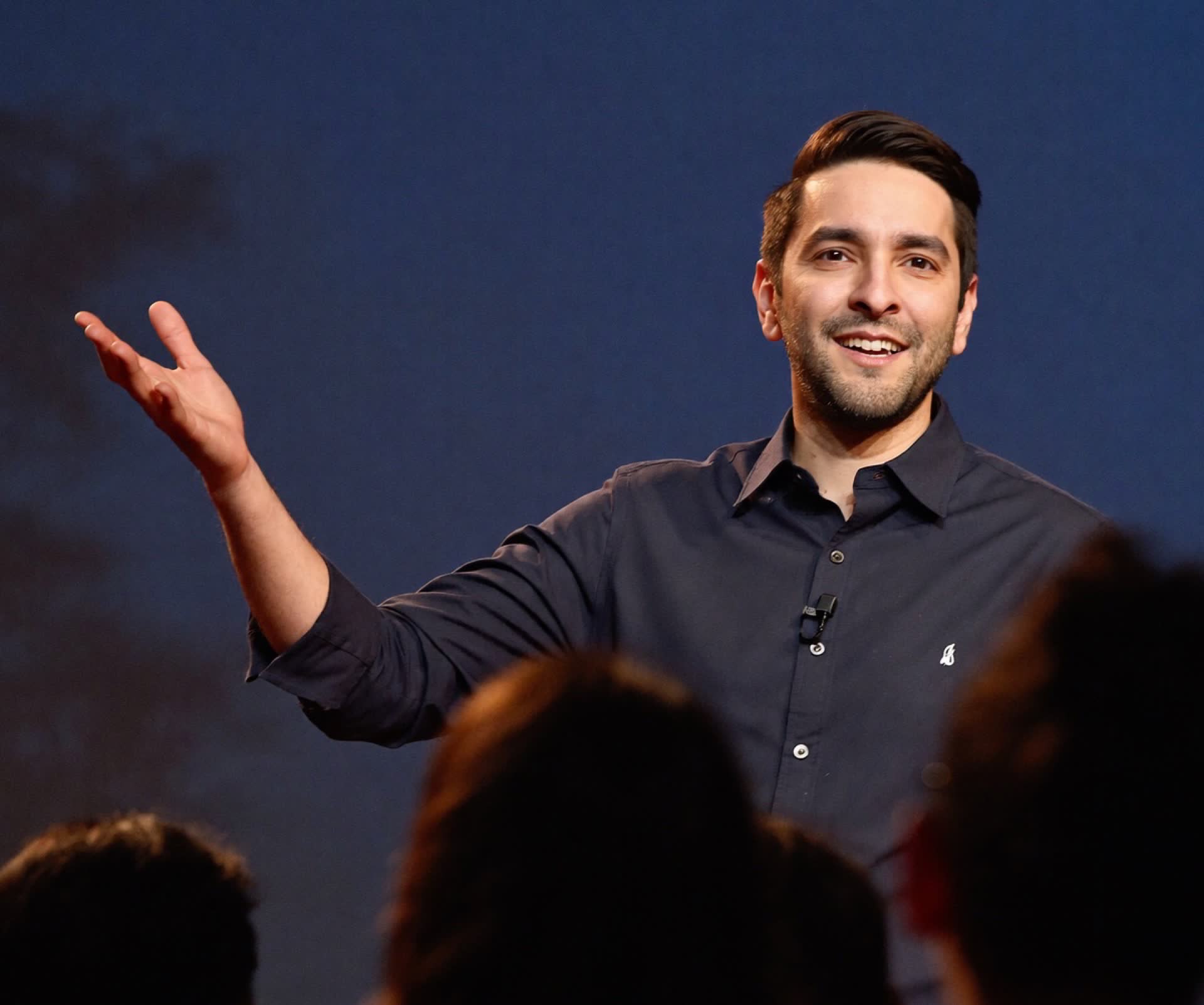
Saddam Hasan built a 150-person Amazon creative agency from a side hustle while working a corporate job at DHL. He breaks down why Pakistan's freelancing boom created more damage than wealth, and what it actually takes to go from zero to a million-dollar agency.
From Peshawar to a $10 million Amazon agency
The episode opens with Muzamil framing the conversation as a deliberate departure from the Amazon content Pakistan has been saturated with. “Amazon, Amazon, Amazon wala jo problem hum sun sun ke dimag pak chuka hai,” he says, before explaining why this guest is different: not another private-label seller, but someone who found an innovative niche inside the ecosystem and built a company around it.
Saddam Hasan grew up in Peshawar, attended Army Public School, and moved through five or six schools before landing in Lahore for his O levels. The move to Lahore was formative. “Lahore was a game changer for me,” Saddam says, “because Peshawar mein it’s like a very reserved kind of society — Lahori’s are really confident.” He skipped A levels by presenting his AS results as twelve years of completed schooling, applied to Canada at seventeen, and ended up in Edmonton, Alberta — the Texas of Canada, oil-rich and full of opportunity — after being rejected by the Ivy League schools he had set his sights on.
He studied economics and accounting, completed a double major, then pursued his CPA while working at DHL. By the time he finished the qualification, he was managing a portfolio of roughly $200 million across eight to nine supply chain sites for DHL’s warehousing division — a division that counts Walmart and Amazon among its clients. It was a serious corporate career. And then, in 2016, he walked into a random Amazon meetup.
The retail arbitrage experiment that started everything
The meetup was about retail arbitrage — buying discounted products from physical stores and reselling them on Amazon. Saddam, analytical by training, decided to test it with ten units of a children’s bicycle camera he found at Toys R Us for $30, listed at $150 on Amazon. They sold out within a week. He went back for more, found the clearance sale was over, and concluded: this works, but it requires constant sweat equity.
What followed was a deeper dive into the community. Saddam started hosting meetups across five cities, not to teach but to connect with people who knew more than he did. By early 2017 he launched his own private label brand — magnetic spice tins in the kitchen category. Private label, he explains to Muzamil, is simply manufacturing a product and putting your own label on it, though the successful version involves customizing the product itself to solve a specific problem rather than just slapping a brand on a commodity.
Within a year, people in his community started asking if he had a good designer. He and his partner began connecting them with their own contractor, then realized the demand was real enough to reverse-engineer into a proper service. That was the origin of AMZ One Step — an agency focused on Amazon creatives: product photography, video, and copywriting. “Jis par aap decision banate ho,” Saddam explains, “all those assets are what we produce and that’s what we primarily specialize in.”
How a creative agency becomes a 150-person operation
By 2019, Saddam sold his private label brand through Empire Flippers and reinvested the proceeds into the agency. He was still working at DHL at the time, running eighty to a hundred hours a week across both. The agency grew, and in September 2022 he acquired Kenji ROI — the company he had originally modelled AMZ One Step after, blog post by blog post, podcast by podcast, conference by conference. When they finally sat down to talk, they discovered AMZ One Step was four times larger than Kenji. The acquisition went through, the teams unified, and now both brands operate under one structure.
The agency today sits at around 150 people spread across Canada, the US, the UK, China, Bali, and Pakistan. The Pakistan office in Karachi handles the largest share of technical work. “The skill set that’s available in Pakistan, especially our office in Karachi, it’s amazing,” Saddam says. “I get wowed.” Revenue is in the one-to-ten million dollar range, with a stated goal of reaching $100 million before an exit.
The pricing story is instructive. When AMZ One Step was top-rated on Fiverr, they sold a package for $195. The same package sells for $3,000 today. The difference is not the deliverable — it is the brand equity and the certainty of outcome. “What you’re pricing is the insurance policy,” Muzamil observes, “that yaar yeh is time ke andar mujhe jo cheez deliver karenge woh mujhe pasand aayegi because they’ve done it so many times that they know what they’re doing.” Saddam agrees entirely: “It’s a solution. At the end of the day the client doesn’t care about step A, B, C. All they’re worried about is mujhe result kaise milega.”
The AI question and what it means for creative work
Muzamil raises Midjourney and the broader wave of generative AI tools. Saddam does not dismiss the threat. He sees it as the next layer of automation, comparable to what rule-based bidding already does for Amazon advertising — managing ten thousand product listings in ways that were previously impossible. “I feel like AI is much more closer in terms of execution within these industries than people think,” he says. “Literally within the next one or two years, there will be a lot of AI-based software that would pop up.”
His estimate: services that currently cost $2,000 to $2,500 will be achievable for $100 to $200. But his conclusion is not that agencies die — it is that the value proposition shifts entirely toward expertise and outcome. A Fiverr designer can execute a task. What AMZ One Step sells is a team of “creative leads who are like shopaholic who obsess over Amazon data” — people who read reviews, identify burning customer questions, and build image concepts around what a shopper needs to see before they buy. That layer of strategic thinking is what AI does not yet replace.
What actually went wrong with Pakistan’s Amazon boom
Muzamil asks the question directly: what happened? Saddam’s answer is structural, not moral. Pakistan’s education system produces professionals who spend seventeen years in school and still cannot earn enough to break even on the investment. “Aap mujhe yeh keh rahe hain ke twenty-five years mein, after giving it my time and effort and money, I am still not able to break even.” That frustration created a population desperate for shortcuts.
Into that gap came people who had made money in Amazon or crypto, and who — as Saddam puts it — “once you are done making money from it, you come and preach.” They sold three-month crash courses with screenshots of the one-in-a-hundred success story. The result was a flood of unprepared people into a market that requires genuine skill. “Ek banda hai freelancer, woh bees different services quote karega — jo ke hum as an agency with 150 people bhi nahin karte.” The mass production of unqualified operators destroyed Pakistan’s reputation in global Amazon communities, to the point where Saddam says he has to actively defend his Pakistani team to clients who hear the word and hesitate.
The parallel he draws is instructive: “Made in China was considered the most horrible product in the world to buy” in the early 2000s. Today the iPhone is made in China. India’s tech talent was mocked in American media for years. The damage is real but not permanent — the first step is identifying the problem honestly.
The rule of thirds and the path from zero to a million
Later in the discussion, Saddam lays out a framework for building an agency from scratch. It has four sequential stages: service development, marketing, sales, and operations. Most young agencies, he says, cannot answer the question “what do you do and why you?” — and until they can, nothing else matters.
On the financial structure, he offers what he calls the rule of thirds. One third of revenue goes to cost of service. One third to marketing and overhead — “without marketing you won’t be able to build a brand.” One third is profit. At a million dollars in revenue, that translates to roughly $300,000 in profit, or $25,000 a month. “Is it complicated? Yes, if you don’t know or if you don’t have the right guidance. Is it complicated if you have that? I don’t think so.”
On managing people across six countries, Saddam credits his CPA training in strategic governance for a key insight: policies shape behaviors. Rather than hiring managers who lead with threats, he built a culture of incentives — bonuses, commissions, public celebration of top performers. “Ek family ko dekho na — agar maa baap jo hai woh problem child ko attention nahin dega aur baar baar taarif karega achhe bachon ki, to problem child khud kahega yaar this is not working.” Bad performers self-correct when they see others getting recognition. He never calls them out publicly.
The Reality Cheque community and the Discord question
By the end of the conversation, Saddam describes a new project: a community called Reality Cheque, aimed at entrepreneurs and agency owners who are already generating revenue and want to grow further. He is explicit that he does not want to create competitors in his own creative space — the community is for agencies in other verticals who can learn from his blueprint and teach him their optimizations in return.
Muzamil pushes back on the community model, noting that earlier Pakistani communities collapsed because they opened to everyone without a barrier to entry, creating noise rather than value. Saddam agrees and says his structure will have layers: free content for enthusiasts, a paid course for those with existing businesses, and collaborators — experts in funding, communications, and other disciplines — brought in as self-sustaining entities rather than employees.
The two spend considerable time debating platforms. Saddam is leaning toward Facebook because Pakistani users are habituated to it. Muzamil argues for Discord, and by the end of the exchange has Saddam “70% convinced.” The core argument: Discord creates a natural barrier to entry that filters out passive users, eliminates competition from political noise and family updates, and allows for granular paid-membership automation through Stripe integrations. “Notification jaayegi to that person knows ke yaar main is app ko khoolunga for this particular purpose.”
Pakistan in 2050
Muzamil closes every episode with the same question: how do you see Pakistan in 2050? Saddam’s answer is cautiously optimistic. He sees an internal revolution coming — not political, but perceptual. “People will start realizing that we’re actually behind and jo log mulk ko loot rahe the woh loot ke chale gaye hain.” What gives him hope is Pakistan’s Gen Z. “They’re less about drama, fun, entertainment. They’re more about what we’re passionate about.” His advice to young Pakistanis is to stop chasing prescribed career paths and instead ask a simpler question: am I analytical, am I creative, am I a problem solver? Find the industry that matches the answer, and go deep.
The rupee’s collapse, he adds, is not only a crisis. “Pakistan is becoming incredibly cheap as a service. This is the best time to go out there and sell Pakistani service.” His own company shut down operations in the Philippines and moved more work to Pakistan precisely because of the exchange rate. The same structural disadvantage that is devastating household purchasing power is, for anyone selling services to dollar-paying clients, an extraordinary competitive advantage — if they have the skills and the communication to use it.


Never miss a conversation.
New episodes and the thinking behind them, straight to your inbox. No hype, no spam, no pitch.