Thought Behind Things
Pakistan's first premium pet food brand, made in Karachi
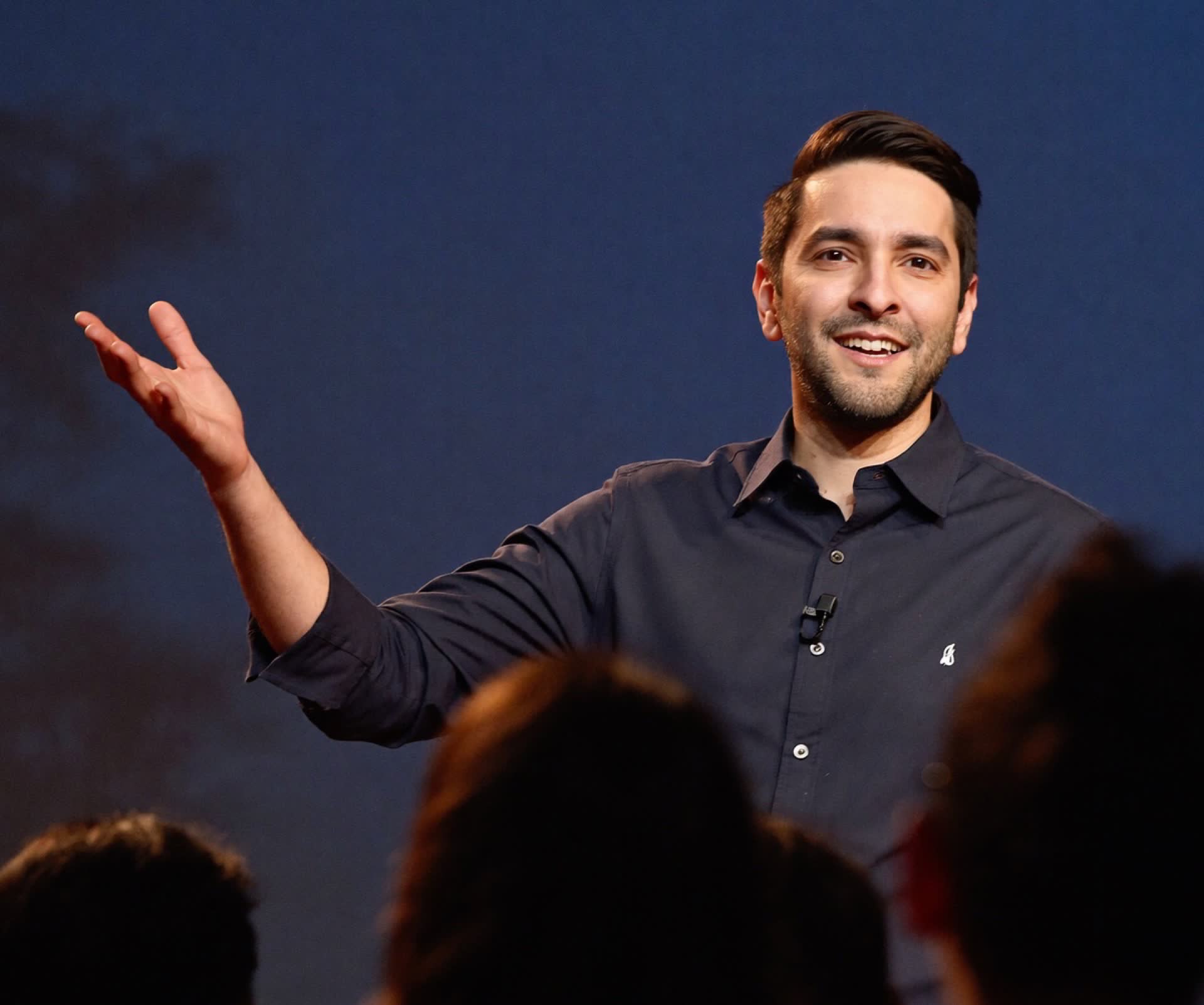
Rafae Dossal launched Waggles in January 2020 from a home kitchen, building Pakistan's first premium natural pet food brand. With five crore rupees in revenue, a donation platform for animal shelters, and exports to Dubai launching next month, he joins TV personality Anoushey Ashraf to talk about import substitution, animal welfare, and what it takes to manufacture locally.
“Every FMCG category is made here — except pet food”
The episode opens with Muzamil welcoming two guests at once: Rafae Dossal, co-founder and CEO of Waggles Pet Foods, and television personality Anoushey Ashraf, who joined as a collaborator and vocal advocate for the brand. Muzamil sets the tone immediately, noting that he had been “chilla raha hoon” — shouting — for five or six years on the podcast that Pakistan cannot even manufacture pet food. The arrival of Rafae, he says, feels like a vindication.
Rafae’s founding logic is straightforward. When he was still working on the agency side of digital advertising — managing Unilever’s digital account, selling biscuits, detergent, and milk — he noticed a structural gap. “Pakistan mein taqreeban har tarah ki FMCG ban rahi hai, except for pet food,” he explains. The entire category was import-dependent, and that dependence struck him as both a problem and an opportunity. He left his job, enrolled in a couple of animal nutrition courses, and in January 2020 launched Waggles from a home kitchen, producing two-kilogram batches at a time.
Two months later, Covid hit.
A pre-Covid brand that survived by going digital first
The timing could have killed the business. Instead, Rafae says, being a digital-first brand gave Waggles an advantage that most traditional FMCG players did not have. The company moved early onto e-commerce for pet food, building a direct-to-consumer channel at a moment when physical retail was shutting down. The decision to launch in January 2020 — before the pandemic — meant the brand had at least a small operational base to build from when the lockdowns arrived.
The product itself was also a deliberate departure from what was already on shelves. Rafae chose wet food over dry, and the reasoning is grounded in animal biology. “Cats for example are notoriously difficult water drinkers,” he tells Muzamil. “So in this situation when you have a source of healthy hydration in their food it makes a lot of difference.” Waggles recipes are broth-based, using real bone broth, and the entire range is grain-free — a decision driven both by pet health science and by global export trends the founders wanted to track from day one.
The brand started with dog food, moved into puppy food for smaller dogs, and launched cat food in 2022.
What’s actually in the can — and what isn’t
One of the clearest differentiators Rafae describes is ingredient transparency. The pet food industry globally, he notes, is among the least regulated, and ingredient labels on imported products are often incomprehensible to the average buyer. Waggles is built around the opposite principle: five to seven ingredients, no artificial flavors, no artificial colors, no preservatives.
“It’s not just a verbal thing that’s written on the packet,” Rafae says. “Actually stands true to the claim.”
Anoushey, who came to the brand independently before any collaboration, describes opening a can of Waggles and watching her animals respond. “Five minutes later she came back and she had the entire thing and for me that was a huge win.” She had been feeding her animals Friskies — a Nestlé portfolio brand — and found the experience inconsistent: flavors she liked would disappear from shelves for weeks, sourcing shifted between Thailand and France without notice, and with eleven animals in the house, the cost was unsustainable.
The canning process itself, Rafae clarifies, is not a preservation shortcut. Food canning is a World War-era method of preserving food without additives — the heat-sealing process does the work. No preservatives are needed, and the shelf life is genuine.
The one imported input is the aluminum can. There is no local source that meets food-grade standards. Rafae is working on a supply-chain fix: instead of importing pre-formed cans — which means shipping mostly air in a 40-foot container — the plan is to import raw aluminum sheet and form the cans locally, utilizing the full freight weight of the container.
The unit economics of competing with Nestlé
Muzamil pushes on the business logic directly. Friskies, a Nestlé brand, was retailing at around Rs. 345 in Pakistan. Waggles was retailing at approximately Rs. 300. The price gap is narrow — but the structural dynamics are very different.
Imported brands, Rafae explains, face 100 percent import duty by the time they reach the shelf. Their Pakistan volumes are ad hoc; there is no fixed consumption pattern, and importers and retailers switch brands based on whoever is offering the highest margin that quarter. “Whichever brand that they get higher margins on is the brand that they pick from the market and they retail over here.” The result is that a consumer who finds a flavor their cat likes may find it gone the next quarter, replaced by something else entirely.
A locally manufactured product has none of those supply-chain disruptions. And as volume grows, the unit economics improve. The path to making those economics work at scale, Rafae says, runs through exports. “By the time aap apni economics ki jab baat karein wo straighten out hoti hai considering ki hum apni export kitni jaldi start karte hain.”
Exports to Dubai — through waggles.ae — are launching the following month. Africa and the broader Middle East are in the plan for the next fiscal year.
Five crore rupees, 33 cities, and a free-sample drive
Muzamil asks about revenue. Rafae is direct: Waggles clocked approximately five crore rupees in its most recent fiscal year. “Coming from a home based startup kitchen to a brand jo hai itni sale kar raha hai ek saal ke andar is a phenomenal point.”
Thirty to forty-five percent of that revenue comes from e-commerce. The brand runs a subscription model on its direct-to-consumer channel, which keeps average order value high and repeat purchase rates predictable. Distribution has reached 33 cities across Pakistan — orders coming in from Layyah, Multan, and Rahim Yar Khan, with transaction values of twelve to fifteen thousand rupees. “Yeh bada trust show kar raha hai woh us cheez ke andar.”
The import ban on 38 luxury and non-essential items — which included pet food — accelerated everything. Waggles ran a free-sample campaign on its website: fill in a few fields, request a sample anywhere in Pakistan. In five days, 1,500 sample requests came in. “Consumer confidence Pakistan ke andar jo hai na of trying something new and wanting to shift on to it has increased.”
Anoushey frames the same shift from a consumer perspective. She had already switched to Waggles before the ban, as part of a personal experiment to buy Pakistani across every grocery category. “I did know that then it becomes somewhat my moral and ethical duty to just support local businesses if they’re doing a good job.”
Animal welfare, street dogs, and the donation platform
Anoushey’s connection to animals runs deeper than brand endorsement. She grew up in a household where injured street animals were brought inside — birds, rabbits, a rooster she wrote a song for — and her mother’s attitude toward animals shaped her own. “It makes you kinder, it makes you responsible, it makes you understand the living beings besides humans who think they’re superior to everybody else.”
She describes beginning to feed a stray black dog on her street with a can of Meo — the cheapest option she could find at the time. The dog began sitting at her doorstep, following her car to the end of the street, wagging her tail on return. “There is an entire personality to her that happened.” The dog disappeared after two or three years, likely having died. That loss, Anoushey says, confirmed for her that street animals deserve the same care as pets.
She is pointed about the contradiction in how Pakistan handles stray populations: “They are like, oh no, we don’t spay and neuter them because it’s un-Islamic but we can obviously poison them with food and make them suffer for three days.” She cites a case in Pune, India, where a sustained program of vaccination, spaying, and neutering brought the stray dog and cat population down by thirty percent over ten years — without killing a single animal.
Rafae connects this directly to Waggles. The brand built what he describes as the first tailor-made pet food donation platform of its kind: a system where consumers can log on, select an animal shelter of their choice — in Karachi, Lahore, Islamabad, Peshawar — and direct pet food supplies to it. “As a manufacturer hum beach mein do teen donation drives run karin but woh sustainable nahi hai.” The platform, built in collaboration with Anoushey, is live and ongoing.
Building an industry, not just a brand
Later in the discussion, Muzamil raises the challenge of exporting food products from Pakistan into competitive international markets. He notes a structural problem: Pakistan has no disease-free zone certification for meat, which means that even if the product is excellent, international buyers can legitimately question the supply chain behind it. Rafae acknowledges this and points to a workaround: Waggles sources its chicken directly from KNN in Lahore — a supplier whose raw material is already FDA-approved for export. “Quality is so auditing and wahan par phir aapki wo ho sakti hai.”
The export ambition is not just commercial. Rafae frames it as the only way to make local manufacturing sustainable. “Agar aap export nahi kar rahe hain na to aap, it’s not sustainable. Aur aapne net benefit add nahi kiya us poore ecosystem ke andar.” Importing raw materials in dollars and selling only domestically in rupees is a losing equation. Exporting closes the loop.
To build the industry collectively, Rafae has taken on a second role. He is forming a pet food manufacturers’ association in Pakistan, bringing together four or five other players who have entered the market since the import ban. Tile manufacturers have an association. Footwear manufacturers have one. Pet food manufacturers, he says, have no collective voice. He is now the chairman of that association.
By the end of the conversation, Muzamil asks both guests where they see Pakistan in 2050. Rafae is an optimist: “2050 ke Pakistan ke andar I would want ki ek large number of contribution towards global pet food is coming from Pakistan.” Anoushey, characteristically, declines the long view. “I kind of just live in the moment and I try and do the right thing today.” She does not know where the country will be. She knows what she wants to leave behind.
Muzamil wraps the hour by telling Rafae he is most excited to watch where the export story lands — and that the conversation itself felt like the kind of thing he had been waiting years to have.


Never miss a conversation.
New episodes and the thinking behind them, straight to your inbox. No hype, no spam, no pitch.