Thought Behind Things
The man who built Pakistan's tourism startup through COVID
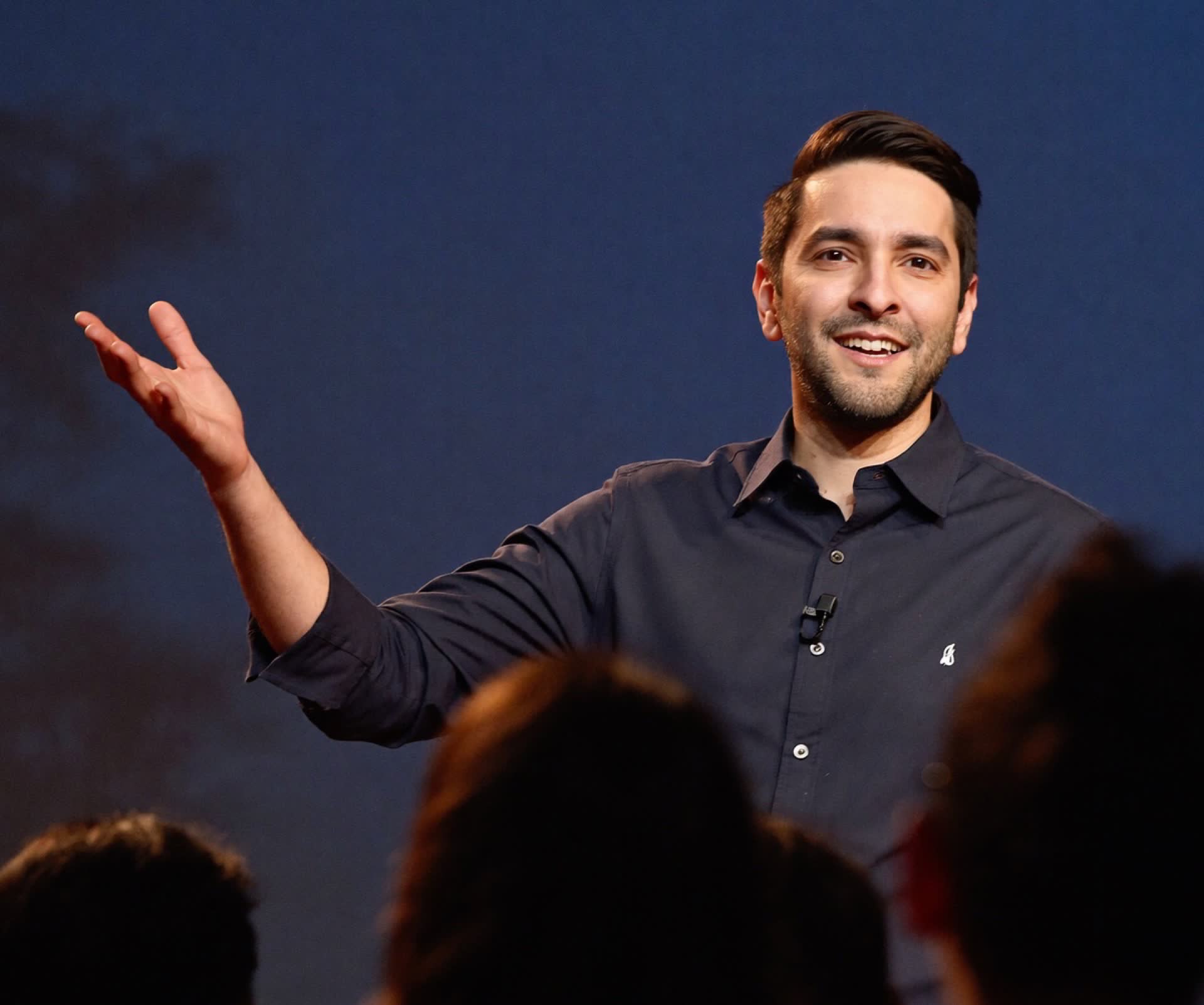
Muhammad Komail Abbas built FindMyAdventure from a Facebook status asking if anyone could build a website, survived COVID with a skeleton team, and eventually merged with GoZayaan. He talks about co-founder equity, the limits of tech-first thinking in tourism, and what Jack Ma told him about success.
From Multan to Karachi to Lahore: a life spent moving
The episode opens with Muzamil noting that he has been watching Muhammad Komail Abbas’s startup for roughly seven years, and that the two had even collaborated on a campaign that took Komail’s family to Nathia Gali. It is a warm opening that quickly gives way to something more substantive: the question of what kind of background produces a travel-tech founder in Pakistan.
Komail was born in Multan, spent early childhood in Islamabad, and then moved to Karachi when his father retired from the army. He attended DA Public School through A-levels, then landed at LUMS — not in engineering, which he had applied for, but in economics, which he drifted into partly because a waiting-list acceptance letter arrived on the same day as his GIK entrance test. “Ghalti se pahuncha,” he says — he arrived there by accident.
The LUMS years matter less for the coursework than for the environment. Komail is candid that he was not a serious economics student. He picked instructors who gave good grades and held evening classes with loose attendance. What changed him was the Adventure Society, which he eventually led, and the hostel culture that put him in the same rooms as people from parts of Pakistan he had never heard of.
Why an economics degree in Pakistan mostly produces salespeople
Muzamil presses Komail on the practical value of an economics degree, and the answer is more nuanced than a simple dismissal. Komail’s argument is that the degree itself is not the problem — the problem is the type of person who ends up in it. In Pakistan, he says, nobody grows up thinking “I want to be an economist” the way someone grows up thinking they want to be a computer scientist. Economics at LUMS in his cohort was, by his own description, the most lenient of the social sciences: no mandatory attendance, soft competition, a refuge for students who did not want to read political science.
The few batchmates who did have a genuine passion for the subject went on to PhDs at Kansas and Rochester, returned as gold medalists, and ended up advising government. Everyone else, Komail says, eventually wandered into private sector roles that had nothing to do with economic analysis. “Private sector was not really interested in economists. They’re interested in accounts and finance.” The degree functioned as a LUMS pedigree delivery mechanism, not an economics education.
One year at Standard Chartered, a CEO award, and a Facebook status
After graduating, Komail joined Standard Chartered Bank. He is careful not to dismiss the experience. His first assignment was a State Bank dispute involving a four-billion-rupee deposit that had been locked for eight to ten years. His manager, Musaddiq, told him to resolve it in eight months and do nothing else. They saved 3.2 billion rupees. Six months into the job, Komail received a CEO award.
The startup idea was not born from frustration with banking. Komail is explicit about this: “I would say that total BS is the story where someone says I was very frustrated at my job and one day I got an idea.” He was genuinely enjoying the work. What happened instead was a Sunday cricket game, a car ride home, and a co-founder who called to say he had business development skills and wanted to pair them with Komail’s operational instincts. A friend posted on Facebook asking if anyone could build a website. The company was originally going to be called Khoj. The name FindMyAdventure came from a joke — someone suggested “find your adventure” and Komail said, why “your” and not “my”? They launched it.
Six co-founders, three relatives, and the equity problem nobody solved in time
FindMyAdventure launched in 2016 with six co-founders, three of whom were also relatives. Muzamil raises an eyebrow at this, and Komail does not pretend it was smooth. The saving grace, he says, was that all six had left real jobs or career paths to join — one had been pursuing the CSS exam, one was at HBL, one at PNG, one at Ten Pearls. The seriousness was genuine, and roles were defined from day one: operations, sales, marketing, finance, tech.
What they did not define was a vesting schedule. The first co-founder to leave, Ali, the tech lead, was honest about it — his passion was startups in general, not travel specifically. By 2018, the team had shrunk. By just before COVID, Komail’s last remaining co-founder told him over a casual conversation that he had a flight to Canada the next day for a JD-MBA. “My SNAN took the last flight to Canada,” Komail says, echoing what his mentor Junaid later told him.
The vesting schedule that eventually got built came from a mediator, Saad Latif, one of the first Global Acumen Fellows from Pakistan, who had just returned from Tanzania. “Until all five of us sat down and said this is fine and we will follow this religiously,” Komail says, the equity structure remained a source of slow-burning tension.
The Alibaba fellowship in China and what Jack Ma actually said
In April 2018, Komail was selected for a fourteen-day fellowship in China run by Alibaba and Jack Ma, open to forty entrepreneurs from across Asia through their respective governments. Pakistan sent five or six people across travel, retail, and AI-ML verticals. The program was fully funded except for airfare.
Komail describes it as more intellectually intense than his entire four years at LUMS. Every morning, Alibaba’s founding team and senior global leaders came in to explain how the company was built from the ground up. The visit to Yiwu — one of China’s largest port cities — left a particular impression. He describes the expo center there as something that fifty or sixty Gaddafi Stadiums combined could not fill, with a Pakistani vendor sitting inside selling screws.
The session with Jack Ma himself produced one exchange that Komail returns to repeatedly. He asked Ma what he thought about Pakistan, expecting a diplomatic answer that could be used for PR. Ma’s response was essentially: why do you care what I think? “We just shut ourselves off and we said we will do the work ourselves.” Ma also mentioned that Pakistan’s IT minister at the time was a woman and that she spoke better than the Prime Minister. The room laughed. But the deeper lesson Komail took from China was about grassroots entrepreneurial mindset — that Pakistani startup culture at the time was teaching people how to fail successfully in two-year-old companies, rather than building the psychological foundations for a decade-long effort.
The structural problem with digitising Pakistani tourism
Later in the discussion, Komail and Muzamil work through what is arguably the most analytically rich section of the conversation: why building a tech-first travel platform in Pakistan is so much harder than it looks.
The core problem is the hotelier. Pakistan has roughly 3,200 to 3,300 hotels in Komail’s dataset — the entire country. He notes that Lagos alone has more hotels in a single neighbourhood. Of those Pakistani hotels, ninety-five percent know that walk-in bookings during peak season will fill their rooms. They have no incentive to maintain digital inventory. FindMyAdventure gave property management systems to hotels so they could update availability themselves. Most did not use them. The team ended up calling hotels every morning to manually update room counts.
“I spent six hundred thousand dollars of a one-million-dollar raise on tech,” Komail says. “For a consumer who didn’t know how to use it yet or wasn’t comfortable with it. The industry didn’t exist.” He draws a contrast with airlines, where the entire vertical is already digitised because airlines digitised themselves. Hotels in Pakistan have not done that, and no platform can force them to until the competitive pressure from other hotels makes it necessary.
Muzamil pushes on the Careem analogy — that Careem succeeded not by waiting for taxi drivers to digitise themselves but by putting a human being in front of every onboarding. Komail agrees. He also agrees with Muzamil’s suggestion that FindMyAdventure’s real long-term value might be as a Bloomberg of the tourism industry: publishing quarterly data on which areas are growing, what demographics are travelling, where capital should be deployed. He has thought about it. He has even started consulting informally — people message him with a plot of land and two crore rupees asking what to build. But he is not ready to attach his name to that service until he has done the hotel operations himself.
COVID, the USAID grant, and surviving on six hundred and fifty thousand dollars
Right before COVID, Komail had a verbal commitment for roughly four to four-and-a-half hundred thousand dollars in new funding. His last co-founder left for Canada. COVID arrived. The funding froze.
What followed was what Komail calls survivor instinct. He emailed every donor agency he could find — World Bank, Asian Development Bank, USAID — anyone who had announced travel-related funds. FindMyAdventure had been an earlier USAID grantee, which gave them credibility. They received approximately one hundred thousand dollars from a USAID COVID relief fund. Using that as leverage, he held the earlier investors to their commitments. By the time lockdowns ended in October 2020, he had assembled roughly six hundred and fifty thousand dollars.
The company pivoted briefly to online experiences — dance classes, guitar lessons — not because they expected revenue but to keep the team moving. As soon as travel reopened, the pent-up demand was extraordinary. “We had never done better numbers,” Komail says of the post-COVID surge. Some employees who had stayed through the worst of it told him he had made a huge mistake keeping the company alive. He told them they would be fine.
The GoZayaan merger: a regional bet, not an exit
By the end of the discussion, Komail explains the February 2022 merger with GoZayaan. Two things converged. First, the name FindMyAdventure had become a constraint — it implied adventure tourism and made people think sightseeing was not available. Second, and more personally, the birth of his son produced what he describes as overnight clarity: what he was doing could be bigger.
He was on a fundraising call for FindMyAdventure when a GoZayaan investor on the call suggested he speak with Ridwan, GoZayaan’s founder in Bangladesh. Ridwan’s pitch was simple: India is one market, and everything else in South Asia is another. No single player is solving travel for Bangladesh, Pakistan, or the rest of the region. “The only way we can compete is we work together.” The plan was a regional play leading to an IPO, not a sale.
Komail had another deal running in parallel — a Pakistani investor with VC connections who seemed close to committing. On November 1, Ridwan called at 11:30 AM to say the board had approved the merger. Komail asked for a few more minutes to check on the other deal. He put the phone down, opened his email, and read that the Pakistani investor was passing on travel due to COVID uncertainty. “Fifteen minutes earlier and I would have crashed the GoZayaan deal,” he says.
By the end of the conversation, Muzamil asks Komail how he sees Pakistan in 2050. The answer is honest and uncomfortable. The political turbulence of 2022 has made the near-term blurry in a way it was not before. The international tourism momentum that was building in 2019 and 2020 — new airports, government conferences, genuine foreign interest — was broken by COVID and has not fully recovered. From a business and travel perspective, Komail thinks Pakistan is heading in the right direction. But he is no longer certain about the timeline, and the birth of his son has made him think harder about what it means to be a global citizen rather than a nationalist. “It’s not about the indicators or the variables,” he says. “It’s really about what us Pakistanis will do.”


Never miss a conversation.
New episodes and the thinking behind them, straight to your inbox. No hype, no spam, no pitch.