Thought Behind Things
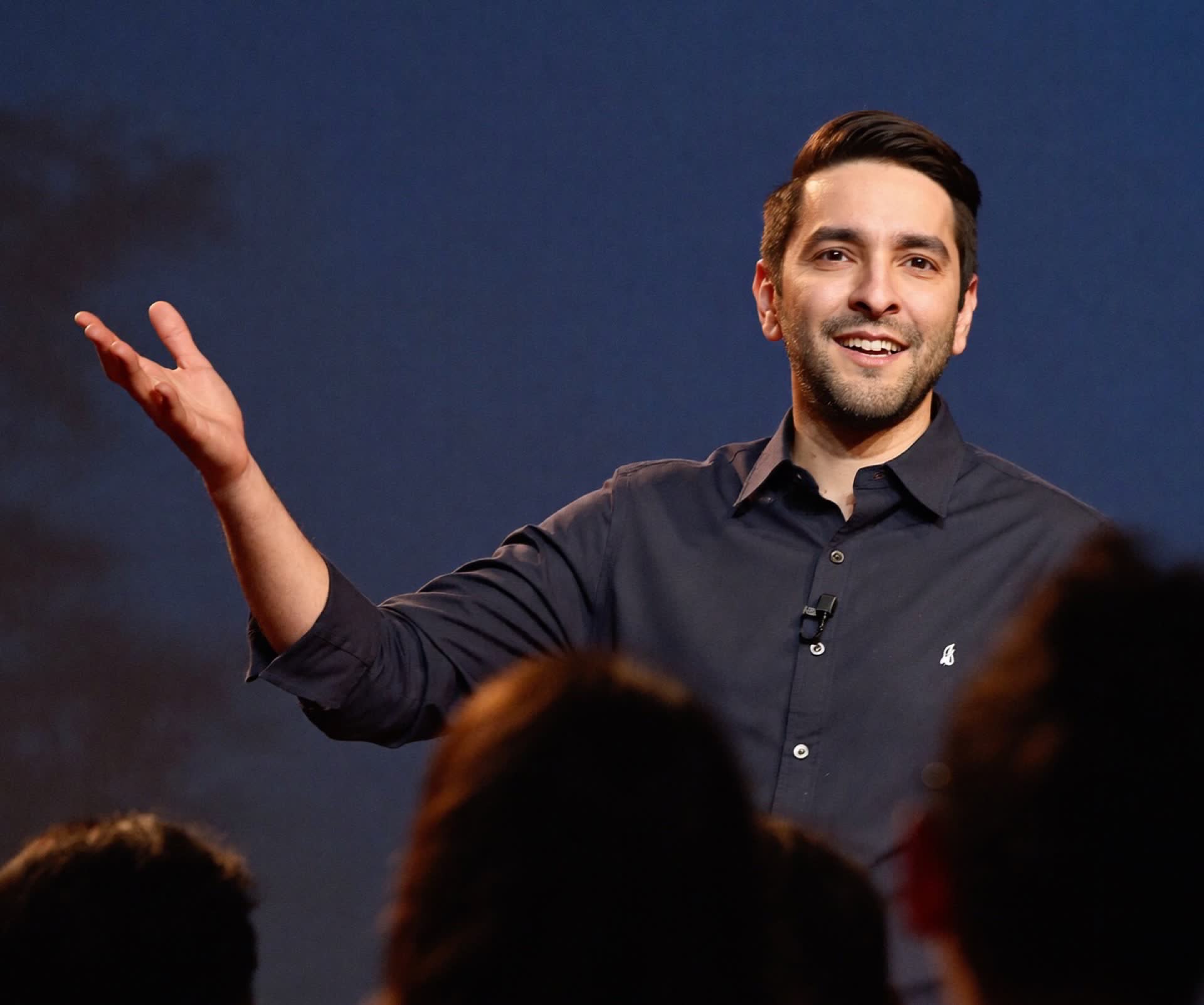
Blink's Syed Sair Ali on digitising Pakistan's restaurants
Blink's CEO Syed Sair Ali explains how a Karachi-built restaurant software company reached $1M ARR by digitising the operating layer small businesses ignored, and why clean data matters more than the software itself.
The foundation layer comes before any AI
Muzamil Hasan opens by asking a question many Pakistanis are now asking: building is easy, but knowing which problem is worth solving is not. Syed Sair Ali points to the layer underneath. “Today everyone is asking for AI intelligence, but if your data is garbage, you cannot do anything intelligible on top of it.” For Syed, the work starts with capturing the signals businesses generate every day, groundwork that most local operators skipped.
A family-business market that never digitised
Syed explains that around 70% of Pakistan’s SMEs are family-owned, and that owners historically saw software as expensive and unnecessary. “Why should I spend two, two and a half, three, four lakh on a software when my system is running?” The problem, in his view, is that the global digitisation wave passed these businesses by. Without capturing transactional data, they could not become efficient, automate operations, or take part in the newer AI wave. Syed says many people advised him to focus abroad, because nobody in Pakistan would pay for this layer.
From an accidental start to a restaurant-first product
Syed describes Blink’s origins as partly accidental. He met his co-founder and was introduced to investors, and the idea took shape from there. By then the team had spent two or two and a half years in the food industry and was working with around 3,000 restaurants, which gave them a clear view of what owners struggled with. “We started with restaurant owners, and from there we built a product module by module, based on what restaurants demanded.” Syed says the platform now covers roughly 80% of a restaurant’s needs, with the rest expected within twelve months.
What the stack actually does
Syed walks through the modules. The base is point of sale, the system where a customer’s coffee is punched in and tracked. Online ordering comes next, and Syed frames its value as saving restaurants the 20 to 30% commission aggregators charge when loyal customers order through them. Fleet management handles rider operations, from order acceptance to payment type. The fourth piece, payments, settlement and reconciliation, is where Syed sees the largest risk. “The biggest risk in a market like Pakistan is leakage.” He ties leakage directly to scaling: owners cannot open a second or third branch when they cannot trust staff or systems to hold the line.
Loyalty, data capture, and the limits of trust
Muzamil asks how Blink captures customer identity. Syed explains that because online ordering is verified through OTP, the company holds reliable phone-number data that in-store orders usually lack. Blink is now building a QR-based loyalty layer for in-store customers. Syed is candid about the difficulty. Discounts and free products are often gamed by staff, and a single café owner can manage that informally where a chain of forty outlets cannot. He points to a token-economy model, where rewards are redeemable through an app and the restaurant sets their value, as a better answer that reduces the incentive for cashier fraud.
Why standardisation may be the real moat
This is the thread Muzamil returns to most often. He raises the global argument that SaaS is dying because the logic behind any product can be reverse-engineered quickly. Syed agrees that insane margins are vulnerable but disagrees with the broader claim. “There is value in standardisation, because the value capture is probably not in the system of record alone. It is in what the whole ecosystem enables.” He compares Blink to Shopify: the value is not how easy it is to set up one store, but the ecosystem of marketing, sales, and services around it. As more restaurants standardise, Syed argues, the aggregate data becomes the real asset, letting Blink tell a client whether a slow month was specific to their outlet or reflected the whole category.
Sizing the market and the case for food
Syed lays out the sizing logic. He estimates around 25,000 restaurant stores listed on Foodpanda, growing modestly, and says Blink is targeting roughly a third of an opportunity worth about $30 million ARR in the country. He presents this as a conservative, practical estimate rather than a fantasy projection. He also points out that food is among the lowest-risk sectors in Pakistan because it keeps operating through difficult periods. He connects tax enforcement to adoption, noting that PRA, card-payment incentives and tightening rules have pushed businesses toward digital records. He contrasts this with the small grocery and kiryana segment, where tax pressure and incentives are weaker and digitisation is harder to justify.
Building in-house versus buying, and the service instinct
Muzamil asks about larger local players, and Syed uses the Imtiaz example to show how even big retailers struggle to build enterprise-grade systems in-house. He notes that talent density matters: Blink’s team includes around fifteen developers, and people who want to work for a serious tech company will not necessarily work for a grocery chain. He also critiques a common habit among Pakistani software firms. “We have a very service-oriented mindset. You say put a button up, we put a button up.” Syed says the better practice is to challenge the request, ask why the cashier is making the error, and offer expertise instead of simply executing.
Pricing, partnerships, and the open API question
Blink uses modular pricing, with cost depending on which modules a client uses and how large the operation is. Syed gives Dunkin as an example, a client using both Blink’s point-of-sale and online ordering, with Blink branding visible in the customer app and branch interface. Muzamil asks whether the company is becoming a platform aggregator. Syed confirms Blink has over fifty integrations and public APIs, and is open to third-party developers building on its infrastructure through a revenue-share arrangement. He mentions a partner, Conviyo, that brings WhatsApp and chat-based ordering directly into Blink’s cashier screen. He frames Blink as wanting to own the infrastructure layer while staying open at the application layer.
Founder lessons from the conversation
The closing stretch turns to founder mindset. Syed ties Blink’s position to first-mover economics: the first company in a category has to create demand, often through paid consultations that feel like a service. Once the category is educated, followers benefit. Muzamil brings up Bakhtiyar Wayne, the CEO of Interloop, whose advice on thinking big Syed echoes. Syed closes with the idea that “you cannot really grow beyond a certain point if you are always thinking small.” He points listeners to Blink’s website, where its APIs are publicly available, and asks anyone building in Pakistan’s ecosystem to think about the underlying data layer before the product.
More from Thought Behind Things



Never miss a conversation.
New episodes and the thinking behind them, straight to your inbox. No hype, no spam, no pitch.