Thought Behind Things
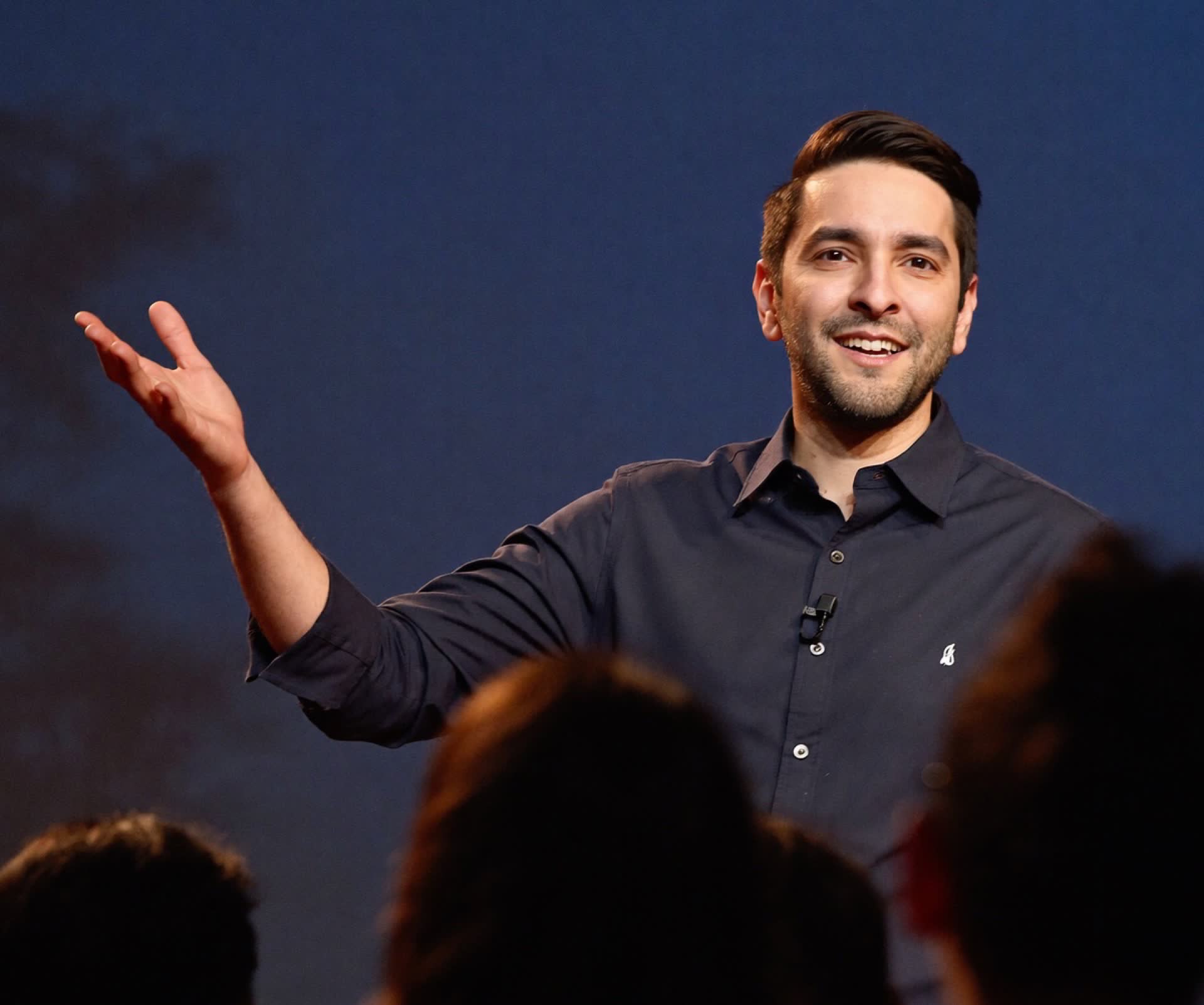
The VC who came back to fix Pakistan's universities
Dr. Arshad Ahmad, Vice Chancellor of LUMS, traces a career built on failure, curiosity, and the slow craft of learning how to teach — then explains what he is trying to do about Pakistan's broken education system.
Growing up in Karachi in the sweet sixties
The episode opens with Muzamil introducing his guest as someone he had been genuinely eager to speak with — not for the usual reasons of business or politics, but because he wanted to understand what was actually happening inside Pakistani academia. The guest is Dr. Arshad Ahmad, Vice Chancellor of LUMS, and the conversation begins, unusually, in Karachi in the 1960s.
Dr. Arshad Ahmad was born and raised in Karachi, attended the Karachi American School on a scholarship from his father’s employer, and then moved to Karachi Grammar School when the company — and the scholarship — departed. He completed his O and A levels there, graduating in 1976. Muzamil notes that this is further back than almost any guest he has had on the show, and uses it to open a question about what Pakistan felt like then. Dr. Arshad Ahmad’s answer is simple: “Very safe, clean air, water you could drink.” His sister, the artist Nuzhun Bilgrami, was studying at NCA in Lahore at the time, and the family would visit. The country felt, he says, like a place where young people dreamed without restraint.
He was, by his own account, a pretty average student — curious about history and the arts, uncertain about direction, and very much influenced by peers who were heading overseas. The 1976 Montreal Olympics gave him a concrete destination: a cousin invited him, and despite having an offer from a school of architecture in the UK, he ended up at Concordia University in Montreal, studying accounting and finance at his father’s insistence.
The promise to his father — and what it cost him
Dr. Arshad Ahmad is candid about the deal he made. His father wanted security: doctor, lawyer, accountant. He agreed, largely because it was the condition for tuition being paid. “I said, sure. If that gets me out and he’ll pay for the tuition, then I’ll do what he says.” He studied accounting and finance, added international business, and graduated in 1980.
What followed was an MBA at McGill University, then a diploma in accounting — the full credential his father had wanted. Only after completing it did he feel free. “Dad, I’ve got the degree. I’ve got it. I’m gonna do what I want.” He reflects that the accounting training, which he found genuinely unexciting at the time, turned out to be invaluable decades later when he became a university administrator reading balance sheets and income statements that most of his academic colleagues could not parse. The lesson he draws is one he returns to several times in the conversation: skills you acquire without passion can still compound in ways you cannot predict.
Montreal itself shaped him in other ways. He worked from the start — first as a store detective in a grocery store, watching for shoplifting in the pre-CCTV era, then doing cash, inventory, and general handyman work. He cooked his own food in minus-fifteen-degree winters. Muzamil asks what that did to him. “The distance between obstacle and opportunity,” Dr. Arshad Ahmad says, “depends on how you look at it. Some people think the distance is too vast. Others travel towards the opportunity.”
The seed planted in a borrowed classroom
The pivot toward academia happened in 1981, when Dr. Arshad Ahmad became a research assistant for a young professor who had just arrived from UCLA. She was working on cross-cultural management and had not yet finished her PhD. When she had to travel to France to present, she asked him to teach her class. He had no idea how. She told him he could do it.
“When I walked into that class, I thought this is something amazing where you can have so much impact, so many people.” The seed was planted. By 1982, when a full-time lecturing position opened at McGill, he took it immediately. He taught semester by semester on contract, then two-year contracts, then three-year contracts. He also moonlighted — teaching night courses and college courses at other institutions, which he was technically not supposed to do, simply because he loved it and wanted to learn from different environments.
The worst evaluations in the department
What followed was one of the most instructive failures in the conversation. Dr. Arshad Ahmad believed he was an excellent teacher. His department chair called him in and told him his student evaluations were the worst in the department. “I thought he’s going to congratulate me on my evaluations. He said, yours are the worst evaluations in the department, and you need help.”
He identifies three specific failures. The first he calls “the curse of content” — covering everything in the textbook at speed, like a bullet train, leaving students behind while believing he was doing his job. The second was pitching the wrong level of intellectual complexity at introductory students, who needed structure and clear answers before they could handle ambiguity. He was introducing ambiguity before students had the foundation to use it productively. The third was misusing classroom time: “Most learning actually happens outside the classroom. Classroom में तो your — flip learning के मायने यही है कि जो boring stuff class में पढ़ाते हैं, वह पहले दे दें. Classroom में गुफ्तगु होनी चाहिए.”
He describes a colleague at Queen’s University who taught law with his mouth shut — deliberately. The colleague’s theory was that teachers ask questions and then immediately answer them, training students to stay silent. “Apply the five-second rule. Ask a question and wait five seconds. Someone will speak.” Silence, Dr. Arshad Ahmad says, is a pedagogical tool.
Recovery took close to a decade. He cites the ten-year rule of mastery — the same principle that applies to tennis players, chess players, or broadcasters. “Good teachers reflect. If not every day, then every week — time to think: what happened, what did I do, how can I be better?” The reflection loop, he argues, is the internal feedback mechanism that separates people who improve from people who stagnate.
A PhD done for the love of learning, not the credential
Later in the discussion, Muzamil raises the question of the PhD — and the broader Pakistani tendency to pursue postgraduate degrees as a fallback when employment doesn’t materialise, rather than as a genuine intellectual project. Dr. Arshad Ahmad agrees the system is broken in that regard, but his own story runs in the opposite direction.
By the early 1990s he had been teaching finance for over a decade, had won a national teaching award in Canada, and was coordinating a program that brought him into contact with ten new teachers from across the country every year. He realised he knew nothing about the theory of learning. “A colleague asked me: which theory of learning do you use? I was embarrassed. I didn’t know a single one.” He enrolled in a PhD in psychology and human learning — cognition, instruction, and computers in education — at McGill, twelve years after his master’s. He had a full-time job, young children, and a family to support. He finished in three and a half years. “You can’t stop a person who’s motivated.”
He is equally direct about the limits of the credential system. A PhD from a poor program produces someone who still cannot read, write, or question properly. A PhD from a quality program produces genuine depth. The distinction matters, and Pakistan has both kinds.
What LUMS actually is — and what it is trying to become
Muzamil asks Dr. Arshad Ahmad to describe what he found when he arrived at LUMS five years earlier, and what has changed. The answer is framed around what he calls “hidden treasures” — a university that was widely known only as a business school but was in fact five schools, each with its own trajectory. The business school is the only AACSB-accredited institution in Pakistan, which has been a mixed blessing: the reputation attracts faculty, but also makes them targets for offers the university cannot match.
The larger schools — Gurmani School of Humanities and Social Sciences, and the School of Science and Engineering — have done remarkable work that goes largely unnoticed. There is also a School of Law and a four-year-old School of Education, which Dr. Arshad Ahmad believes may ultimately have the most impact of all, given the scale of Pakistan’s education crisis.
He is blunt about that crisis. “Education is a ticking time bomb. If we don’t fix it, we’re going to have a huge population of people that could either be our biggest assets or could be the reason for our demise.” He connects it directly to climate change and food security — three interlocking threats that require the same kind of interdisciplinary response.
He gives three examples of work already underway. The Centre for Water Informatics and Technology (WIT), led by an electrical engineer but staffed by computer scientists, bio-engineers, economists, and an anthropologist, has produced the same wheat and rice yields as a conventional small farmer using zero pesticides and one-third the water. The Energy Institute, four years old, has provided recommendations to the federal government that are saving an estimated one billion US dollars per year. The electric vehicle policy — including the electric rickshaw now on Pakistani roads, developed with a South Korean company — originated at LUMS.
The NOP, access, and the myth of the rich-kids university
Muzamil raises the National Outreach Programme, and Dr. Arshad Ahmad corrects several common misconceptions at once. LUMS receives no government subsidy. Every rupee it earns goes back into the institution. The NOP, now twenty-one years old, sends teams to 170 districts across Pakistan on a talent hunt — identifying students from families earning roughly $200 a month, bringing them to campus for two to three weeks at the university’s expense, and then offering full scholarships covering tuition, room and board, transportation, and a living stipend for the entire degree.
Between 13,000 and 18,000 students apply for NOP each year. The results are measurable: in the CSS civil service examination, LUMS students rank first, second, and third nationally. The top-ranked student is an NOP graduate.
Beyond NOP, one in three LUMS students receives financial aid of up to 100% of tuition. “Lums is for the rich kids” is, he says flatly, a myth. Of 17,000 alumni, roughly 11,000 are still in Pakistan. The brain-drain narrative is similarly overstated.
Building Pakistan’s own EdX — and a twinning program in Gilgit-Baltistan
The conversation turns to what comes next. Dr. Arshad Ahmad describes two concrete collaborations already in motion.
The first is a consortium of thirteen universities — including LUMS, NUST, and Aga Khan University — working with HEC and World Bank funding to build a shared repository of online core courses in Urdu and local languages. The model is a domestic alternative to importing Coursera content that ignores Pakistani context, language, and standards. Students at any member university will be able to take courses designed by any other member institution and count them toward their core curriculum. Dr. Arshad Ahmad built a five-course finance specialisation himself while at McMaster University in Canada; over 100,000 students have taken it. “I don’t teach it. I built it, and it ran. That’s impact.”
The second is a twinning program with the University of Baltistan in Skardu. Thirty students from each university spent a month together in Gilgit-Baltistan last July, taking five field-based courses — on water, energy, entrepreneurship, e-commerce, and life sciences — designed from scratch with 80% of learning happening outside the classroom. The logistics were chaotic: no water, no electricity for the first week. By the final day, not one student wanted to leave. “We went there to teach, but we were the ones who learned.”
By the end of the conversation, Muzamil asks Dr. Arshad Ahmad how he sees Pakistan in 2050. His answer is unambiguous: “I see Pakistan with the glass not just half full, but pretty much brimming right up to the top.” He grounds that hope not in sentiment but in a specific argument — that Pakistan’s youth are its most underutilised resource, and that treating them as partners rather than clients, from the classroom to the boardroom, is the only lever that matters. “If you start with a problem, you’re going to stay at the problem space. If you start with what’s working, it’s much easier to close the gap.”


Never miss a conversation.
New episodes and the thinking behind them, straight to your inbox. No hype, no spam, no pitch.