Thought Behind Things · Nov 3, 2021
Pakistan's import duties are, in effect, export taxes
World Bank senior economist Gonzalo Varela walks Muzamil through why Pakistan's export sector has eroded for two decades — a real exchange rate held artificially strong, one of the world's most protected tariff structures, and a policy posture that quietly punishes anyone who tries to sell abroad.
with Gonzalo Varela
10 min read
A career built on the uncertainty exporters live with
The episode opens with Muzamil welcoming Gonzalo Varela, a senior economist leading the World Bank’s trade program in Pakistan, and noting up front that the conversation will run in English. The choice is deliberate. Varela has spent the better part of a decade thinking about exchange rates, tariffs, and the slow-moving forces that decide whether developing economies grow or stall — and the audience for that argument extends well beyond Karachi.
Varela traces a clean line from undergraduate economics in Uruguay to a PhD in the United Kingdom, where his thesis examined how real exchange rate uncertainty shapes production decisions. The framing matters. In developing countries, uncertainty is not a footnote; it is the operating environment. A summer assignment in Indonesia for the World Bank turned into a full-time career, first in the global trade unit and then on country-specific engagements. “I ended up in Pakistan actually, working on trade,” he tells Muzamil. The choice of words is understated, but the rest of the conversation makes clear how much ground that one sentence covers.
The difference between the exchange rate you see and the one that matters
Muzamil pulls on a thread he suspects most viewers will not have considered: the gap between the nominal exchange rate — the 171 rupees per dollar quoted in the headlines at the time of recording — and what economists call the real exchange rate. Varela’s explanation is careful. The nominal rate is simply the price of the dollar in rupees. The real rate adjusts for what is happening to domestic prices and wages. If both grow in lockstep with a depreciation, nothing has really changed in real terms.
This is not an academic distinction. It is, Varela argues, the variable that actually drives the decisions exporters make. “Changes in the exchange rate make them one day profitable, another day, not profitable. They really pay attention to what is happening with that variable.” The point lands cleanly: a country can hold its nominal exchange rate steady and still be quietly destroying the competitiveness of its export sector if domestic prices keep climbing.
Why a stronger rupee is not unambiguously good news
Muzamil presses on a question he says comes up constantly in Pakistani commentary: is a more expensive dollar bad for the economy? Varela refuses the binary. The price of the dollar moves too many things at once for a single answer to hold.
A depreciation is good news for exporters whose costs are in rupees and revenues are in dollars. It is bad news for a government servicing dollar-denominated debt out of rupee tax revenues. It is bad news for fixed-income households watching imported energy and food prices climb. The honest answer, Varela says, is empirical: across developing countries, sustained periods of relatively depreciated currencies tend to coincide with faster long-run growth. He cites the Harvard economist Dani Rodrik’s 2008 paper, which finds that a depreciated currency reallocates resources into tradable, export-oriented sectors, and that those sectors tend to be where productivity gains and better jobs come from.
The framing is the takeaway. A depreciation is a redistribution between consumers, debt-holders, and producers — and over the long arc, leaning toward producers is what makes economies grow.
What broke in Pakistan’s last decade
Muzamil sketches the rupee’s path in plain terms: stuck near 65 for years, then a jump to 100, then a long flat stretch, then 150, and a slow climb past 170. Varela splits the decade in two. The State Bank moved to a managed float in 2018, allowing demand and supply to set the price with occasional interventions to smooth volatility. Before 2018, the nominal rate was held roughly fixed even as domestic prices kept rising — which meant the real exchange rate was steadily appreciating. Imports got cheaper. Exports got harder to sell abroad.
The damage was structural. “We moved from having about 16% of GDP explained by exports in 2000,” Varela says, “to have today less than 10% explained by exports.” Pakistan did not simply miss a cycle. It spent fifteen years tilting its growth model away from production for the world and toward consumption of what the world produced.
Varela also lands a direct counter to the conventional wisdom he encountered when he first arrived in Pakistan in 2017 — the claim that Pakistani exports do not respond to the exchange rate, so a depreciation would not help. He went to the data. The relationship is there, in the long run, exactly as Econ 101 predicts. “A 1% depreciation of the rupee, in real terms, increases exports by half a percentage point. A 1% appreciation in real terms of the rupee decreases exports by 0.5%.” The paper is published; it is summarised in the Pakistan Development Update.
Why the response is fast on the way down and slow on the way up
The asymmetry is the interesting part. When the rupee appreciates, exports fall quickly — exporters lose buyers because they are no longer competitive. When the rupee depreciates, exports rise, but slowly. Varela identifies three reasons.
First, the distinction between homogeneous and differentiated goods. Basmati rice, wheat, mangoes — traded against a reference price, with an organised market — respond fast. A mug, a garment, a piece of finished hardware does not. It needs to be tailored: the size the Americans like, the colour the Europeans want, the handle in a specific place. That work is what economists call market intelligence, and it costs money and time.
Second, credit. “No credit, no gain,” Varela says, borrowing the personal-trainer phrasing. A more profitable export opportunity is irrelevant if the firm cannot finance the machinery to scale up. Sectors with access to credit react; sectors without it do not.
Third, size. Varela offers a comparison that does more work than any abstract argument. “An exporter of Pakistan exports in a year $1,400,000 on average. An exporter of Bangladesh exports about $3,800,000.” Pakistani exporters sit at the bottom of the global size distribution. When the rupee depreciates and their margins should expand, large global buyers — fewer in number, larger in scale — capture some of those margins by repricing what they pay. Economists call it pricing to market. In plain language, it is the bargaining power of a buyer who knows the seller has nowhere else to go.
The most protected economy in the room
The conversation turns from the currency to the tariff structure, and this is where Varela’s argument lands its hardest punch. Pakistan, he says, is among the top five most protected economies in the world. Import duties come in three layers — customs duty, regulatory duty, and additional customs duty — averaging around 20% in aggregate. They are high across consumer goods, machinery, and intermediates alike.
But the level is only half the story. The structure is the other half. Pakistan applies what economists call cascading tariffs, where the duty on the finished good is much higher than the duty on the inputs needed to produce it. The intention is to encourage domestic industrialisation. The result, when the cascade is steep enough, is what is called effective protection — and Pakistan ranks second in the world on that measure.
Varela’s framing of the consequence is precise. A domestic firm with high effective protection has two options: sell at home into a market shielded from international competition, or take on the headache of exporting. The choice is not close. “Of course, they’re going to sell domestically,” he says. “And so, exporting becomes only a residual option for firms because it’s so profitable to sell in the domestic market.”
He flags a linguistic tell. In Pakistan, the term “export surplus” is used to mean whatever the domestic market does not absorb — the residual. The Oxford dictionary defines it as net exports. The local usage is not an accident; it is consistent with a policy environment in which exports are what is left over after the protected domestic market has had its fill.
The argument closes with the line that gives the conversation its sharpest claim. “The high import duties are essentially and implicitly high export duties. So they are levied on imports, but their effects are on the cherrying of exports.” The mug-maker example makes it concrete: raise the tariff on finished mugs and the producer earns a higher domestic price, sells more at home, and has even less reason to chase foreign buyers.
Why the foreign investment that does arrive does not export
Muzamil asks whether the move to a floating exchange rate in 2018 has begun to attract export-oriented investment. Varela’s answer is sobering. Most foreign direct investment flowing into Pakistan is what he calls market-seeking — investors come to sell into the domestic market, not to use Pakistan as an export platform. The tariff wall is exactly what makes the domestic market attractive. As long as the protection is there, foreign capital will continue to set up shop to exploit it rather than to build for the world.
The implication is that the currency cannot do the job alone. A competitive real exchange rate is necessary but not sufficient. The tariff structure has to flatten too. Without that, Pakistan keeps attracting the kind of investment that locks in the consumption-led model rather than breaking it.
Where the next exports might actually come from
Muzamil closes by asking the forward-looking question: where could Pakistan grow? Varela reframes it. Rather than searching for new sectors to invent, he argues, the more productive question is how the existing sectors can be done differently.
He uses garments as the example. Pakistan has a comparative advantage in the sector; it employs at scale. The pressure point coming over the next decade is climate. International buyers increasingly want low-carbon products, and developed economies are moving toward carbon border adjustments — taxes on imports based on their carbon footprint. The producers who decarbonise and certify will capture higher prices and avoid the new taxes. The producers who do not will be priced out. The opportunity is hiding inside the sector that already exists.
He then makes a point that he says is often overlooked because of statistical blind spots: knowledge-intensive services. Software, architecture, engineering services sold abroad. In fiscal year 2015–16, this category was 10% of Pakistan’s services exports. By the time of the conversation, it was 50%. The pandemic accelerated awareness of outsourcing, but the trend predates it by years. Much of the activity is freelance, and much of the revenue stays in Dubai or other offshore accounts because moving money in and out of Pakistan is difficult — which is precisely the policy lever to pull. “If you cannot move money out, you will not bring it in.”
The third area, he says, is the China-Pakistan free trade agreement, which Pakistan has underused. Smaller firms in particular lack the market knowledge to take advantage of the preferences on offer. Public-sector support to bridge that gap could move significant volume.
The three threads weave together neatly. Decarbonise the old. Scale the services that are already growing. Use the trade agreement that is already signed. None of it requires a moonshot. All of it requires the policy discipline to stop punishing exporters in the meantime.
By the end of the conversation, Muzamil thanks Varela and directs viewers to the World Bank’s Pakistan Development Update, fall 2021 issue on reviving exports, for the underlying analysis. The closing tone is the one the episode has been earning the whole way through: the answers are not mysterious, and the diagnosis is not contested in the data. The question is whether the policy environment is willing to act on them.
More from Thought Behind Things
Jun 20, 2026
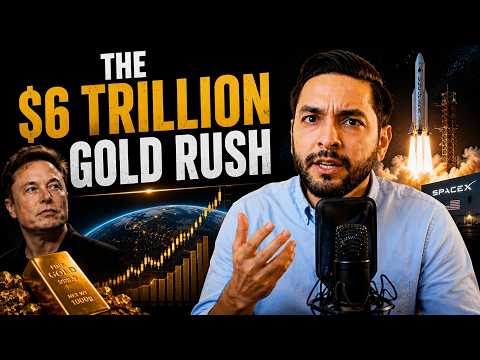
The space economy's real wealth is in the startups under SpaceX
Muzamil reads the space-tech decade through one variable: the falling cost of reaching orbit. As that number drops, hundreds of companies and millions of jobs open up beneath the headline names.
Listen →
Jun 16, 2026
SpaceX's IPO is a pump. The space industry is real.
Muzamil reads the SpaceX IPO line by line: a 2 trillion dollar valuation on 18 billion in revenue and a 5 billion dollar loss, the index-fund rule that forces the buy, and why the real value is the hundred startups underneath.
Listen →
Jun 9, 2026
How Asad Mehmood landed Mattermost from Pakistan before A levels
with Asad Mehmood
Asad Mehmood walked into Mattermost before he had A levels, crossed two million dollars on Upwork, and now runs a design agency from Pakistan. He sat with Muzamil to lay out the framework underneath it: become undeniably good, then become visible, then sell outcomes.
Listen →Never miss what's next.
The dispatch - new writing and conversations, straight to your inbox.
First name, last name, email - in your inbox weekly. No spam.