Thought Behind Things · Apr 19, 2024
Pakistan's exports lose at the shelf, not the field
MacPac Films managing director Ehtesham Maqbool Elahi on a forty-year packaging journey, surviving a fire that wiped out thirty years of work, the patent that killed bioplastic, and why Pakistani exports keep losing on the shelf instead of the field.
with Ehtesham Maqbool Elahi
16 min read
A special episode, and why packaging earned one
The episode opens with Muzamil flagging that this is a special drop while season five of Thought Behind Things sits paused for a redesign. He has decided that whenever a Friday conversation is worth sharing, he will share it, and the one in front of him qualifies. The guest is Ehtesham Maqbool Elahi, managing director of MacPac Films, and the trigger for the conversation sits in Muzamil’s own recent reporting: Pakistan, he has been arguing, is being forced by the dollar into an inherently globalised, export-led economy, and the smartest young Pakistani keeps looking for a “sexy” business idea — cars, cell phones, aircraft — instead of the boring industries that are quietly carrying the country.
Packaging, in Muzamil’s framing, is exactly that kind of industry. “You have probably used many things in your life that were made by MacPac Films, and you don’t even know about them,” he tells the audience. He met Ehtesham recently, asked him what he did, was intrigued enough by the answer to ask for a factory visit, and was struck by the scale. The invitation to the studio followed.
Muzamil also lays out the personal context that pushed him to book the conversation. Having recently moved to Dubai, he kept noticing that products that are cheap and ordinary inside Pakistan are expensive abroad — and that the few Pakistani products on the shelf were being held back by their own packaging. His Himalayan salt example is the one he keeps coming back to: the Pakistani option was on the shelf, but he could not bring himself to buy it because the packaging was so bad. The thesis of the episode is set right there. The problem is not the product. The problem is the wrap.
A father, a factory, and a delayed phone call from Germany
Ehtesham’s opening answer is a family-history answer. His father came out of the pharmaceutical sector, where he had spent years manufacturing products in other people’s factories, and decided to switch to pharmaceutical packaging — aluminium blister packs, paper boxes, and eventually cellophane imported from Europe. Cellophane, Ehtesham explains, was a paper-and-tree-based film, made from cellulose, dissolvable in water. As global demand outpaced what trees could supply, Europe invented a polypropylene-based replacement called BOPP film in the late 1970s and early 1980s.
In 1984 his father got a call from German suppliers. A line had become available because a customer had backed out, and they wanted to know if he would take it. He turned it down — his first son was about to be born and he could not travel. A year later the same suppliers called again. The line was still unsold. He still could not come, because that son was about to turn one. The suppliers waited. Right after the first birthday, his father flew to Germany, and MacPac became the first BOPP film manufacturer in Pakistan.
That son on the phone is Ehtesham. He frames the story as a small piece of family lore, but it is the origin of an entire industry inside Pakistan. “It is now a multi-billion-dollar industry,” he says, “and Alhamdulillah we’ve been part of nurturing it and taking it forward, and that’s what my father was known for.”
What a packaging line actually is
Muzamil pushes for the mechanics. What does a “line” mean here, and how customisable is it for different customers? Ehtesham walks through the physical reality of the plant Muzamil had walked through days earlier. A line is a chain of machines two or three hundred metres long. Plastic resin pellets go in at one end, and several metres-wide rolls of film come out at the other. Those rolls move to a converter, who prints them, and then they end up wrapping biscuits, chips, candies, betel nut, textile socks, and a thousand other everyday products. A coating of “9.9 percent purity aluminium” gives the film its preservation properties.
Customisation, he says, is real but happens at sensible volumes. Ten units of anything is not viable. Ten thousand units of Himalayan salt pouches is. Different companies negotiate different minimum order quantities. Startups that aren’t yet exporting can use unprinted film with a sticker, but the moment a brand decides to compete in an export market, the rules change. “For export markets you have to place yourself with global competition,” he says. “You must invest in packaging for all the products you’re trying to export.”
That line is the hinge of the entire conversation. Muzamil has been arguing that Pakistan must value-add its agricultural produce and ship it out. Ehtesham is telling him, in technical detail, that the value addition is not optional, and that the country already has world-class capability for it sitting inside facilities like his.
October 30, 2007 — the fire
The hardest part of the conversation is the one Ehtesham did not arrive prepared to give. MacPac went public in 2001 to raise growth capital. Ehtesham joined operations in May 2007. By October of the same year, the company had its first positive EPS quarter since listing — a turnaround he describes with a kind of quiet pride, including a zero-working-capital workaround he engineered by using sister concerns and friends and family to purchase raw materials so the plant could keep running.
On the day they announced those results — October 30, 2007 — half the factory burned down.
He got the call at 2:15 in the morning from his GM production. His father was at the K Show in Germany, the biggest plastics trade fair in the world, which Ehtesham now says was a piece of luck. “I don’t think he could have handled it. Thirty years of his hard work — in the next thirty hours I watched it burn down.”
The details he gives are precise and small. The firefighters who arrived asked who would pay for the diesel before they would start. The ones who did start were smoking cigarettes as they walked into the burning building. The local police asked him whether they could escort him out as a director — not whether they could help. He spent thirty-six unslept hours on site, came home black and dark enough that his mother struggled to look at him, and then, once the main film plant turned out to have been saved while the auxiliaries were gone, asked his team a single question: now what?
“They told me, sir, we will do it again, and we will do it better. That gave me a new life.”
Two years of being out of operation followed. He used that time for something almost no one in his shoes would have used it for. With nothing to sell and nothing to buy, he started the company’s digital transformation — its first ERP implementation. That work eventually carried MacPac all the way to a January 2024 SAP S/4HANA go-live, which he flags as a milestone he is still close to.
Public listing, family business, and the word “exponergy”
Muzamil presses on a structural question that recurs across his interviews with Pakistani founders: why are there so few publicly listed companies in Pakistan, and what does life on the exchange actually feel like? Ehtesham is direct. He resisted the listing at the time — he was young, he was studying, and he saw equity as expensive currency to part with for a small ocean of capital. With hindsight, he is unequivocal in the other direction. The SECP framework, he says, is genuinely useful. It forces structure. It opens the door to growth capital through follow-on offerings and rights issues. It creates the system that a scaling company needs anyway. And in his view, the costs are mostly cultural rather than financial. “We are a shy economy. We are not extroverts. We don’t want to share how much we are making.”
The deeper unlock he describes is the move from family business to professional company. MacPac, he insists, is not a family business in operating terms, even though the family holds majority shareholding. The CEO runs the company. Ehtesham, after fifteen years of doing everything by hand, says he is now “zero involved” at the micro level in daily decision-making — and is proud of it.
He gives the architecture a name borrowed from an internal team member, an IBA graduate named Hassan: exponergy. The combination of experience and energy. Older generations have the experience; the youth have the energy; the magic is in fusing the two through communication rather than defensiveness. He extends the point into a wider piece of advice to the youth listening: stop telling your elders they don’t understand, and to the elders, stop refusing to give the youth authority and freedom. “Allah has guided me and my father supported me,” he says of his own arc — but the structural piece, in his telling, is the willingness to professionalise.
He returns to a line his father gave him when he first took a managerial position: every decision you make, imagine it is being made on behalf of a widow somewhere who holds five hundred shares and has no other source of income. MacPac, he says, has received both kinds of letters over the years — the ones from shareholders who funded a daughter’s wedding from share gains, and the ones from shareholders whose savings were wiped out. That, he says, is what minority responsibility actually feels like in practice.
Pakistan does not need more cars — it needs better packaging on what it already grows
Muzamil reframes the conversation back to the macro pitch. For young Pakistanis staring down joblessness and a currency in free float, what does Ehtesham, sitting in the middle of the supply chain, actually see? The answer is unambiguous. “Huge. Amazing,” he says. “There’s so much potential. We shouldn’t let the challenges in our economy and around us and what we see on conventional media bring us down.”
He then makes the part of the case that gives the episode its sharpest takeaway. The export opportunity is sitting inside what Pakistan already produces and currently wastes. Rice bran, which most processors burn or feed to animals, can be pressed into oil and exported by the millions of tons. Chicken feet, which are exported raw to China or dropped into soup at home, can be pickled and packaged for the lollipop-style market they have become there. Potatoes can be dehydrated into powder for mashed-potato product. Mangoes — “the kind we have” — should be reaching foreign shelves in a state that does them justice. Moringa leaves and Himalayan salt sit inside a niche but very large global super-food market with high value-add margins. He sums it up as a single line: “Our waste is the world’s gold.”
The choke point in all of it is the wrap. Pakistan’s packaging facilities, he insists, are already world-class — European and American grade machinery, capable of the highest end of finish. The bottleneck is talent and, more often, the exporter’s decision to underinvest in the packaging layer at all. The line he wants young exporters to internalise is simple. Pick a product. Package it at premium level. Reach customers through Alibaba, Amazon, or your own e-commerce site. Find a coach or a mentor. Stay consistent. The path is unsexy and it works.
He also pushes back on the default of looking only at the US, Canada, and the UK. China alone, he points out, has over 1.5 billion people, and many of the products Pakistan already produces — chillies, chicken feet, salt under their own licensing regime — have real demand there. “Think out of the box. Decide your niche and your passion. Work on it patiently. Be consistent. The fruit will come.”
What packaging is actually for
When Muzamil asks Ehtesham to explain why packaging matters beyond marketing, the answer is structured and worth pausing on. Globally, more than 30 percent of the food we produce is still wasted, and bad packaging is one of the main drivers. Ehtesham gives three purposes for a package, in order. The first is preservation — shelf life, whether that is days for milk or months for biscuits. The second is labelling — allergen information, recycling information, ingredients, recyclability codes. The third, and only the third, is marketing — the visual layer that has to look good enough on the shelf to earn the first sale, and the physical engineering of an easy-peel opening so a child can get to the snack without tearing the bag with their teeth.
“First time, the product sells through the packaging,” he says. After that the product itself has to earn the repeat purchase. But the first sale is engineered through the wrap.
The bioplastic that a patent killed
The longest single technical detour in the episode is on sustainability. Muzamil asks the obvious question. Plastic is non-biodegradable, it ends up in landfills, it ends up in the ocean, and the world has decided it is the problem. How does Ehtesham see the industry from inside?
Ehtesham, who describes himself as a diver who has watched a decade of damage on reefs and as a father worried about the world his children will live in, gives an answer that splits the moral question from the material one. Plastic, he says, does not litter itself. It has no movement of its own. Human behaviour — disposal habits, sorting at source, road-side throwing, ocean dumping — is the live variable. MacPac, he says, makes only PP-range, 100 percent recyclable film, marked with the recycling number five. It runs a sister concern that lifts trash from collection systems and scavengers and converts it into eco-bricks and eco-tiles. Material that has no second life is not made in the first place.
Then he tells the story of the bioplastic that almost replaced everything. The product was polylactic acid, or PLA, made from corn and sugar rather than petrochemicals, mostly sourced out of Brazil. A look-alike film called BOPLA could be run on the same machinery. MacPac was about to commit to it. Then a single global entity patented the PLA process. Prices jumped from roughly $1 to roughly $4. Corn and sugar prices started moving in the world — corn is a major cattle feed, so American beef prices started rising in turn — and the food-security blowback turned what had looked like a clean solution into a non-starter. “Such an amazing product the world had built,” Ehtesham says. “And it was killed.”
He is also direct about the paper alternative. If seven billion people moved off plastic and onto paper tomorrow, the climate cost would be worse, not better. Paper requires more water and more energy than plastic, and the world — Pakistan especially — is already water-scarce. The path he advocates is mono-material design: PP-on-PP, PE-on-PE, no mixed structures. Europe is already moving toward extra taxes on non-compliant imports, and the US has its own rules. The exporter who designs around mono materials wins on shelf acceptance and avoids border penalties at the same time.
Consumption, contamination, and the West’s problem versus ours
Muzamil makes a point Ehtesham clearly likes. The “plastic is the problem” framing is, in large part, a developed-world problem. A household in Dubai or the US consumes vastly more plastic than a household in Pakistan because everything there is overwrapped — a single small product sealed inside fifty layers of film. Pakistan is at roughly seven kilograms of plastic per capita against forty to fifty in the West. The intervention that matters in Pakistan is not abolition. It is behaviour and disposal.
Ehtesham extends the point. Pakistan’s essential categories — flour, rice, lentils, spices — are still largely sold unpackaged. The right move is to expand packaging into the essentials that need it for food safety, while reducing packaging on the categories that do not. Loose milk, he reminds Muzamil, is routinely adulterated in the supply chain. Sealed milk is not. Packaging, used correctly, is a tool of survival. Used as overwrap on a child’s toy, it is waste. The case is calibration, not retreat.
The energy bill that equals another country’s total cost
By the end of the conversation, Muzamil pushes Ehtesham on MacPac’s own next chapter. Is the company going to ride this thesis itself? Ehtesham confirms it already is. MacPac has recently spun up a wholly owned UAE subsidiary, MacPac Middle East, and is exporting into Europe and North America. But he is honest about the limit. The labour-arbitrage story most people tell about Pakistani manufacturing does not apply to a capital-intensive flexible-packaging plant. The arbitrage that does matter, and the one that runs the wrong way, is energy.
Muzamil offers a number from his own life. As a residential customer in the UAE he pays 29 rupees a unit. In Islamabad he pays 65. A two-to-three-times difference flows straight into the unit economics of any product Pakistan tries to export. Ehtesham gives the line that lands hardest in the entire episode. “Our energy cost alone equals some countries’ total processing cost.”
His prescription is structural. Pakistan has the installed generation capacity already — what is broken is distribution and the non-utilisation charges currently being passed to industry. Pass those costs through to export industry instead, he argues, and the country could do far more. And in the longer arc, he is willing to name the unfashionable option directly: nuclear. The US runs on it. Pakistan has the technology. Cheap nuclear-derived power for the population and for industry would change the country’s competitive position in a way that gas exploration alone will not.
MacPac itself, he notes, runs on 100 percent captive power — about six megawatts, historically gas-based, and now adding a megawatt of solar from March, with more to come.
Muzamil’s closing pitch
Muzamil closes by thanking Ehtesham and turning back to camera with the line he wants the audience to leave with. There is, he says, an army of young Pakistanis already drop-shipping Chinese products into global markets through Amazon — applying packaging, branding, and distribution skills to other people’s goods. He wants them to apply the same skill set to Pakistani products instead. Find a local product the world will accept on quality but cannot yet find on a shelf. Wrap it properly. Get it to a warehouse. Earn dollars.
The thesis of the episode, by the end, is a single sentence. Pakistan does not lose its exports in the field. It loses them at the shelf. And the wrap that decides the outcome is a more boring, more solvable, and more lucrative problem than almost anyone in the country is currently treating it as.
More from Thought Behind Things
Jun 20, 2026
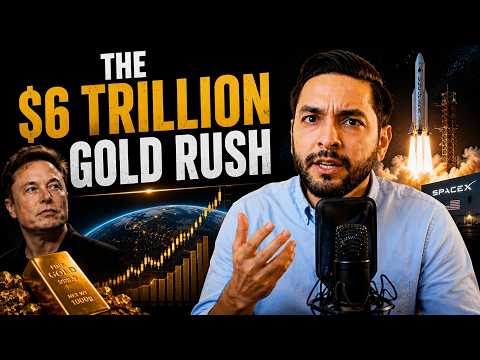
The space economy's real wealth is in the startups under SpaceX
Muzamil reads the space-tech decade through one variable: the falling cost of reaching orbit. As that number drops, hundreds of companies and millions of jobs open up beneath the headline names.
Listen →
Jun 16, 2026
SpaceX's IPO is a pump. The space industry is real.
Muzamil reads the SpaceX IPO line by line: a 2 trillion dollar valuation on 18 billion in revenue and a 5 billion dollar loss, the index-fund rule that forces the buy, and why the real value is the hundred startups underneath.
Listen →
Jun 9, 2026
How Asad Mehmood landed Mattermost from Pakistan before A levels
with Asad Mehmood
Asad Mehmood walked into Mattermost before he had A levels, crossed two million dollars on Upwork, and now runs a design agency from Pakistan. He sat with Muzamil to lay out the framework underneath it: become undeniably good, then become visible, then sell outcomes.
Listen →Never miss what's next.
The dispatch - new writing and conversations, straight to your inbox.
First name, last name, email - in your inbox weekly. No spam.