Thought Behind Things
Pakistani real estate runs on guesswork, so price it backwards from rent
DAO PropTech co-founder Owais Barlas on taxes, KIBOR and files, why rents look so low, and how tokenized property lets small investors enter the market.
Two weeks on real estate, and then an operator
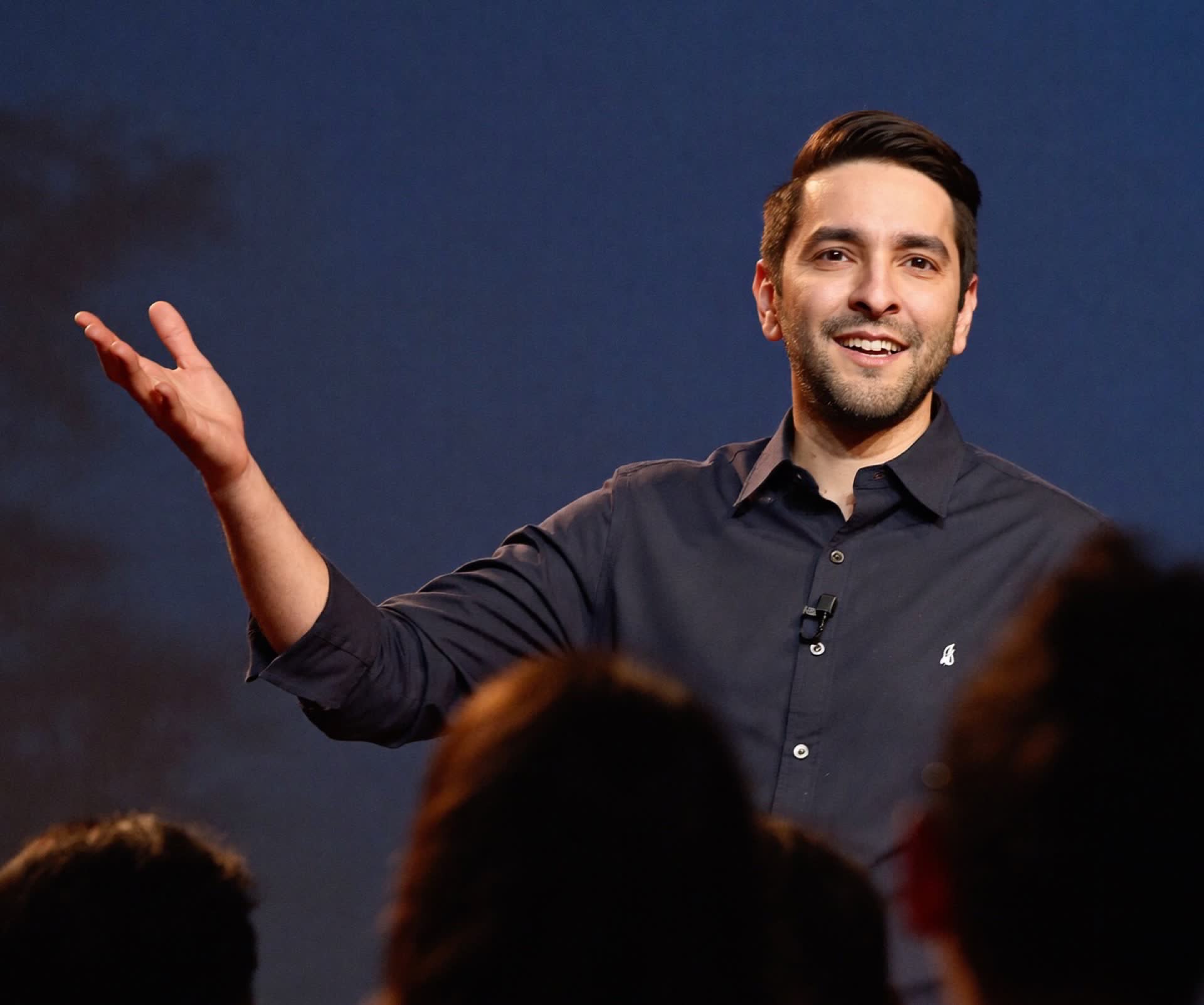
Muzamil opens by explaining why this episode exists. His last two Dil Ki Baat videos focused on real estate, and he had taken his own research as far as it could go. So he brought in someone who works inside the industry, though not in the way it has always run. His guest is Owais Barlas, co-founder of DAO PropTech, a company Muzamil describes as one of the players disrupting the industry right now.
His first question is the one many Pakistanis are asking. For years, real estate was the only investment people talked about. For the last two years, everyone has said it is finished. What is actually going on?
Taxes, KIBOR and a market with no buyers
Owais says Pakistan never treated real estate as a professional industry. Nobody thought it needed rules. People followed norms, and some investments did very well while many did not.
The market is also tied closely to tax policy. Capital gains tax on property used to fall each year, from about 15 percent in year one to 12, 10, 7 and 1 percent, then to zero. That made property a tax haven. Pressure from the FBR and IMF conditions changed that. The latest budget set a flat capital gains tax of 15 percent for filers and 30 percent for non-filers. A non-filer also pays roughly 15 percent in advance tax, so the combined bill comes to around 45 percent. Islamabad adds a 3 percent sales tax. Tax is assessed on the DC rate, a minimum value per square yard set by the CDA. At recording, Owais says, it was about 115,000 rupees in F-10, around 200,000 in F-8 and about 350,000 in F-7.
The bigger driver was the interest rate. Normal property growth, Owais explains, tracks inflation plus GDP. Over ten years, inflation averaged around 7 to 8 percent and GDP growth around 4 to 4.5 percent, so property should grow near 12.5 percent a year. With KIBOR between 17 and 22 percent for two years, money moved to the bank instead. A billion rupees at 22 percent earns 22 crore a year, roughly 18 to 19 crore after tax. “You generally don’t really need to do anything,” he says.
His example is a close friend who sold a house in F-10 as soon as KIBOR touched 18 to 19 percent. The friend parked the money in the bank, took it out this month, and can now buy back for less than he sold. When money leaves, demand disappears. People who bought property to fund a wedding or a car cannot sell, and they panic. Experienced buyers, Owais says, know a recession is the best time to buy.
Correction or crash depends on which market you mean
Muzamil asks whether prices have corrected to their real level, which means slow growth from here, or crashed for lack of liquidity, which means a sharp rebound.
Owais first explains why nobody can answer with certainty. Other countries have Real Estate Regulatory Authorities that record actual prices. Pakistan does not, and tax is paid on the DC rate, so true sale prices are unknown. “It’s all my guess against your guess,” he says.
He also splits the market. In Islamabad’s F sectors, prices have not fallen. Owners hold for 5 to 15 years, did not borrow, and will not cut prices. You still cannot find a house in F-8 or F-7 for 10 to 15 crore, because sellers want 18 to 20 crore. The new societies are different. Small 5-marla plots and files there are investor products that change hands several times a year. A plot bought for 1 crore could be worth 1.5 crore a year later. “No development has happened there, no new schools, no infrastructure. Only a file has come out,” he says. “This is air.” That is where the bubble was.
He believes Pakistan hit a normal recession and a larger cycle at the same time. A textbook recession lasts 12 to 18 months. This one passed 24. He still expects money to come back, mostly into property, because the stock market cannot absorb it. He says the PSX has around 250,000 registered investors and about 35,000 active traders. His forecast is blunt. “Whatever beating real estate has taken in the last two years, it will double that in the next two,” he says. “You can mark my word on this.”
Five parts of a portfolio, and where REITs fit
Muzamil notes that Pakistan’s property conversation usually starts and ends with plots and files. Owais, who says he has worked in real estate for five to seven years and completed an MIT diploma in development real estate, lists five parts of any portfolio:
- Land, the long-term holding.
- Files, a Pakistani addition for smaller retail investors.
- The asset market: built property, such as a house or shop, traded for capital gains.
- The space market: anything available for rent, which earns passive income.
- Development: buying land, building, then selling or leasing.
Files get the longest explanation. A society that needs development money might take 1,000 kanals and issue 5,000 or 10,000 files. A file marks out no specific piece of land. Later, 10 files can be merged into a 10-marla plot. Muzamil says it sounds like a token. Owais agrees: it is a paper asset. The trouble is that nobody knows the total supply on day one. Files went wrong when people traded them with nothing behind them.
Muzamil asks whether REITs are the regulated version of the same idea. Partly, Owais says. Pakistan has rental REITs, such as the Arif Habib Dolmen REIT, and developmental ones, such as Globe Residency REIT. They get tax rebates for ten years and so far cover only high-rise buildings. But the paperwork to invest through the PSX keeps small investors out, and Owais says the institutional investors who come in expect at least KIBOR plus a margin. At 22 percent, a developer must finish first and sell at the end, at 15,000 to 17,000 rupees per square foot. A 1,000-square-foot apartment that would cost about 1 crore off-plan ends up near 1.7 crore.
Fixed prices break when costs move
Muzamil shares his own purchase. His developer gave him a pre-launch rate of 9,500 rupees per square foot. Now he sees brown bricks returning to buildings in Islamabad’s Blue Area as developers cut costs, and he heard the last unit in his building sold at about 18,000. “He didn’t run away with the money,” Muzamil says of developers like his. “He basically went bankrupt, because his model was broken.”
Owais gives the numbers. In 2020, steel cost about 70,000 rupees a ton and construction about 4,000 to 4,250 rupees per square foot. Today construction is above 6,500. Many projects started in 2020 are still unfinished. A developer who sold everything at one fixed rate at the wrong time can only go back to buyers and plead.
DAO PropTech started from the other end. “We worked it backwards,” Owais says. The team first estimates a project’s terminal value, say 15,000 rupees per square foot for an apartment. An occupier will pay a yield of about 2.5 to 4 percent of that, 5 percent at the very most. At 5 percent, that is about 70,000 rupees a month for 1,000 square feet. Can anyone in that location pay it? Only then does the team set a starting price.
Development has five stages, he explains: planning, land purchase, construction, lease-up and stabilization. In Islamabad, Sukh Chain is still under construction, Elysium is in occupancy and Centaurus has stabilized. Risk falls along an S-curve as a project moves through those stages. DAO priced along that curve, so early buyers take more risk and get a bigger return. Muzamil sums it up: the bigger your risk, the bigger your discount.
Why rents look so low
Muzamil ran his own searches on Zameen.com. Areas such as Ghauri Town and Korang Town showed yields of 4 to 6 percent, while Bahria Town and DHA showed around 2 to 2.3 percent. With a wide gap between rich and middle class and almost no mortgages, he expects rents to be higher. India’s yields sit near 5 percent and Egypt’s near 6.5. At 2 to 2.5 percent, he argues, Pakistani rents have catching up to do.
Owais adds context. The Ghauri Town numbers reflect the recession: a seller who once asked 2.25 crore now asks 1.8 crore but wants the same 60,000 in rent, so the yield looks higher. Yields swing with seasons too. Last year, when many Afghans were housed in Islamabad, E-11 and F-11 ran at full occupancy and E-11 yields reached 9 to 10 percent. Online listings also run 10 to 15 percent above real asking prices. Even the 2 to 2.5 percent figure, he says, is unrecorded and comes from surveys of Islamabad.
The real issue is the absolute number. A run-down house near his own in F-8, probably built in the 1970s, rents for about 4 to 4.5 lakh rupees a month. That is roughly a 2.5 percent yield, yet no middle-class family can pay it. Someone earning 3.5 to 4 lakh a month at a good telecom company cannot live in F-8. Worldwide, he says, rent takes 20 to 25 percent of income, 30 at most. Here it can take 50 to 60 percent. Even Dubai’s headline yield of about 9 percent nets out near 6.25 to 6.5 percent.
Tourism, trust and the cost of a closed road
Muzamil asks why tourist stays cost so much. In the northern areas, rooms often start at 25,000 rupees, about 100 dollars, while he finds good rooms abroad for 20 to 30 dollars.
Owais says the northern season lasts four or five months, so owners must earn the year in that window. Nobody regulates the sector. His team runs a resort called Cube in Nathiagali. There, Alpine sets the anchor at about 35,000 to 40,000 rupees a night in season, and annual occupancy stays at 50 to 60 percent at best. Muzamil asks whether a management company could optimise this, as Careem did for taxis. Owais says Pakistanis prefer to run things themselves and do not trust operators. Guests also damage property. At Cube, some have torn sofa fabric and taken remotes and pillows, saying, in effect, “We paid 35,000 rupees, so this is ours.”
Politics adds more cost. Owais’s family once lost money on a retreat because a dharna closed the roads. Last year, a 10 to 12 day dharna in Islamabad landed in the Nathiagali and Murree season. Muzamil connects it: there is no economic stability without social and political stability. Owais adds internet shutdowns. A small business that gets its leads through Facebook, Instagram and YouTube loses them when the internet goes down.
What tokenization does, and what two years tested
Muzamil turns to small investors. His driver recently called about a file for a one-kanal plot in Islamabad for 3 lakh rupees, in instalments. DAO, he notes, let people enter with 5,000 to 10,000 rupees. He adds a disclaimer: this is not a paid podcast, and DAO has never paid him. But he has heard complaints that a promised secondary market has not delivered and that people cannot get their money out. Some call it a scam. That did not fit what he knew of the company, so he asks.
Owais starts with the purpose: removing fraud. Fractional ownership is crowdfunding, where people pool money into one asset. Tokenization turns the title deed into tokens, and each holder gets individual rights to ownership and rent. It runs on a blockchain, which prevents double selling. Once a project’s total area is set, say 200,000 square feet, no more and no less can be sold.
DAO also sold at a heavy discount, priced on its risk-return curve. Owais says that is why none of its projects are stuck and no investor has lost money. Using the replacement cost method, he says, prices on the platform are still close to what it would cost to build the same property today. Liquidity can be a problem for a while. Loss should not be.
The business changed under pressure. Early marketing pushed lead cost to around 1,800 to 2,000 rupees. Four months ago DAO moved to a fully digital platform, and lead cost dropped sharply. Owais says around 40,000 to 45,000 people now visit daily, and DAO has completed about 35 fully digital sales, mostly small. Before that, liquidity had shrunk for a year to a year and a half. DAO had about 120 people. Owais recalls telling them at a town hall: “I can see a wall in front of us, and this train is going to hit it. I have two options. Let it hit, or push the wall further away.” Pushing meant downsizing, closing an office, and no growth for the year. The goal was to protect investors.
DAO has about 1,200 customers, he says. Of those, 15 to 20 are heavily disgruntled, usually because they need cash in a market with no liquidity. He invites them to the office and says the team is working through each case. Some investors, including site labourers, had never invested in property before. His wife was one of the first women to invest, and about 20 to 22 percent of DAO’s investors are women. DAO has signed a deal with Arif Habib Dolmen REIT and an MOU with Silver Oaks for a tower in Mumtaz City.
A platform that never touches the money
Muzamil checks his understanding. DAO is a platform. It does not develop projects itself. It lists developers whose numbers fit its model and keeps the economics transparent.
Owais agrees and compares it to Careem, which owns neither cars nor riders. DAO scores each project on 30 to 35 attributes. “We never touch public funds,” he says. Investors pay the developer directly and sign with the developer. DAO charges the developer a service fee. It is a B2B business. If it took money from the public, he says, the SECP would stop it.
He is clear about limits. “There is a strategy for mitigating risk. There is no strategy for eliminating it,” he says. Nobody could have predicted KIBOR at 22 percent or the war in Gaza. DAO’s plan worked about 80 to 90 percent. Even so, DAO treats every buyer who came through the platform as its own customer.
Muzamil asks whether Pakistan will get a real estate regulator within five years. He notes that Dubai holds buyer money in escrow and releases it against progress. Owais says he is apolitical, but if the current momentum continues, a regulator will come.
A chatbot, the Gulf and a museum of digital jewellery
Muzamil repeats that he was not paid for this episode or for three days of workshops with DAO. He is not asking anyone to invest. He wants viewers to learn how the model works, because he sees it as the future of real estate investment.
Owais adds that DAO launched an AI chatbot the day before. The team uploaded white papers for every property, and the bot answers questions about real estate, development, tokenization and DAO. It is in beta, and a human is still reachable by phone or email.
On expansion, Owais says DAO has built the full platform, and contacts in the UAE and Saudi Arabia are ready to invest and want it brought to them. At home, he says, acceptance is low because endorsement does not come from the right places. He points out that Airlift raised hundreds of millions of dollars and still shut down, while DAO has a few unhappy customers and no losses. He notes that the UAE has a Virtual Asset Regulatory Authority, while Pakistan has no real estate regulator. Real estate is one kind of real-world asset tokenization. Gold, cash and equities are others.
Muzamil closes with a story from Russia. He met a developer based in Dubai with a contract from the royal family there. The job is to capture their jewellery piece by piece, in 360 degrees, and turn each piece into an NFT asset for a digital royal family museum. He asks viewers for their views on Pakistan’s property market and on blockchain-based property investment. If nothing else, he says, try the chatbot and learn how it works.


Never miss a conversation.
New episodes and the thinking behind them, straight to your inbox. No hype, no spam, no pitch.