Thought Behind Things
The digital bank built from scratch in nine months
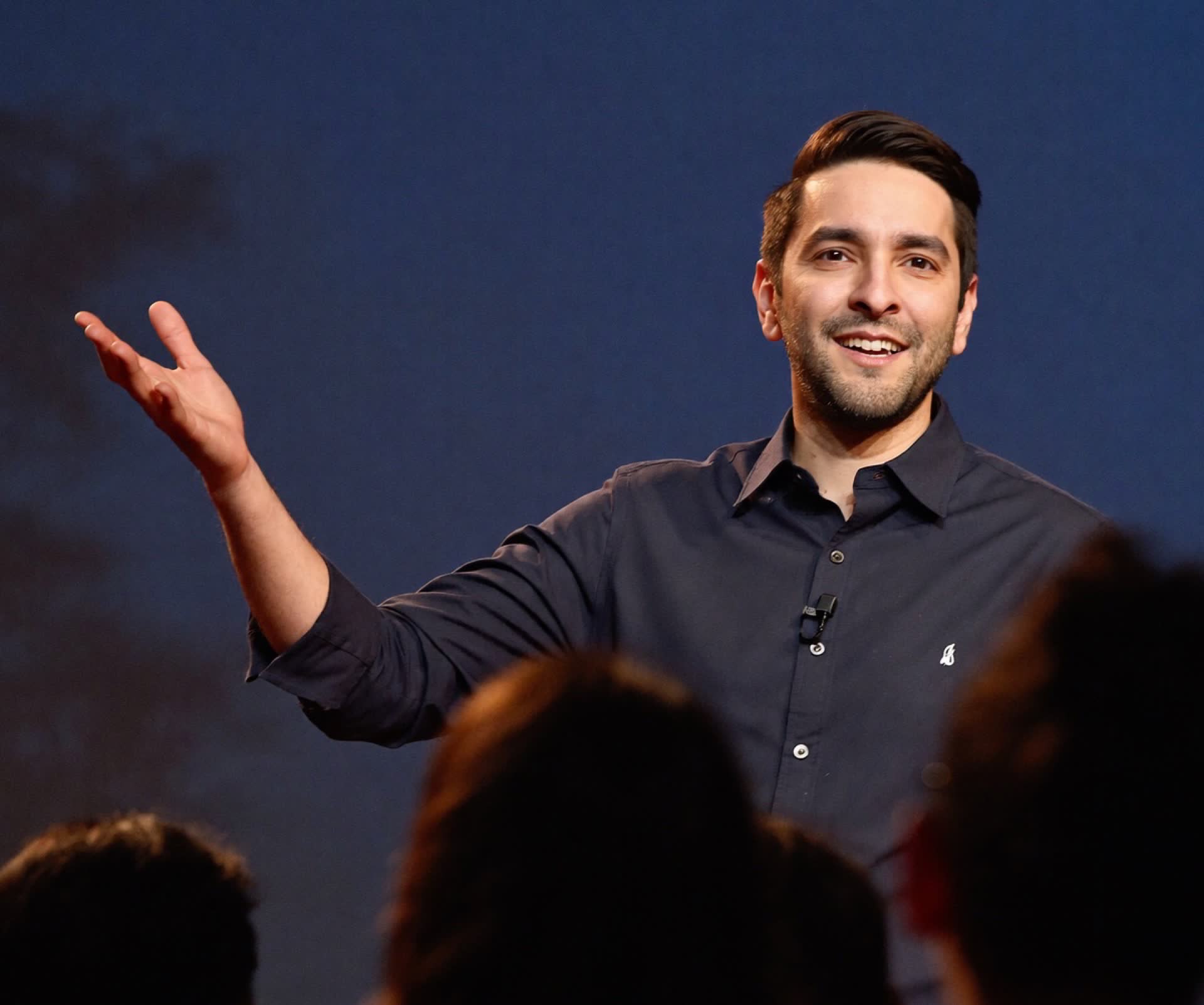
Noman Azhar, Chief Officer of Zindigi, traces his path from a financial crisis in his family to building a fully digital banking experience on a commercial banking license — and explains why Pakistan's cashless revolution is a generational, not a technological, problem.
A year in the making
The episode opens with Muzamil admitting he had been trying to get Noman Azhar on the show for a full year. “Finally we have him with us today,” he says, before immediately asking about the title on Noman’s LinkedIn profile — Chief Officer, where it used to say Chief Digital Officer. The distinction matters. Noman explains that Zindigi was carved out as a separate vertical inside JS Bank, with every function — regulatory, compliance, marketing, technology, product, customer experience — replicated under him and pointed exclusively at the Zindigi brand. It is not just a rebrand. It is a structural reorganisation of accountability.
Rawalpindi, a financial crisis, and the accidental BBA
Noman was born in Rawalpindi, schooled in the city, and by his own description was never a strong organised learner. “I am really poor with organised learning,” he says. “I was always good at problem solving.” He drifted through metric, chose biology over computer science because of social pressure, performed worse in FSC than he had in metric, and ended up at ARID University almost by accident — it was the only institution still accepting applications when his cycle had passed. He finished a BBA and then an MBA from the same university, graduating around 2007 and 2008.
The more important event happened mid-BBA. His family, which ran a business, fell into serious financial difficulty. Loans, losses, and a last semester with no fees. “My majboori thi. Mujhe fees pay karni thi. Maine naukri kar li.” He joined an international call centre, not out of ambition but necessity. What he saw there — the world changing around him — became the fuel. “Jab maine duniya badalte dekhi na, usne mera passion banaya.”
From customer service to the youngest business head in telecom
Noman joined Ufone in 2008 on an internship arranged by an MBA teacher who saw something in him. Within two months he had doubled his salary. Within two and a half years he had moved from customer service to the business side — an almost unheard-of transition in telecom, where the two functions rarely mix.
Muzamil pushes on this, noting that for most people a stint in customer service is a career ceiling, not a launchpad. Noman is direct about what it cost him. “Mera dressing ko bhi question kiya jata tha, mere bolne ke style ko bhi question kiya jata tha.” He was an outsider in a business environment that had its own codes, its own greetings, its own hierarchies. His response was not to fight it but to learn faster than the people questioning him. “Woh mujhe challenge karte the, unko yeh samajh nahi aati thi ki main yeh dekh raha hoon ki maine unse behtar kaise hona hai.”
He stayed seventy-two hours straight in the office during one crisis. He attended his grandfather’s funeral and returned to the office the same day without telling anyone. Within three to four years he was the top performer in a department where he had once been an alien. He eventually became the youngest business head in the telecom industry, heading digital financial services and digital governance at Ufone after eleven years.
Two branchless banking launches and the leap to banking
Inside Ufone, Noman launched UPaisa — the branchless banking product — and then a separate Islamic version in partnership with Meezan Bank. When a management change brought in leadership that, in his words, had a “telecom mindset” and little confidence in digital, he left. He spent a year at a payment systems company on the other side of the table from banks, then moved into JS Bank in 2017 as head of branchless banking.
The portfolio he inherited, J-Cash, was losing roughly one billion rupees a year. He took it, changed its direction, and made it profitable in under two years. “Negative se positive par le aaye.” That result gave him credibility inside the bank. He became the youngest SVP, then the youngest EVP. He was then asked to take an acting charge as CIO across JS Bank — a role he held for five months while the bank searched for a permanent hire. When the new CIO was brought in, Noman handed the role back willingly. A week later, the president called him at midnight and offered it back. He declined again, choosing instead a new digital role that was, by his own description, five percent of the CIO’s portfolio. “Ninety-five percent portfolio chhod diya sirf ek basis par.” He gave himself nine months to launch something or walk away. On 18 January of the following year, Zindigi went live.
Building the tech stack in-house
One of the most consequential decisions Noman made was to build Zindigi’s technology himself rather than rely on third-party vendors. “Maine kaha ji tech toh main khud banaaunga. If I have to be the digital bank, I can’t have my dependency on a third party vendor.”
Convincing the board was hard. What helped was a track record: by that point, Muzamil notes, Noman’s reputation inside the organisation was that he delivered on what he said. The core stack is now fully owned. Ancillary applications — front end and others — are also proprietary. The remaining vendor dependencies, which exist because of Pakistan’s banking infrastructure, are being removed systematically. The goal is a plug-and-play system that can go international without external dependencies.
Eighteen months after launch, Zindigi had over seven million downloads, ranked fourth among financial services apps in Pakistan by downloads in the previous year, and had 3.5 million active accounts. “Alhamdulillah we are around 7,000,000 plus downloads which is a massive massive number.” Marketing spend has since been reduced significantly while customer acquisition continues to grow — a signal, Noman says, that word of mouth has taken over.
The cashless problem is not a technology problem
Later in the discussion, Muzamil raises the question that has hung over Pakistan’s digital finance conversation for fifteen years: why hasn’t the cashless revolution arrived? Regulators have opened up. Licenses have been issued. Apps have been downloaded. And yet people still cash out the moment money hits their account.
Noman’s answer is structural. The early branchless banking products were built for the bottom of the pyramid — cash in, cash out, money transfers. The use cases that Gen Z and Millennials actually want — investments, international payments, credit — were never built. “Mobile top up se hum aage nahi gaye. Chaar utility companies se aage nahi gaye.” The generation that pays utilities is not the generation these apps were targeting.
He goes further. Cash in Punjab, he says, is not just a habit — it is a social norm. “Punjab mein shaadi nahi hoti cash ke bagair.” Digital Eid money feels wrong to people who grew up with fresh notes. “Woh maza hi nahi aata.” Changing that is not a product problem. It is a civilisational one, and civilisations do not change overnight. The faster a change is forced, the higher the risk of collapse. Sustainable change takes a generation.
The unlock, in his view, is threefold: focus on Gen Z and Millennials, bring their income — freelance earnings, pocket money, payroll — into accounts, give them investment and other use cases, and digitise government payments completely. On the last point, Zindigi digitised Islamabad traffic police challan payments years ago, saving the government millions of rupees a month in revenue leakage. “Kahin par koi leakage nahi hai. Customer is more than happy.”
Data as the core product, not money
Muzamil frames digital banking as a money game. Noman reframes it. “Mere liye it’s not a money game, it’s a data game.” Money, he argues, is the last node. Everyone is focused on it. Almost no one is focused on the data and value generation that makes money possible.
His reference point is telecom. “Pakistan mein at least to my experience koi industry aisi hai na jo sahi maano par data driven rahi hai from day one toh woh telecom hai.” At Ufone, twenty-three million customers were broken into twenty-three thousand segments. Every customer had a profile. Predictive models ran on top of those profiles to forecast churn and spending, and to act on both. That discipline came directly into Zindigi.
Today, when a user signs up, Zindigi begins categorising them immediately — how long the sign-up took, what phone they used, what their behaviour was. If a user taps the same screen three times without proceeding, Noman’s team knows before the user complains. “He should not be complaining me. I should know ki yeh masla hai.” The feedback loop runs from observation to action, not from complaint to response.
On cyber security, Noman is equally precise. The question of where data is stored — Pakistan or abroad — is a national sovereignty decision and a secondary one. The real question is how the data is protected. GDPR compliance, encryption at rest, supply chain risk — these are the actual vulnerabilities. “Pakistan mein kitni organisations hain jo data at rest ko encrypt karti hain?” A financial platform with 150 integration partners is only as secure as the weakest partner in that chain.
Credit, lending, and what comes next
Muzamil raises credit — buy now pay later, credit cards, unsecured lending — as the missing piece in Pakistan’s digital banking story. Noman agrees it is a huge gap, and explains why it exists. Microfinance banks have mandates that prevent them from crossing into full lending. EMIs have no mandate for it. Most players are issuing debit cards and calling it digital banking. “Debit chhaapte raho, debit chhaapte raho.”
The money in digital banking, Noman says plainly, is in lending. Everything else is free infrastructure. “Digital banking mein paisa kahan par aata hai? Aata hi lending mein.” Zindigi, backed by a commercial banking license, can do it. They already run a salary advance product for payroll customers with, he says, no regulatory observations. The broader lending push is weeks away at the time of recording. The limiting factor has been waiting for their customer base to age into a bracket where their algorithm produces more reliable signals. “Sixty days from today hum inshallah be live.”
Pakistan in 2050
By the end of the conversation, Muzamil asks Noman to look out to 2050. The question is asked, Muzamil says, because Noman has given him something he had not felt in a while — optimism. Noman does not hedge. “I am very optimistic. Rather I am sure Pakistan is going to grow.” Large tech companies, many startups, and players like Zindigi will bring investment back. The exposure gap — the difference between the Noman of fifteen years ago and the Noman of today — is the same gap Pakistan as a country is closing. The process takes time. The direction is not in doubt.


Never miss a conversation.
New episodes and the thinking behind them, straight to your inbox. No hype, no spam, no pitch.