Thought Behind Things
The kid who wouldn't have finished tenth grade
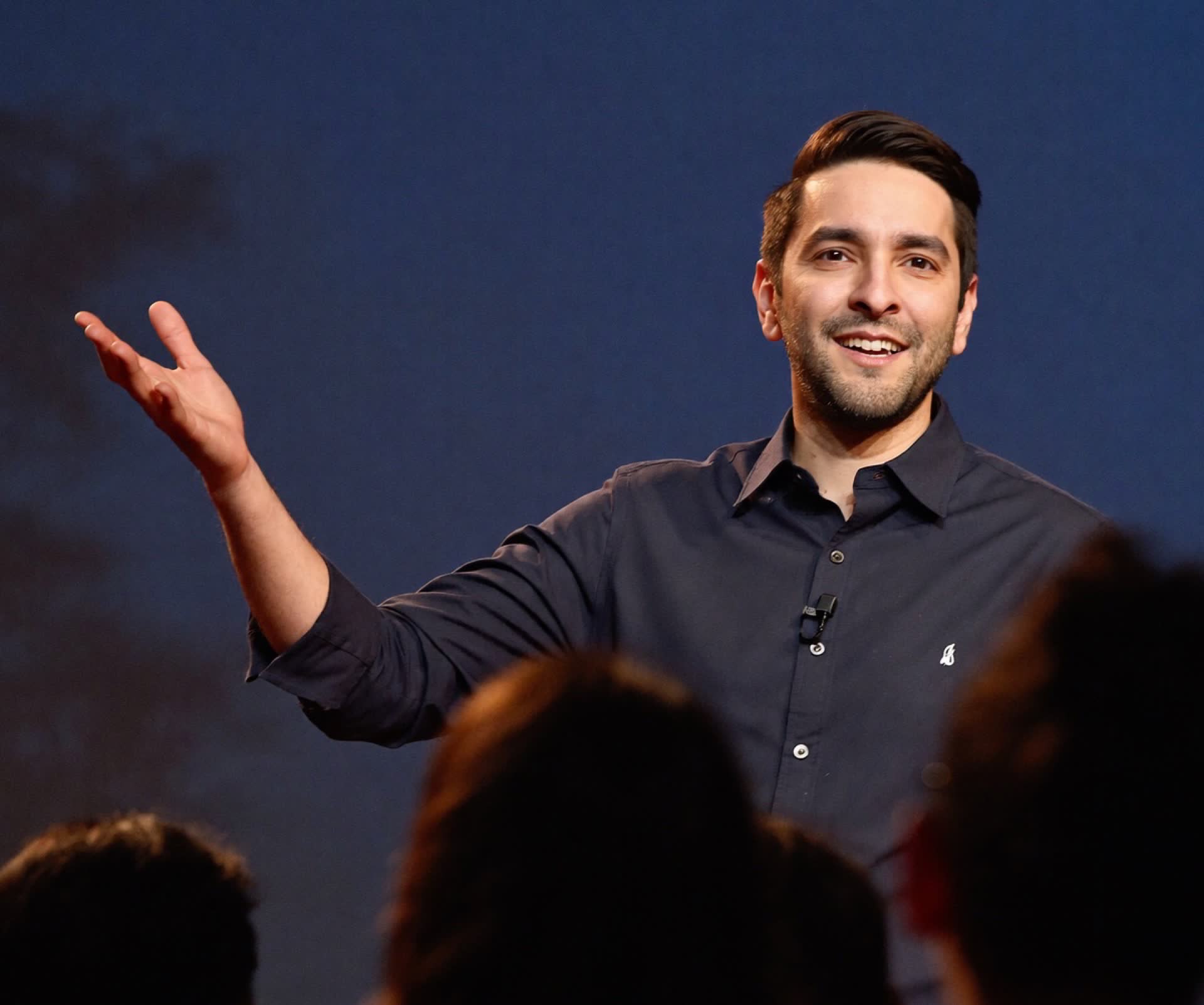
Nadeem Hussain grew up in a Karachi slum, attended a TCF school that didn't exist before he was born, and went on to MIT and Oxford University Press. In this conversation he traces that journey and turns it into a lens on Pakistan's broken public school system, Sindh's political economy, and whether the country can survive its current fiscal crisis.
From a Karachi slum to MIT: the personal stakes
The episode opens with Muzamil establishing why he invited Nadeem Hussain onto the show. Education, he argues, is “a core element of any society’s development that we more often than not ignore,” and social mobility through schooling is, in his words, “a no brainer.” Nadeem’s biography is the proof of concept.
Nadeem was born in rural interior Sindh, in a district called Naushahro Feroze, but his family moved to Karachi when he was two months old. He grew up in an urban settlement — a kachi abadi — called Ibrahim Goth. There was no school in the neighbourhood. Then The Citizens Foundation built a campus there.
“I was an out of school kid, but then TCF built a campus in our urban slum,” Nadeem explains. “In another way, you can simply say that kids who go to TCF schools would be just another addition to the country’s out-of-school children population if TCF didn’t exist.”
When Muzamil asks whether Nadeem would have reached MIT without TCF, the answer is unambiguous: “I would not have even completed my tenth grade.”
The TCF model, Nadeem clarifies, is not a supplement to existing provision. It builds only where there is no school at all — no government school, no low-cost private school, nothing. Teachers conduct door-to-door campaigns because many parents in those communities do not yet understand the value of formal education. By the time of recording, TCF operated 1,836 campuses across Pakistan, schooling over half a million students.
From TCF, Nadeem went to DJ Science College for his intermediate, then won a place on IBA’s National Talent Hunt Programme — a scholarship track that advertises in newspapers, visits government intermediate colleges, and prepares shortlisted students to compete on the same entrance test as applicants from elite private schools. He graduated from IBA in 2014 with a major in computer science, then pivoted entirely toward policy.
Why a computer scientist ended up writing books on Sindh
The divergence from computer science to public policy was not accidental. “I developed some interest in policy, in things that have a direct relationship with humans, with people, with masses at large — which a computer scientist or a programmer sitting on a laptop screen misses,” Nadeem says. He wanted to work at the intersection of policy and technology, and joined the Sindh government to implement a World Bank project in education planning.
That work led to his first book, co-authored with Ishrat Husain and Ijaz Qureshi: The Economy of Modern Sindh, published by Oxford University Press in 2019. It is, Nadeem notes, the first book on a sub-national economy in Pakistan. His second book, Agents of Change, co-authored with Amjad Noorani, covers Pakistan’s K-12 education landscape.
What the book found: Sindh’s wins and its systemic failures
Muzamil puts the standard stereotypes about Sindh to Nadeem directly — feudalism, ghost schools, water scarcity, a province held hostage by a narrow elite. Nadeem does not dismiss them, but he complicates the picture.
On the wins: Sindh has major institutions of higher learning — Aga Khan University, Dow Medical College, NED, IBA, Habib University, Mehran University, Sukkur IBA. It has the port city of Karachi. And it has an unusual structural advantage in the interdependence of its rural and urban economies: agriculture in the interior, processing capacity in the cities, and a port to export the output. “In the same province, you get both, and then you have a port, which means you have huge potential and space to export things.”
On the failures: “Sindh has one of the perhaps most broken public school systems in the entire world. I say this with extreme sadness, but this is reality. You are just running the payrolls of the government school teachers and the students are not actually learning in the classrooms.” In the northernmost districts — Kashmore, Kandhkot, Jacobabad, Kambar Shahdadkot — the transition rate for girls from primary to middle school is just 7 percent. These are the same districts whose populations return the ruling party to power at every election.
The ethnic fault line: quotas, Karachi, and who built what
A significant portion of the conversation turns on the historical tension between Sindh’s Sindhi-speaking indigenous population and its Urdu-speaking Muhajir community. Muzamil shows a map of the subcontinent from 1818 on which Karachi does not appear — the city was effectively built after Partition by Urdu-speaking migrants. From a Sindhi perspective, the province’s development should benefit all its people. From a Muhajir perspective, they arrived with knowledge and capital and were then subjected to a quota system that limited their children’s access to universities.
Nadeem’s observation is that the argument has now inverted: “The tables have been reversed. The one that was opposing it now advocates it, and the one that was advocating it is now opposing it.” He frames the underlying issue as one of unequal starting points: a child born in Tehsil Warah of Kambar Shahdadkot and a child born in North Nazimabad, Karachi, are set on entirely different trajectories from birth, and the state has a responsibility to both.
He is equally clear that the provincial government has not delivered for either community. “The situation is still the same” in the districts that vote for the People’s Party every cycle. And Karachi, which does not vote for them, has been neglected for different reasons. “Anyone who has ruled Sindh and Karachi — their definition of building Karachi is just building a couple of roads at the cost of totally devastating its social and academic fabric.”
Digital media, Nazim Jokhio, and slow empowerment
Muzamil raises the Nazim Jokhio case — a Sindhi activist whose filmed confrontation with powerful figures went viral — as a symptom of something changing. Nadeem agrees it is a useful case study. “The people of Sindh are one of the most marginalized people in this country. You don’t really find a middle class in rural areas. You find two extremes: super powerful and completely powerless.”
Digital media, Nadeem argues, is beginning to close that gap. The Jokhio case showed Sindhi activism reaching people across the country and the world. It is a slow, evolutionary process, but it is real — and it extends beyond political awareness to economic and educational opportunity.
On the forced displacement of communities from their ancestral land to make way for housing societies, Nadeem is unsparing: “Among the great injustices of modern human history, this will be one — that people whose ancestors’ graves are there, whose homes are there, who are happy there, were forcibly removed.” He adds, pointedly, that the housing societies were not built for any particular ethnicity. “It was a class issue more than anything else.”
150,000 government schools and the voucher debate
The conversation’s most technically detailed section concerns education reform. Muzamil raises the suggestion — attributed to former finance minister Miftah Ismail — that Pakistan should privatise education delivery through vouchers given to parents, allowing market competition to drive up quality.
Nadeem’s response is precise. Every province already runs an Education Foundation that pays private school operators a per-child fee to educate students in areas where government schools are absent. “It’s just the same thing he says — that you give the voucher to the parents. The education foundation actually gives the vouchers to the private school operators, which is the same thing.” The instrument is not new.
The more important point, Nadeem argues, is scale. Pakistan has nearly 150,000 government schools. TCF, after twenty-seven years of extraordinary effort, has 1,836 campuses. The Sindh government alone runs 45,532 schools. “The country has nearly one fifty thousand government schools. It’s a huge number.” Elite conversations about Karachi Grammar, Aitchison, and Hassan Abdal miss the point entirely. “You are not even naming Government High School Manawala, District Sheikhupura. No one has heard this name. The school houses more kids than Hassan Abdal does. But the school is not part of the discourse.”
Girls’ stipend programmes — cash transfers to parents who send daughters to school — already exist in every province and are delivered through mobile money. Nadeem has seen the numbers. They have not dramatically changed enrolment among families who were already resistant. “People who are not willing to put in their girls are still not willing to put in their girls just because of money. It’s about changing their mindset too.”
The government’s responsibility and the limits of charity
This leads to the sharpest exchange in the episode. Muzamil pushes back on the idea that individuals, civil society, or philanthropists can substitute for state action. “We are the most charitable nation in the world. What has that done for us? All it has done is it has worsened our situation where more people want charity and more people are poor.” He argues that celebrating private initiatives unconsciously relieves pressure on the government to do its job.
Nadeem does not fully disagree. He acknowledges that a private or nonprofit initiative cannot carry the responsibility that belongs to the state. But he resists the binary. “When there were bodies lying on the roads in Karachi and the government was not picking them up, you do even little good.” The Edhi Foundation ran ambulances in Karachi for decades because the government of the country’s largest city did not have a rescue service. That is not an argument for charity over governance — it is an argument that both pressures need to operate simultaneously.
Later in the discussion, Muzamil reflects on his own frustration: “I have had this conversation three years ago. Exact same conversation, exact same outcomes, exact same recommendations.” Nadeem’s response is measured: the way to put pressure on government is through the vote, and “we know what happens to the vote in this country.”
Default, sustainability, and Pakistan in 2050
By the end of the conversation, Muzamil turns to the macro. He references a report from a research group laying out the high probability of Pakistan defaulting and the social unrest that would follow. He asks Nadeem, who holds a master’s in international economics from MIT, whether the current system is sustainable.
Nadeem’s answer is direct: “It’s not sustainable, for the good of the country. But unfortunately, all of these vested interests are very strongly knitted.” He points to Pakistan’s recurring pattern of selling geopolitical leverage — the Afghan war, the war on terror, and now climate finance — to attract external bailouts without fixing the underlying economy. “It used to be around terrorism, and now it’s around climate. But we are not ready to fix the climate issue. We are just interested in bringing the money from the outside.”
On the human reality of default, he strips away the technical framing: “For me, this is the default. Your citizens are already under huge mental stress financially, about the future of their kids, about the future of the investments they have made in this country.” A person earning 25,000 rupees a month and a person earning a million rupees a month are both feeling the heat, he says — just differently.
On Pakistan in 2050, Nadeem draws on the thousands of people he met while researching his two books — children in the fields of Sindh, students in Karachi madrassas, people striving and improving around him. “I’m forced to be hopeful because I see them striving every day.” His forecast: bearish on the next two to three years, but genuinely optimistic about 2050. “Pakistan of 2050 will, inshallah, be an amazing place.”
Muzamil closes by thanking Nadeem for what he calls “your service” — a phrase directed at academics generally, people who absorb difficult knowledge and still have to keep a functioning face. It is a fitting end to a conversation that began with a child in a kachi abadi who had no school, and ended with a researcher who has spent a decade trying to make sure fewer children face that same absence.


Never miss a conversation.
New episodes and the thinking behind them, straight to your inbox. No hype, no spam, no pitch.