Thought Behind Things
The CEO who got caught in a war before his career started
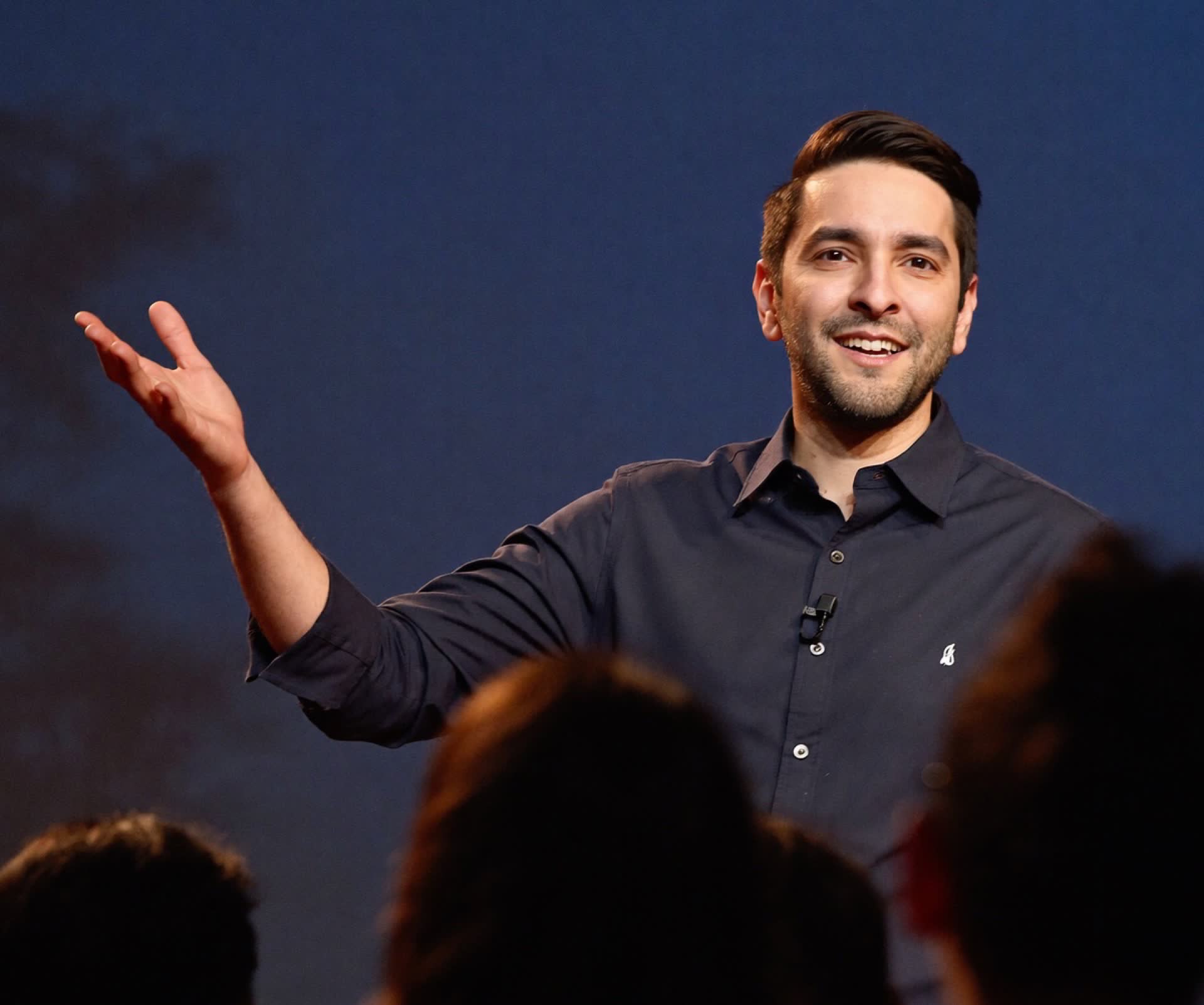
Khaqan Sikander went to Beirut as a UN volunteer, got trapped in the 2006 Israel-Lebanon war, and came back convinced he was a saltwater fish who belonged in the open sea. Now he's trying to fix Pakistan's healthcare system from the inside out.
Born in Bahawalpur, raised on bicycles and no TV
The episode opens with Muzamil asking Khaqan Sikander about his earliest memories. Khaqan was born in 1985 in Bahawalpur, attended a school run by nuns and sisters, and describes a childhood defined entirely by physical activity — cycling in the heat, no television, no phones. “You would spend the entire day in the sun on a bicycle, just physical activity,” he recalls. The family later moved to Karachi, though Khaqan was young enough that he carries no negative memories of the city’s turbulent period. It is a deliberately simple origin story for someone who would go on to live anything but a simple life.
Two months of computer engineering, then a library job that changed everything
Khaqan followed his elder brother — already finishing a computer engineering degree at the University of Arizona and working at IBM — to the United States. The plan was straightforward: follow the route that had already been set. He enrolled in computer engineering. It lasted two months.
“You have to know yourself,” he tells Muzamil. “The US education system allows you to explore. Here we are put in boxes. We don’t have choices.” Rather than declare a major, Khaqan spent two years sitting in classes he wasn’t even registered for. He got a job in the university library — night shifts — and describes it as the first time in his life he picked up a book to read for pleasure and never put one down again.
What emerged from that exploration was an unlikely triple: Arabic, then French, then Spanish, eventually combined with a double major in economics. The economics degree, he admits with some amusement, was purely practical. “That was purely for jobs — something to show.”
Che Guevara, a UN volunteer slot, and a war
The pivot that defined everything came from a book. Khaqan stumbled across Motorcycle Diaries by Che Guevara in the library and fell in love with the idea of travel as a form of understanding. A friend who had just returned from Ethiopia told him about UN volunteer opportunities. He applied — Pakistani passport, post-9/11 America, the odds were not obvious — and was accepted for a placement in Beirut, Lebanon, in 2006.
He arrived at two or three in the morning. The driver sent to collect him was Palestinian. Khaqan, who could speak Arabic, asked on impulse whether he could stay in the refugee camp rather than go to the hotel. The driver pulled over, made a phone call, and eventually agreed.
“I stayed in that quarter and I basically never left,” Khaqan says. He spent his time in the Palestinian refugee camp, building relationships, learning the texture of a community that had been living in concrete structures stacked vertically for sixty or seventy years — because Palestinians cannot own land in Lebanon and so build upward instead of outward.
Then, approximately two months after he arrived, Israel launched what became known as the July War. The bombing started in the south of Beirut, precisely where Khaqan was living. “I was right in the middle,” he says. The driver who had taken him in protected him like family and eventually secured his passage out through a UN convoy — a journey that took ten to twelve days, by road through Syria, while aircraft bombed anything that moved.
Muzamil asks what that experience did to him. Khaqan’s answer is the conceptual spine of the entire conversation. He points to the aquarium behind them in the studio. An aquarium is a controlled environment — clean it, feed the fish, change the water, and two plus two always equals four. The open sea is full of variables: predators, temperature currents, unpredictable outcomes. “Our world is like that open sea,” he says, “and the developed world, for all its systems and controls, is much like an aquarium.”
His conclusion: “I think fundamentally, us human beings are essentially at our core all saltwater fish. We are made and born to live in a natural habitat.” That is why immigrants do well in the developed world — they bring the adversity of the open sea into a controlled environment and master it. But they also eventually feel suffocated. From that point on, Khaqan says, he knew he was a saltwater fish and belonged in the open sea.
Paris, Senegal, and the difference between experience and exposure
After graduating in 2008 — into the global financial crisis — Khaqan had already spent 2007 in Costa Rica and Cuba with UNESCO. Cuba, he notes, is frozen in time: 1960s cars, no capitalism, a time capsule. He was suffocated by the lack of choice but struck by one counterintuitive fact: Cuba has one of the world’s best healthcare ecosystems, built on the logic of a communist state where everything is free. Cuban doctors went to Pakistan after the 2005 earthquake. That detail lodged somewhere.
Before returning to Pakistan, a masters opportunity arrived at a university in Paris — diplomacy and strategic negotiations, taught in French, full scholarship, students from sixty or seventy countries. He took it. The year became less about the classroom and more about tracing the footsteps of Iqbal through Muslim Spain and Morocco.
Then came a summer in Dakar, Senegal, with the United Nations Industrial Development Organization — the westernmost tip of West Africa, where the slave trade once aggregated its human cargo before shipping it across the Atlantic.
Later in the discussion, Muzamil draws out what Khaqan considers the most important lesson from all of this travel. Khaqan distinguishes sharply between experience and exposure. “Experience is limited to you,” he says. “Let’s say you are a content creator. You know everything there is to know about content creation. Today I have interacted with you. I have been exposed to your experience. My exposure has increased.” The best decision-making at the highest levels, he argues, comes not from deep personal experience but from wide exposure — an almost intuitive sense built from encountering many different worlds. The message to young people: whatever you are studying, always expose yourself to the other.
Low-income housing, transformers, and a letter to a finance titan
Khaqan returned to Pakistan around 2009-2010. He describes the first three to four years as deliberate experimentation — trying to figure out what Pakistan needed and where he fit. He joined one of the first portfolio companies of Acumen Fund, working on low-income housing and disaster rehabilitation in flood-affected areas of Sindh. He then co-founded a manufacturing unit for distribution transformers with a former Siemens executive, built it from the ground up, and sold it.
The real turning point came from a letter. Khaqan had read about a Pakistani financier operating at the global stage — running a large private equity firm, rubbing shoulders with Bill Gates and Richard Branson — who talked about impact investing: using capital to create both returns and social change. Khaqan guessed the man’s email address on the first attempt (firstname.lastname@company.com) and wrote to him cold. The email reached him. Within forty-eight hours, Khaqan received a call from Karachi. He was in Lahore. He went anyway.
That connection led him to the Aman Foundation in Karachi — an organisation running what was, at the time, the only credible private ambulance network in Sindh, alongside a state-of-the-art vocational training institute in Korangi. “We swim in a sea of mediocrity surrounded by islands of excellence,” Khaqan says. Aman was one of those islands.
A JIT, the Supreme Court, and a six-year-old girl
The Aman Foundation years produced one of the most dramatic episodes in the conversation. The organisation’s backers ran into severe financial trouble. Salaries went unpaid for months. Strikes broke out internally. Then a young girl was accidentally shot by police during a mugging in Karachi. An ambulance was called. It took twenty to twenty-five minutes to arrive — not because of negligence, but because Karachi, a city of millions, had almost no emergency medical infrastructure. The girl died.
Because the family came from the media industry, the case received national coverage. A JIT was formed. Khaqan, by then the public spokesperson and a senior operational figure at Aman, was called to appear before the Supreme Court in Islamabad. “I was in the line of fire in every way,” he says.
His response to the crisis was counterintuitive. When most people were leaving, he stayed. “Fire is good,” he explains. “Fire turns dough into bread. Without fire, dough is useless to anyone. But the same fire can turn it to ash.” The JIT ultimately cleared the organisation. The Sindh government, under pressure from the spotlight, stepped in to sponsor the service. That ambulance network today operates across the province under a government rebrand — but the original seed, Khaqan says, is intact.
The problem with healthcare: everyone is incentivised when you get sick
After Aman, Khaqan was approached to become CEO of a corporate health insurance brokerage — his first CEO role. That led eventually to Healthx Pakistan, the franchise of Dubai-headquartered TruDoc International, operating in over ten countries with a customer base of approximately 23 million people and more than 7,000 corporate clients.
Muzamil asks him to explain the problem Healthx is trying to solve. Khaqan’s diagnosis is structural. “All stakeholders in healthcare — insurance companies, hospitals, doctors, pharmacies, labs — are incentivised when you get sick,” he says. “It’s upside down. The entire sector is reactive and incentivised on spend.”
Healthx operates on a subscription model. A customer pays a monthly fee and receives unlimited access to general practitioners, psychologists, nutritionists, and nurses — all full-time employees, centrally hired, locally licensed, unable to practice elsewhere. The company runs data analytics on past health claims to identify disease burden within a corporate client’s workforce, stratifies patients into acute, healthy, and chronic categories, and then puts chronic patients — who generate eighty percent of all healthcare costs despite being only twenty percent of the population — onto proactive disease management plans.
The commercial logic is deliberately inverted. “We are incentivised on cost savings,” Khaqan explains. “If I save you X percent, you pay me Y. If I don’t save you X, you don’t pay me Y.” The goal is to keep people healthy, because that is the only way the business makes money.
He offers a simple rule for consumers trying to navigate a confusing market: “Any stakeholder interacting with you who is incentivised by your being sick is problematic. Any stakeholder incentivised by keeping you healthy is fine. Use that lens to declutter.”
Hybrid, not digital — and why the human has to stay at the centre
Muzamil pushes on the digital health question. There are aggregator platforms, telemedicine startups, mobile clinics with nurses and remote doctors, pharmacy delivery services. How is Healthx different, and where does all of this go?
Khaqan makes two arguments. The first is about scale and sustainability. Healthx is not a startup burning cash to acquire customers and inflate a valuation. It is a traditional profit-and-loss business, and its incentive structure is aligned with the customer’s incentive. “The marriage happens when our goal — profitability — and the customer’s goal — staying healthy — are the same thing,” he says.
The second argument is about the limits of pure digital health. The total global healthcare market is roughly ten to twelve trillion dollars. Digital health — telemedicine, telehealth, digital platforms — currently represents only one to two percent of that, most of it post-COVID. Retail took twenty-five years to digitise twenty to twenty-five percent of its market. Healthcare is predicted to make a similar shift in ten years. But Khaqan is sceptical that digital alone can do it. “Healthcare is trust-based. You want to speak to someone you trust, who you believe won’t deceive you, who knows your history, who will also save you money.” The model has to be hybrid — digital tools backed by human care coordinators as the first point of contact.
He is watching conversational AI closely. ChatGPT-style interfaces, he says, will eventually become the front end of healthcare navigation — a personal assistant that knows your history, your location, and your symptoms, and walks you through what to do next. But the direction of travel matters more than the speed. “Simth nahi badlni” — the direction must not change — and that direction has to be designed through the lens of a human being who wants a healthy, low-stress life.
A book sixteen years in the making
By the end of the conversation, Muzamil turns to Khaqan’s book, That Which Flows. Khaqan says it took sixteen years to write, though he did not know he was writing a book for most of that time. It is built around a single idea: that all human beings are capable of living multiple lives within a single lifetime, and that the people who do — Leonardo da Vinci, historical religious figures, revolutionary thinkers — are those who refused to limit themselves to a single identity.
“People perish. Words survive,” he says. “Long after I’m gone, this will survive.”
The title comes from a simple observation: still water stagnates; flowing water stays clean. “Human beings should flow like water with time. Evolve, grow. If you stop, you rot — just like water.” The book is available on Kindle globally and in hardcopy through India, with Pakistani distribution under discussion.
Muzamil asks the closing question he puts to all guests: where does Pakistan stand in 2050? Khaqan’s answer is both philosophical and practical. Good and bad have always coexisted in human history and always will. But practically, he sees the end of dynastic and cult politics, more informed voters, maturer institutions, and a democratisation of technology that dissolves borders in ways that open up opportunities for Pakistanis regardless of geography. “Anybody — look at yourself,” he tells Muzamil. “This conversation is global right now.”
His parting message is the same one that brought him back from Paris, from Senegal, from the open sea: “Life is a balance between money and meaning. If you have only one, you’re in trouble. Pakistan and this part of the world allows you to find that balance. Try to become problem solvers. That is how you will make a better Pakistan.”


Never miss a conversation.
New episodes and the thinking behind them, straight to your inbox. No hype, no spam, no pitch.