Thought Behind Things
Pakistan's drama audience has the habit. Now it has to learn to pay.
ARY Network CEO Jerjees Seja on why Pakistani TV runs on ads alone, why Netflix stays out, and why viewers must start paying before quality can rise.
Following the money in Pakistani media
Muzamil opens with the context of the series. Thought Behind Things is working with Endeavor Pakistan to explore fifty of the country’s most exciting startups and businesses. Alongside the startups, he wants to look at industries that began as something like a startup ten to twenty years ago and grew into giants. Media is one of them.
Everyone, he notes, has an opinion on media, because the consumer watches the product every day. So he decided to ask the people who run it where the problems and opportunities are.
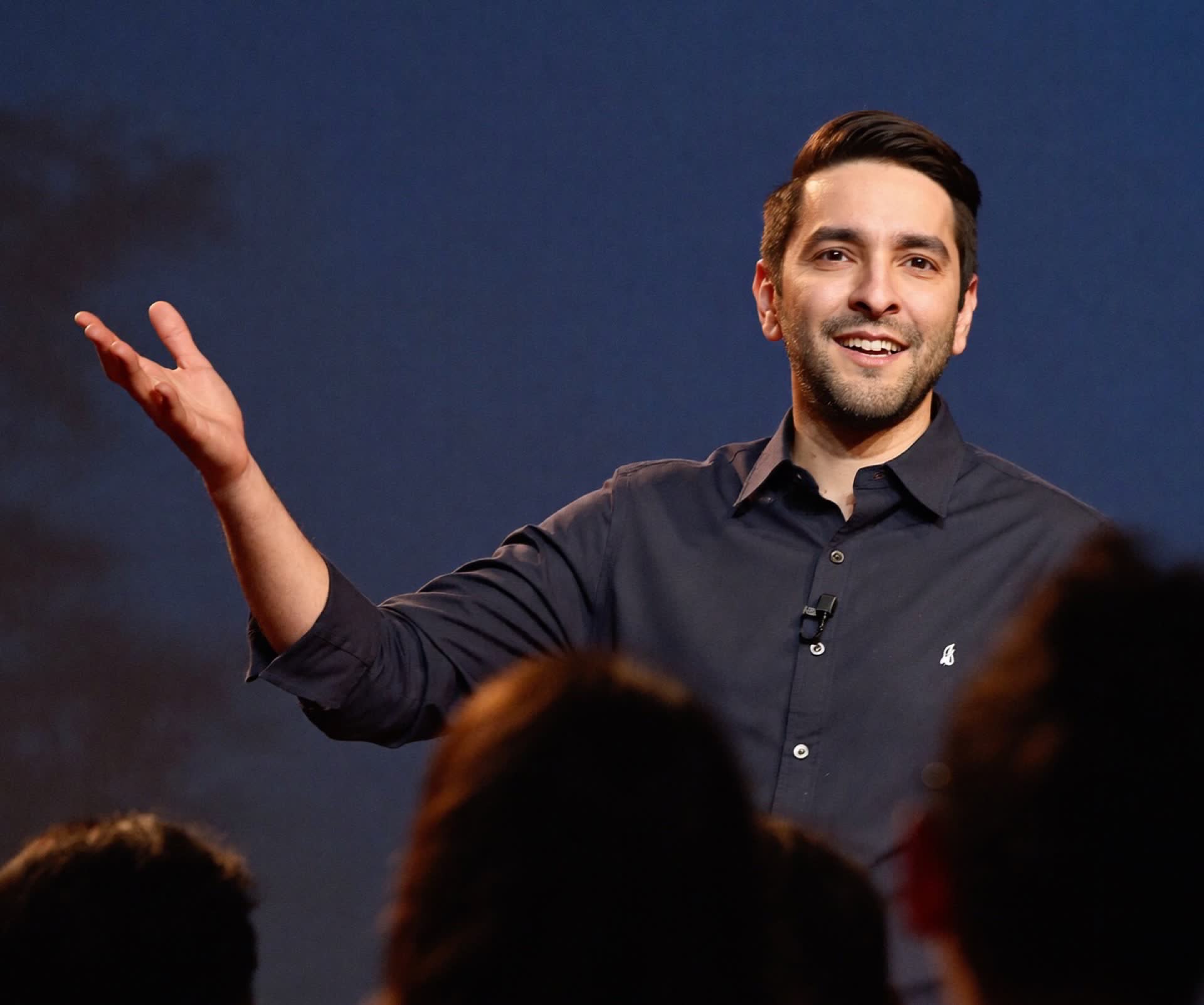
The guest is Jerjees Seja, CEO of what Muzamil calls one of the largest media groups in Pakistan. Jerjees corrects the name in his first line. It is ARY Network.
A marketer who treats content as a product
Jerjees was born in Hyderabad. His father worked in insurance and was posted in Quetta for 25 to 30 years, so Jerjees did his schooling there. He moved to Karachi for university and calls himself a media freak who watched every movie he could.
He studied marketing at Greenwich University, then affiliated with Southeastern University in Washington DC. While still doing his bachelor’s he interned at Interflow, and two weeks in he was offered a job. A year later he moved to Orient, then to Evernew, an advertising group with an entertainment arm. Private channels were starting to open up. “I was just lucky I was at the right place at the right time,” he says.
The marketing background shaped everything that followed. “I am at heart a marketeer,” he says. His edge, as he tells it, was to stop treating a drama as a drama and start packaging it as a complete product.
Evernew Entertainment bought airtime slots on PTV, placed other producers’ dramas in them and sold the advertising. After learning on dramas by Sultana Siddiqui and others, Jerjees decided the company should make its own. He went to Sajjad Gul, a film producer he calls one of the greatest in Pakistan. Sajjad Gul’s first answer was that television was too small a job for a film man. Jerjees convinced him anyway.
Their first production was the drama serial Mehndi. Jerjees made Jawad Ahmed’s “Mehndi ki raat” its title song and packaged the show around it. The drama became a major hit, and Chandni Raatein followed. He also pushed for music videos for drama soundtracks when the idea did not exist. People asked why a drama needed one. Before this, he says, nobody pre-marketed a drama. His team built a show into a brand before it aired, and advertisers came asking to be part of it. Soon every producer was making promos and soundtracks the same way.
Before private channels, and a goal set at 23
In the early 1990s, Jerjees recalls, India opened up to satellite television with Star TV, Zee TV and Sony. Pakistani homes put up dish antennas to watch. Inside Pakistan there was PTV, PTV World, STN and a few hours of NTM programming.
Content came on VHS, and switching channels could mean turning the whole dish. Jerjees recalls a PTV music show that aired once a week at around 10:15 at night and launched just two songs. For his generation, he says, that was an entire music channel. Today he calls access to content “the easiest thing in the world.”
Private satellite entertainment for Pakistan, in his account, started in 2000 with ARY, which began operating from the UK. Haji Iqbal had bought out a London channel called The Pakistani Channel with no media experience. It was handed to Salman Iqbal, now the group CEO, a finance graduate who spent the next five or six years building the team. Jerjees credits a government policy change in the early 2000s for opening up the market. Indus TV and others followed, and ARY tried bold formats, including a quiz that gave away a kilo of gold every day.
Jerjees entered the industry in 1997, at around 20 or 21. There were no ratings then. He remembers telling clients that one day channels and programmes would stop being sold and ratings would be sold instead. They thought he was joking. Today every audience is measured.
The target he set himself came from a media conference in Hong Kong in 2000, when he was 23. The chief operating officer of Columbia TriStar walked on stage and said he was 31. Jerjees decided he would be a chief operating officer by 31. He joined ARY in 2005, aged 28, as executive director, after serving as chief operating officer at Evernew. At 31 he was chief operating officer of ARY.
Asked about ageism, he says senior people kept calling him very young. He reframes Muzamil’s word “ego” as a safe zone that people find hard to leave.
His first event at ARY was a 6 September concert in 2005 with 30 of the country’s top singers. When the countdown ended and they went live, he felt proud to be taking a show to 120 countries. Then he sets that against today. “Today a five-year-old goes live from his phone and is watched all over the world,” he says. He sees that as the youth disruption that comes every ten to fifteen years, and he welcomes it.
How the ARY network grew
When Jerjees joined, ARY was already a network. The early private channels copied the PTV model: one channel carried news, drama, music and everything else on a fixed schedule. ARY, he says, was the most dynamic group and the first to split that into separate channels.
ARY Digital became the entertainment channel. ARY News, ARY Music and QTV followed, then the food channel ARY Zauq. ARY also brought international channels such as HBO, Nickelodeon and FTV around 2008 or 2009. Zauq was later stopped as food content moved online, and A Sports launched about three years ago.
Jerjees builds on Muzamil’s split of the history into phases. From 2000 to 2008, everyone opened channels in excitement. From 2008 to 2015, the industry re-consolidated and closed what did not work. A business channel, Jerjees says, either was not needed or needed a different model. From 2015 entertainment began to take the lead again. After 2019 came Covid, which he calls a different world.
The business of viewership
Muzamil asks for the economics, because he believes most people never ask who pays. Jerjees gives a clean definition. “When we say the business of media, we are talking about business of viewership,” he says. The prime goal is maximum relevant viewership.
There are two models. Advertisers pay content makers to reach a certain audience. Or the audience pays content makers to produce what it wants to watch. “Unfortunately, in Pakistan only one exists,” he says. The second model does not.
Muzamil assumed cable operators paid channels for their feeds. Jerjees says it ran the other way. Operators charged households a fee but passed nothing to the channels. Channels paid operators a carriage fee for their position on the dial, which he says is normal worldwide. What is not normal is that the consumer’s money never flowed back. In India and elsewhere it is shared among channels by viewership. In Pakistan the law never required it. He believes the government of the time did not want to hand over that revenue stream, fearing whoever held it would grow too powerful to listen. Direct-to-home dish service never came to Pakistan either, though Indian dishes flooded the country until a crackdown around 2017.
Then there is the mix of channels. PEMRA has issued more than 100 licences, and Jerjees says most are news. He counts barely seven or eight proper entertainment channels. In the early 2000s, he explains, so much was happening in the world that news became entertainment for Pakistanis. Many owners, he says, opened news channels to protect other businesses and get a voice in the corridors of power, and many now depend on government advertising.
Muzamil suggests that outside the top three or four, news is not a profitable business. Jerjees calls the system flawed. Government spending runs into the billions, he says, and none of it goes to entertainment channels, even though most of the viewing does. It took the industry more than a decade to bring entertainment back on top.
The budget behind the quality argument
Muzamil offers a thesis from the consumer side. After 2008, he argues, an ad-driven model chased the largest audience, which pulled programming toward the lowest common denominator. Jerjees disagrees. Making something that works for men, women and children at once is far harder than making a niche product, he says. Masses contain every class.
As cable grew from 15 or 20 channels to around 100, viewers began comparing Pakistani shows with the best from abroad. People ask him why ARY does not make something like Game of Thrones. “I can make it. Who said I can’t?” he says. “But where will the funds come from?”
He is proud of the craft. Pakistani drama is still the cheapest made in the region, and he says that is because the industry has worked hard and mastered the art. One episode of a Turkish drama costs hundreds of thousands of dollars, he says, as much as five complete Pakistani serials. His friend Sharmeen Obaid-Chinoy directs international projects, and she could make them in Pakistan if the budget existed here.
The same logic explains the slow move to HD. Broadcasting in HD gained nothing while viewers had analogue sets and cable downgraded the feed. Consumers would not pay more and advertisers only wanted numbers, so nobody funded the change. That shifted in the last five to seven years. Most major channels are now HD, and a television that cost four or five lakh rupees now costs 50,000 to a lakh. Jerjees estimates about half of households now have an HD-ready set.
YouTube, Netflix and the war over content
Muzamil raises something he sees as unique to Pakistan. News channels stream live on YouTube, and dramas go there too, which hands a large share of the industry’s revenue to Google. Why did it happen?
Jerjees says nobody chose it deliberately. The bigger gap, in his view, is that no foreign media company has ever entered Pakistan. India got Sony, Star and Disney, who brought expertise, technology and data and then localised. Pakistan had to learn alone. YouTube itself was banned in Pakistan for a while. When it opened up, channels took the opportunity.
He adds a point about the size of the pie. The advertiser who once spent only on linear TV now splits the same budget across TV and YouTube. “We are eating from the same pie,” he says. “The pie is not expanding.”
Then the Netflix numbers. Jerjees puts Netflix at around 750,000 monthly users in Pakistan, about 400,000 of them on premium plans. He asks whether that justifies millions of dollars of investment, and whether the environment is welcoming enough. His answer is that it is better for them to stay out.
ARY’s own response was to launch its app in 2017 alongside YouTube. He says ARY has the largest YouTube channel in Pakistan and is the only channel that also runs its own globally available streaming platform, with more development coming.
Muzamil pushes back. If the whole catalogue is free on YouTube, why would anyone download an app and make an account? Netflix grew on an exclusive catalogue before it made originals. Here, the catalogue that would have pulled viewers onto a paid platform is already free. He adds that viewers feel entitled to everything for free, which he meets as a creator too.
Jerjees turns the question around. He asks how many originals Pakistan’s streaming platforms have ever made. “Next to zero,” he says. They built the technology, bought cricket and live sport, and asked for content for free. He points to Disney, which pulled its content from Netflix once it saw its library was building someone else’s platform, and launched Disney+.
“We are in the business of content,” he says. The delivery method keeps changing, from rooftop antennas to satellite to WhatsApp and Instagram. “Eventually, the war is of the content, the war is not of the platform.” In his words, “content will stay emperor.”
Habit first, payment later
Muzamil asks for the step-by-step path to a market where quality pays. Jerjees is optimistic. You can argue about the speed, he says, but not the direction.
What YouTube gave the industry, in his view, is a habit. Appointment viewing is ending, and people now watch on their own screens wherever they are. Daily consumption has gone from about 30 minutes to around five hours. He calls Pakistan a nation raised on Rainbow Centre, where content that cost dollars elsewhere came free, so payment will come slowly. Even so, a base of paying streaming subscribers has started to form.
He reminds Muzamil that inflation is high and Pakistan has few parks, stadiums or cinemas. Television and food are what people have.
His proof that content pulls people is the final episode of Mere Paas Tum Ho. ARY put it on the ARY Zapp app an hour before television. The app crashed. Millions had downloaded it to watch the ending early. “That’s the power of content,” he says.
Muzamil’s counter is about segments. He compares Kabhi Main Kabhi Tum and Sar-e-Rah with the Indian series Mismatched. When Kabhi Main Kabhi Tum aired, his driver, his cook and the CEOs he interviewed were all watching it. But educated viewers in the SEC A and B segments, he argues, will not accept a hero who builds a Call of Duty level game in one night. The money sits with the young people in DHA and Clifton paying 6,000 rupees an hour for padel, who could easily pay 500 to 1,000 rupees a month for streaming. He proposes a streaming-only pet project: 50,000 viewers paying 1,000 rupees each would cover its cost, as Sacred Games and Little Things proved possible on Netflix India.
Jerjees agrees with parts of it and pushes on others. At the premiere of the final episode of Kabhi Main Kabhi Tum, ARY’s PR head told him she was glad the network had finally left mother-in-law dramas behind. He asked if she had watched it. The drama had every one of those elements. The setting and the narrative style change, he says, while the stories stay the same. The real shift is that Pakistani dramas are cool again, and Gen Z is watching.
He answers the Netflix India point with his own count: after Sacred Games and a few others, he says, some 70 to 80 similar series flopped, and Netflix India now carries a Kapil comedy show, the most mass content India has. His metaphor is a restaurant menu. Pakistanis eat daal chawal every day and sushi once in a while. Bring people onto the platform first, he says, then widen the menu slowly. In two years, he expects, the two of them will be having a different argument.
Films, drama budgets and seasons
Film, Jerjees says, is not profitable in Pakistan today. “It’s a passion project,” he says. Anyone who puts money into a film should do it for the love of the art. With only about 100 screens there is no business model to show an investor. Elsewhere a film leaves cinemas within 15 days, he says. In Pakistan it has to run for three months. Screens grew from five or ten in 2015 to 125 or 150, and now they are closing again. With 2,000 screens, he believes, the film business would boom. He calls ARY the only network still investing in film, to keep Pakistani cinema alive. As CEO he cannot promise Salman Iqbal a return. It could be zero or a total loss.
For dramas he gives a working number. An average good-quality drama costs about 28 to 30 lakh rupees an episode, which Muzamil converts to around 10,000 dollars. The only returns come from ad sales on the linear channel and on YouTube. When a drama does not work, viewership falls and so does the advertising, so losses do happen.
Muzamil asks why Pakistan has no seasons and no expanded universes for loved characters. Jerjees says sequels do exist. Baby Baji ran about 80 to 85 episodes in its first season and 85 in its second. The country renamed the soap a long serial, which runs 80 to 100 episodes, while short serials run 26 to 40. Abroad, he explains, a pilot gets enough money to make five or six Pakistani serials, and seasons are pitched in advance. Here economies of scale rule. Serials grew from 13 episodes to 20 and now average around 36, because fewer episodes would not return the investment.
Pakistan in 2050
Asked to picture Pakistan in 2050, Jerjees says he cannot see that far. He can picture the next five or ten years. He is optimistic about his industry and also scared of what AI will do to it. The young now hold a canvas his generation never had, and he thinks they may finally earn Pakistan an international name. He calls the country a powerhouse of talent and hopes it reaches the top five in the world, provided things go as hoped.
Muzamil closes with the idea he wanted viewers to take away. “Media’s positives and negatives are entirely driven by economics,” he says. Until consumers pay and create the right incentives, the drawing-room debates about mother-in-law dramas lead nowhere. He is also optimistic about AI. “There is a deflation happening in the media industry the same as it happened in the software industry a couple of decades ago,” he says. Lower costs will open space to experiment.
His last point is about reach. Dramas, like music, are a Pakistani product that could go global, as Korea showed with its soft power. He asks viewers whether they still watch them.


Never miss a conversation.
New episodes and the thinking behind them, straight to your inbox. No hype, no spam, no pitch.