Thought Behind Things
Pakistan's politicians aren't incompetent — they're not trying
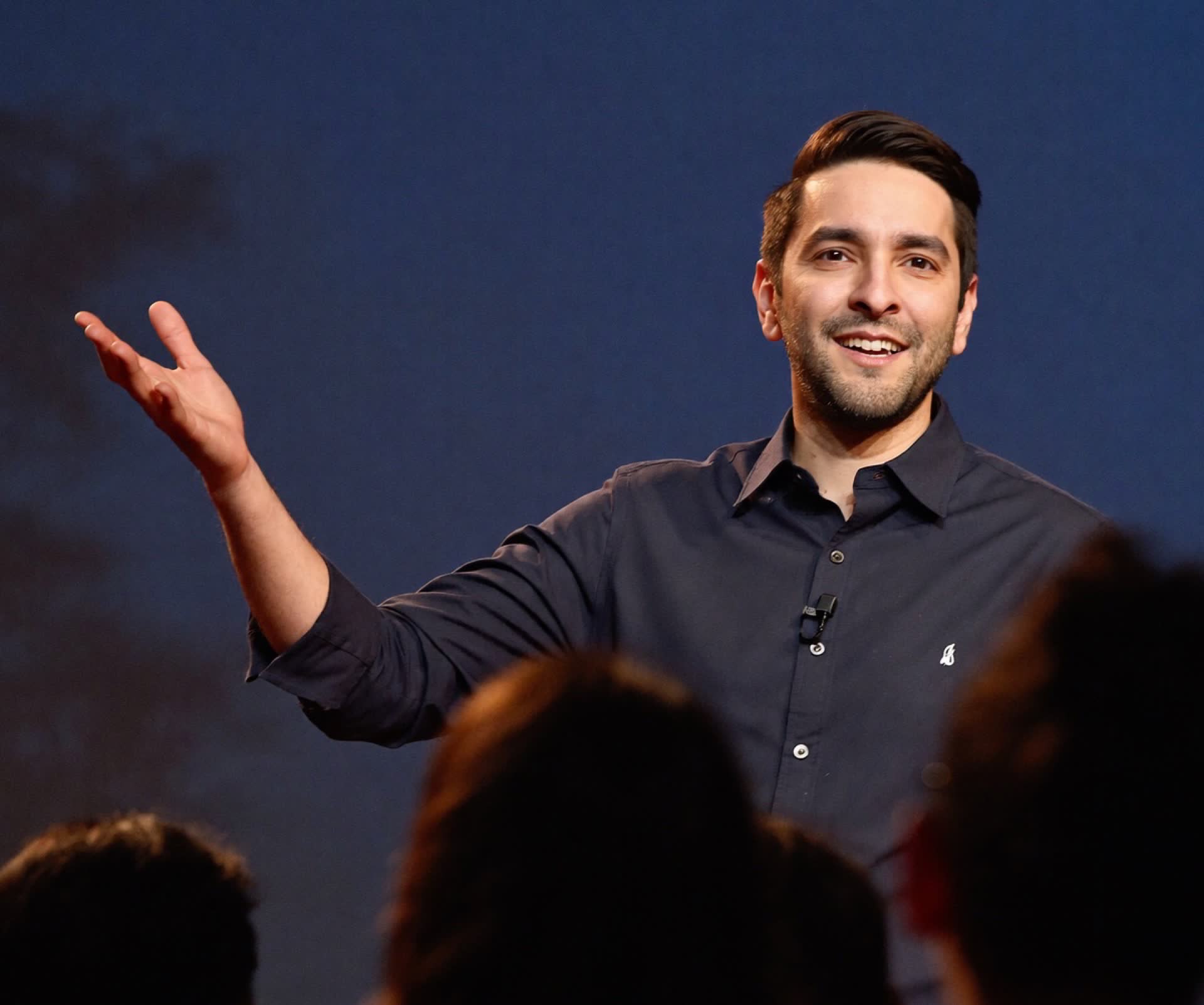
Hussain Nadim returns to Thought Behind Things to argue that Pakistan's crisis is not economic at its core — it's a collapse of human spirit, a failure to define national interest, and a political class that is smart enough to know exactly what it is doing.
From policy to Silicon Valley: how the shift happened
The episode opens with Muzamil welcoming back Hussain Nadim — a guest who has appeared on the show before — this time in a very different professional position. Nadim had spent years in Pakistan’s policy world, most recently as Executive Director of the Islamabad Policy Research Institute (IPRI), where he also built a data analytics and geospatial intelligence unit called G5IO. He is now a fellow at Transformations of the Human (ToftH), working on AI out of Silicon Valley.
Nadim explains that the shift was not a clean break. When he returned from his PhD in Australia, he found that “policy as usual could not work” and that evidence-based decision-making, data science, and new technology tools had to be embedded into the policy process — particularly on the national security side. “Once technology’s kick landed,” he says, he realized the game was much bigger than national security alone, and he moved toward the tech world entirely.
Free fall — and where the landing happens
Muzamil asks Nadim to make sense of the chaos of the past year: economic collapse, social incidents, political crisis. Nadim does not soften the picture.
“We’re definitely in a free fall, for some years now,” he says. “The question really has been for the past decade or more — free fall में तो है, क्या landing soft beach पर होगी या rocks पर होगी?” His answer is that the events of the last year have shifted the trajectory from a soft landing toward a hard one.
He traces the roots not to recent governments but to the founding of the state itself — what he calls the “Praetorian oligarchy,” a troika of the DMG bureaucratic group, the military establishment, and a landed aristocracy that has governed Pakistan since its creation. “Actors change हो گئے,” he says, “but the rot was the same.” That rot, sustained over seventy years without structural reform, was never going to be sustainable indefinitely.
The real war: traditional versus digital
Nadim pushes back against the dominant social media framing of the crisis as a personality contest between PTI, PML-N, PPP, and the establishment. He argues that if you mask the names of the individuals involved, the underlying forces become visible — and they have nothing to do with those individuals.
Two forces are driving the chaos. First, a demographic shift: 70 percent of Pakistan’s population is under thirty, with entirely different dreams, a different relationship with technology, and a different sense of what is possible. Second, an explosive change in technology that societies — especially unreformed ones — were not prepared for.
“The war is only one,” Nadim says. “Traditional versus digital. Old versus new. In Pakistan there is no other war. You just have to watch who wins.” He argues that in the battle of ideas, the most innovative ideas always win — and that the technology-driven disruption is simply accelerating a collapse that was already structurally inevitable.
The incompetence myth
One of the sharpest moments in the conversation comes when Nadim dismantles what he calls “myth number one” — that Pakistan’s politicians are incompetent.
“Our politician is not incompetent, our politician is not stupid,” he says flatly. “I think only the stupid most people can make this argument.” He points out that the same politicians who appear helpless in government are highly creative and successful in their private businesses. The incompetence narrative, he argues, is a convenient cover story: “By human nature we are forgiving. We are ready to forgive a stupid incompetent person. We are not ready to forgive a corrupt individual.”
The deeper problem, he says, is that Pakistan has never defined its national interest. There are no KPIs, no performance indicators, no framework against which any government can be judged. “We are the only nation that I know of that is running without even doing philosophical activity on what our national interest is. Vibes پر چل رہے ہیں.” Without that definition, even well-intentioned leaders have no compass — and the system’s inertia ensures that doing nothing is the path of least resistance.
The human spirit problem
Muzamil raises the economic dimension — the possibility of default, the comparisons to Sri Lanka — and Nadim redirects the conversation to what he considers the more fundamental issue.
“Broken countries with broken economies can work. They can fix,” he says. “Countries with broken human spirits cannot.” He argues that economies are fixable in three to five years in the digital age — remove the bottlenecks, fix the regulatory framework, and growth follows. The deeper damage is what decades of corruption, injustice, and elite capture have done to the consciousness of ordinary Pakistanis.
Corruption, he says, is not primarily a financial problem. “Over the time period, corruption creates rot in society and it kills the human consciousness.” It inverts victimhood — the actual victims stop seeing themselves as victims, and the corrupt become the aggrieved. The result is the despair visible everywhere today: every young person Nadim speaks to wants to leave. “آج سے دس سال پہلے یہ نہیں تھا۔” He contrasts this with his own return from Cambridge in 2011, when he came straight back without applying for a single foreign job, because there was still a belief — however fragile — that something could be built here.
The IPRI experiment: proof that reform is fast
Later in the discussion, Nadim offers a concrete counter-argument to the fatalism about reform. When he took over IPRI — a think tank founded in 1999 that had never appeared in global rankings — he undertook a digital transformation using what he calls a “3D framework”: datafication, digitalization, and disruption.
The disruption came first, through HR. He hired young graduates, some not yet finished with their degrees. He brought in a data scientist to work alongside the qualitative research team. He upgraded the existing staff through training in R programming and digital tools. He changed the research products. He did all of this without a single extra rupee of budget.
“In the seventh month, it was ranked 74 in the global think tank list published by UPenn.” Every government ministry began requesting research partnerships. The lesson he draws is direct: “Transformations of nations, economies, organizations all have the same formula. They don’t take decades. In the digital age, they don’t even take five years. تین سال کے اندر اندر آپ کی transformations ہو چکی ہوتی ہیں۔”
The formula: bring in a young leader, give them a free hand, and do not resist the change. “Bottom-up change نہیں آتا ہے، trickle down آتا ہے۔“
Sentient machines and the question of what remains human
The second half of the conversation shifts to the global technology picture. Muzamil asks Nadim to explain the concept of a sentient machine — the term Nadim uses to describe where AI is heading.
Nadim draws the distinction between mechanical machines (input produces a predictable output based on fixed code) and sentient machines (trained on data, capable of improvising, producing outputs that were not anticipated). He points to large language models and image generation tools as early examples. The pace of machine learning, he argues, has become so accelerated that it is effectively beyond control.
“If we are defined as humans as the ones who think, then the machine is thinking better than you, more than you.” This raises, for Nadim, a genuinely philosophical question: if machines can think, feel, and create, what is left that is distinctively human? Are we becoming creators — the role we once assigned to something else entirely?
He connects this to the Galileo case: throughout history, new technologies have forced revisions to our most fundamental beliefs about ourselves, about God, about nature. The AI revolution is simply the latest — and most radical — instance of that pattern.
AI governments, blockchain corruption-proofing, and Pakistan’s fork in the road
Muzamil raises the question of AI-led governance directly. Nadim’s answer is unambiguous: “AI government is a definite future.” The reason is structural. Human decision-making carries an inherent confirmation bias — the brain filters out data that does not fit its emotional or political priors. AI, at least as currently designed, does not carry that bias.
His proposal is not to replace governments wholesale but to delegate specific mathematical decisions — fuel prices, interest rates, inflation management — to machines. “Petrol کی price کتنی ہونی ہے؟ It’s a mathematical decision. It’s not supposed to be a political emotional decision.” The human role becomes the creative one: deciding what kind of future to build, not managing the arithmetic of the present.
On corruption specifically, he argues that blockchain alone could solve Pakistan’s corruption problem. On productivity, even base-level AI training — not advanced research — could transform the country’s output. The opportunity exists precisely because Pakistan’s traditional system is collapsing: “جو analog تھا، ہم اس میں سے ہٹ کے completely sentient technologies powered by AI, powered by blockchains کے اوپر shift کر سکتے ہیں۔”
By the end of the conversation, Nadim frames Pakistan’s choice starkly: become a tech ghetto — untouched by the AI revolution, providing cheap labor at the margins — or get a foot in the door of the revolution that is coming regardless. “We can become a top 10 economy in the next five to ten years. We can be relegated to the annals of history. It’s entirely on us.”
Muzamil closes by noting that the second half of the conversation — the technology and AI discussion — was where the episode came alive. Nadim agrees, and adds a personal note: hopping between Dubai and Islamabad, he feels the distance between the two worlds acutely. “وہ لوگ مریخ پر جا رہے ہیں اور ہم کہہ رہے ہیں کہ یار ہمارے public parks safe ہیں کہ نہیں ہیں۔” The parallel worlds are real — and the gap is widening fast.


Never miss a conversation.
New episodes and the thinking behind them, straight to your inbox. No hype, no spam, no pitch.