Thought Behind Things
Pakistan is on the precipice — and holding itself back
Asif Aziz, Chief Commercial Officer of Jazz, on why 90 million internet users still isn't enough, why 5G spectrum pricing is killing the future before it starts, and why Pakistan in 2050 will be either formidable or finished — with no middle ground.
From London to Lahore: a first-generation story in reverse
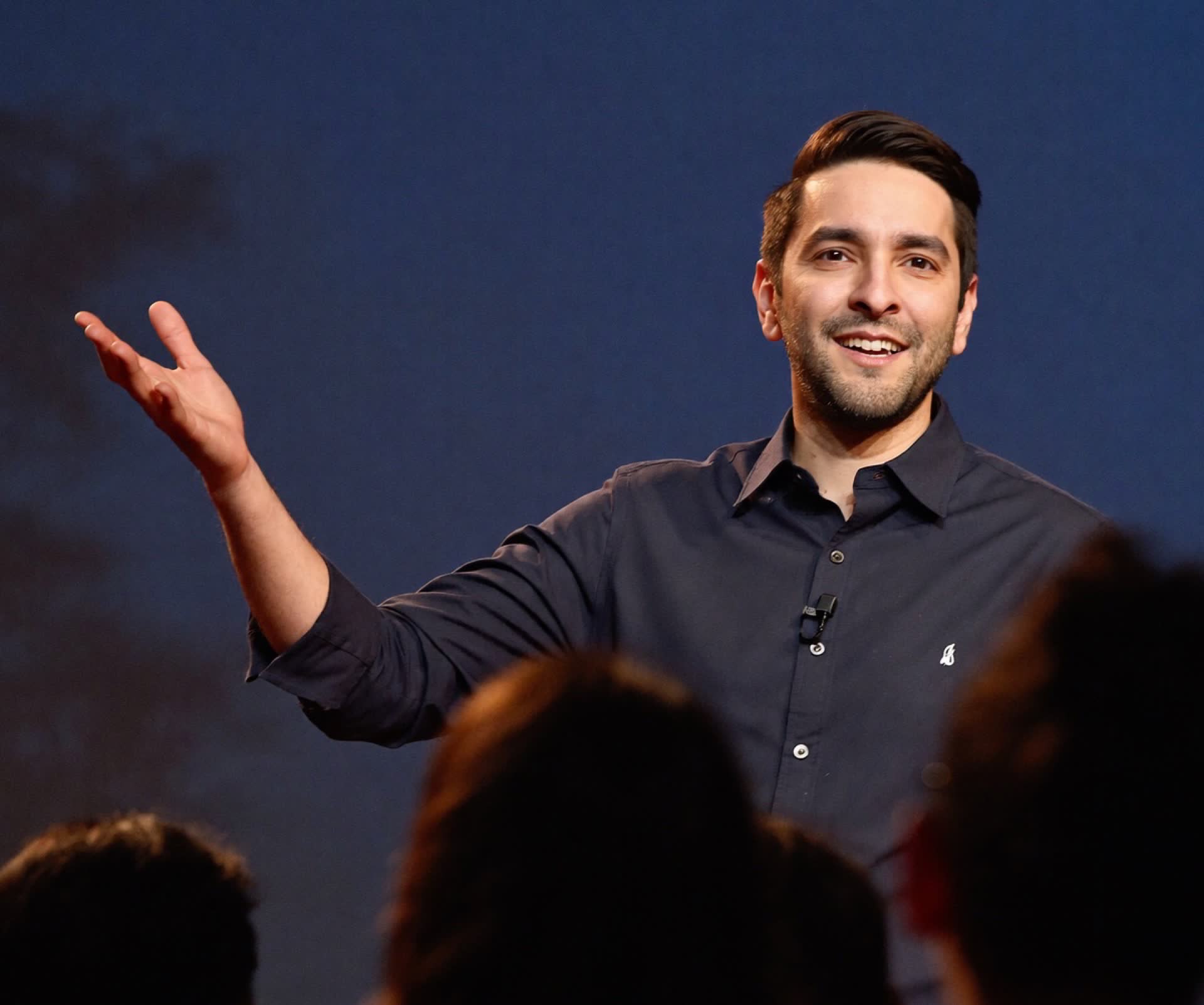
The episode opens with Muzamil introducing Asif Aziz not just as the Chief Commercial Officer of Jazz but, in Asif’s own corrective words, as the head of “a digital company” — a distinction that sets the tone for everything that follows.
Asif was born and raised in London to parents who emigrated from Pakistan in the late 1950s. His father left at around 14, travelling by train to Karachi to get a passport before boarding a plane that stopped in Geneva to refuel on its way to London. He did not return for thirteen years — coming back only to get married. It is a detail that lands with weight: the original migration was so total, so one-directional, that the family’s connection to Pakistan became largely ceremonial for a generation.
Growing up in the suburbs of London in a tiny Muslim community, Asif describes a close-knit but small world. On how the UK has changed since, he is measured but direct: “What they need is more dialogue and more embracing and more celebration of people’s individuality.” He traces the rise of racial tension to the post-9/11 “war on terror” branding, which he argues demonized Muslim communities and made them more insular in self-defence. He notes the irony of a Pakistani mayor and an Indian prime minister in the same breath as rising extremism in France, Denmark, and the Netherlands — “hatred only breeds more hatred.”
Business studies, banking, and the accidental telecom career
Asif studied business at a London university, then added marketing diplomas from the Chartered Institute of Marketing and the Chartered Institute of Market Researchers, before completing an MBA at Ashridge — a former hunting lodge of King Henry VIII converted into a boutique management college of thirty students, later acquired by HULT. The choice of business over accounting was deliberate: he found accounting “too limiting,” and had grown up watching his father run everything from apparel shops to care homes.
His first job was at HSBC, which he joined in the early nineties on a management training rotation. He is wry about the pace of that era: “Banks بند ہو جاتے تھے تین بجے” (banks would close at three in the afternoon). The contrast he draws with today is sharp: “I can come up with an idea on Monday. Build it on Tuesday. Launch it on Wednesday. Review it on Thursday. Kill it on Friday — because it didn’t work. You couldn’t do that twenty-five years ago.”
The move to telecom was almost accidental. While working on the global rebrand of HSBC — the bank was still called Hong Kong Bank as Hong Kong was being returned to China in 1997 — Asif met the chief marketing officer of Orange at a brand conference. “I said, you provide these walkie-talkies. I like them. I don’t know what they do, and I love your brand. Can I have a job?” He was being asked to relocate to Hong Kong for trade finance. He chose Orange instead.
Fourteen years at Orange and the lesson of astronomical growth
When Asif joined Orange, the company had three hundred thousand customers. Nobody, he insists, saw what was coming. “I wanna find the guy that said I had the vision to launch mobile telephony because I knew it would become ubiquitous. Doesn’t exist.” Business plans projected one million customers; the actual numbers kept outrunning the projections before the ink was dry.
He spent roughly fourteen years at Orange — with one detour into a broadband provider that Orange subsequently acquired, pulling him back in — rising to marketing director and eventually spending time in France after France Telecom bought the company. The growth he witnessed at Orange, he says, is comparable only to how Facebook or TikTok scaled later. But he adds a note of respect for older institutions: “I do respect businesses that have been around for two generations. Banks are still here. They’ve seen tough times. They’ve seen good times.” Some app businesses, he observes, are “a little bit fashion focused” — and in Western Europe, nobody under a certain age opens a Facebook account anymore.
Africa, mobile wallets, and the origin of JazzCash
After Orange, Asif moved into emerging-market telecom roles based out of Dubai, commuting for two and three weeks at a time to West African countries — Mauritania, Senegal, Mali, Sudan, Guinea, Niger, Chad. He is careful to push back against treating Africa as a single entity: “Biggest mistake possible. Countries share borders yet they share no identity with each other. That is no different to Europe.” The continent, he explains, splits roughly into pure Saharan desert in the north, a tropical forest belt through the middle where Nigeria, Ghana, and Kenya sit, and southern Africa below that.
It was in Senegal that he first observed the behaviour that would eventually become JazzCash. He watched a customer in a shop transfer mobile balance to the shopkeeper instead of paying cash. When he asked why, the customer said cash could be lost — the balance was safer. He also observed rural workers travelling to the city on Monday, sleeping rough, and taking a night bus home on Tuesday with their wages. “I thought, why not facilitate them — transfer the balance from here to there.” That insight, he says, is how mobile wallets came into existence: the worker no longer needed to spend money on a bus fare home. He could send the money immediately.
The family dimension of this period is one of the more candid moments in the conversation. Muzamil asks directly whether the years of absence damaged his relationship with his children. Asif does not deflect: “There were times where I would be sitting in my apartment and wondering, why am I doing this? All the interesting work and the money in the world, and I’m losing out on something.” He eventually made a conscious decision to stop traveling, partly because his daughter had started saying “Father, you were never there. What do you know about what’s going on in my life?” The window for absence, he concludes, closes somewhere between ages ten and fifteen.
Pakistan’s digital economy: the gap between potential and reality
Asif joined Jazz in 2015 as vice president of marketing, recruited via a LinkedIn message while he was in Senegal. He had never lived in Pakistan, could not speak Urdu, and had only visited once — to get married. He was elevated to Chief Commercial Officer within a year, a role that encompasses marketing, sales, customer care, network rollout decisions, and all customer-facing product development.
The conversation turns to the central tension Muzamil raises: Pakistan has roughly 90 million internet users, but the digital economy has not grown at the speed that number should imply. Asif is blunt about why.
“I absolutely think we are too slow as a country. This should be 160, 170 million. Every recharge has withholding tax, and when you use it there is GST. All in, roughly 40% of your money goes in tax. A child wants to read a Wikipedia page — 40% tax. You go to a library, you don’t pay 40% to look at a book.”
He cites a figure from the GSMA: every ten percentage point increase in internet penetration adds up to 1% to GDP. Taking Pakistan from its current penetration to 75% could mean $10 billion in additional economic output. “This money can come. It’s not that it won’t come. It is the enabler.”
The handset problem compounds the tax problem. Pakistan is the fifth most populous country in the world, with 65% of its population under 25, yet it took thirty years to begin assembling handsets locally — and taxation on imported handsets remains high. Most strikingly: “We still import SIM cards. I import everything.” Because of recent price pressures, 2G phones are now outselling 4G phones on his network. His prescription is direct: shut down 2G entirely and move everyone to data.
Freelancing, female inclusion, and the $10 billion opportunity
Later in the discussion, Muzamil frames the freelancing opportunity: Pakistan has one of the largest English-speaking young populations in the world, a significant cost advantage over Western markets, and post-COVID proof that knowledge work can be done remotely. Asif agrees without qualification.
“India has more IT graduates every year coming out than the Netherlands has workers. Now think about that — this manpower can work from anywhere.” He draws the parallel to his own Jazz workforce: “So many of my guys resign, freelance for me, freelance for others, and they earn more money and they work remotely. I don’t need every employee to come in, sit at a table, hang their jacket on the chair. That was the objective of the old world. This is the delivery of the new world.”
Muzamil adds a dimension Asif picks up immediately: Pakistan’s female workforce participation is structurally low, and digital income is one of the few channels that does not require leaving the house. Asif confirms the data from inside Jazz: “When I open my database, roughly 75% is male. On JazzCash, majority are male.” He frames female financial and internet inclusion not as a social nicety but as an economic imperative, quoting the founder of Pakistan: “You cannot move forward unless your women are side by side.”
Jazz’s product portfolio: beyond the SIM card
Muzamil asks Asif to map what Jazz actually is now. The answer is considerably wider than most consumers realize. The core business — voice and data access — sits underneath a set of verticals: JazzCash for financial transactions; Tamasha, a streaming TV product where, Asif notes, the highest usage is in rural areas that never had cable infrastructure; BIP, a social messaging platform with news, weather, and sports; Bajao, a music application; Bakhabar Kissan, an agricultural information app giving farmers weather, rates, and market data; Jazz Musafir, an early-stage travel product; and Discount Bazaar, a restaurant voucher system currently running in Karachi.
On the B2B side, Jazz is the largest provider of business solutions in Pakistan — 96 of the top 900 companies on the Stock Exchange are customers — offering hosting, cloud services, security, and tracking products under a cloud brand called Garage.
The data science operation is perhaps the least visible but most strategically significant piece. Asif has struck agreements with universities to hire all first-class mathematics graduates. “I give them a problem: tell me how many left-handed customers will cross this road. I don’t know if that’s useful, but they can do it.” The same models used to decide where to place network towers — combining satellite imagery, night-light data, population density, and road construction — have been applied to help a bank decide where to open branches in Karachi, and to help advertisers understand which platforms their customers actually use.
5G: build it and they will come — if the pricing lets you
By the end of the conversation, Muzamil and Asif work through the 5G question together. Asif’s position is that 5G is not optional — “we have no different DNA, we are the same people” — but that the current spectrum pricing makes it financially impossible. Pakistan has 47 megahertz of available spectrum; 5G requires a minimum of 100. The pricing regime mirrors 4G, which means the economics do not work for the investment required.
His proposed solution is a moratorium on spectrum pricing, starting with a limited launch in business hubs — Islamabad’s F-sector, Karachi’s DHA — where enterprise customers and early adopters exist, and growing outward as the customer base develops. Muzamil suggests a pay-as-you-grow model rather than a large upfront auction; Asif endorses it immediately: “This is exactly the solution. Please record those two paragraphs and send them to the Ministry of IT.”
The underlying logic is the same one that drove mobile adoption in the nineties: “Facebook came after 4G. When you build the infrastructure, entrepreneurs build the applications behind it. When we don’t enable this, how do entrepreneurs work?”
Pakistan in 2050: formidable or finished
Muzamil closes by asking Asif — a man who chose Pakistan over London and Dubai at a point in his career when he had options — how he sees the country in 2050. The answer is the sharpest in the episode.
“This is a polarized view. It will be either very, very economically prosperous — we have used our population to our advantage, we have encouraged education, we have encouraged local indigenous products including digital products, and we are a 300-million-person formidable force on the world stage. Or the other. There will be no middle ground.”
The obstacle he identifies is not capability but will: “We have too much internal conflict between ourselves. Everybody is far more interested in tomorrow morning’s headlines than in developing a longer-term vision of what would be a beautiful Pakistan.”
But he does not end there. “I still have no intentions of leaving. I am still convinced that we can do really, really well. I don’t think there is a major problem. I think we have a PR disaster going on around us right now.” Fifth most populous country in the world. Fastest-growing, youngest population. A relatively educated workforce by emerging-market standards. A digital economy that requires nothing more than a laptop and a line of code to participate in. “We are on the precipice of being on a world stage. Everything is with us — but somehow we are a little bit hell-bent on holding ourselves back.”


Never miss a conversation.
New episodes and the thinking behind them, straight to your inbox. No hype, no spam, no pitch.