Thought Behind Things
Badar Munir: the Shopify freelancer model is dead
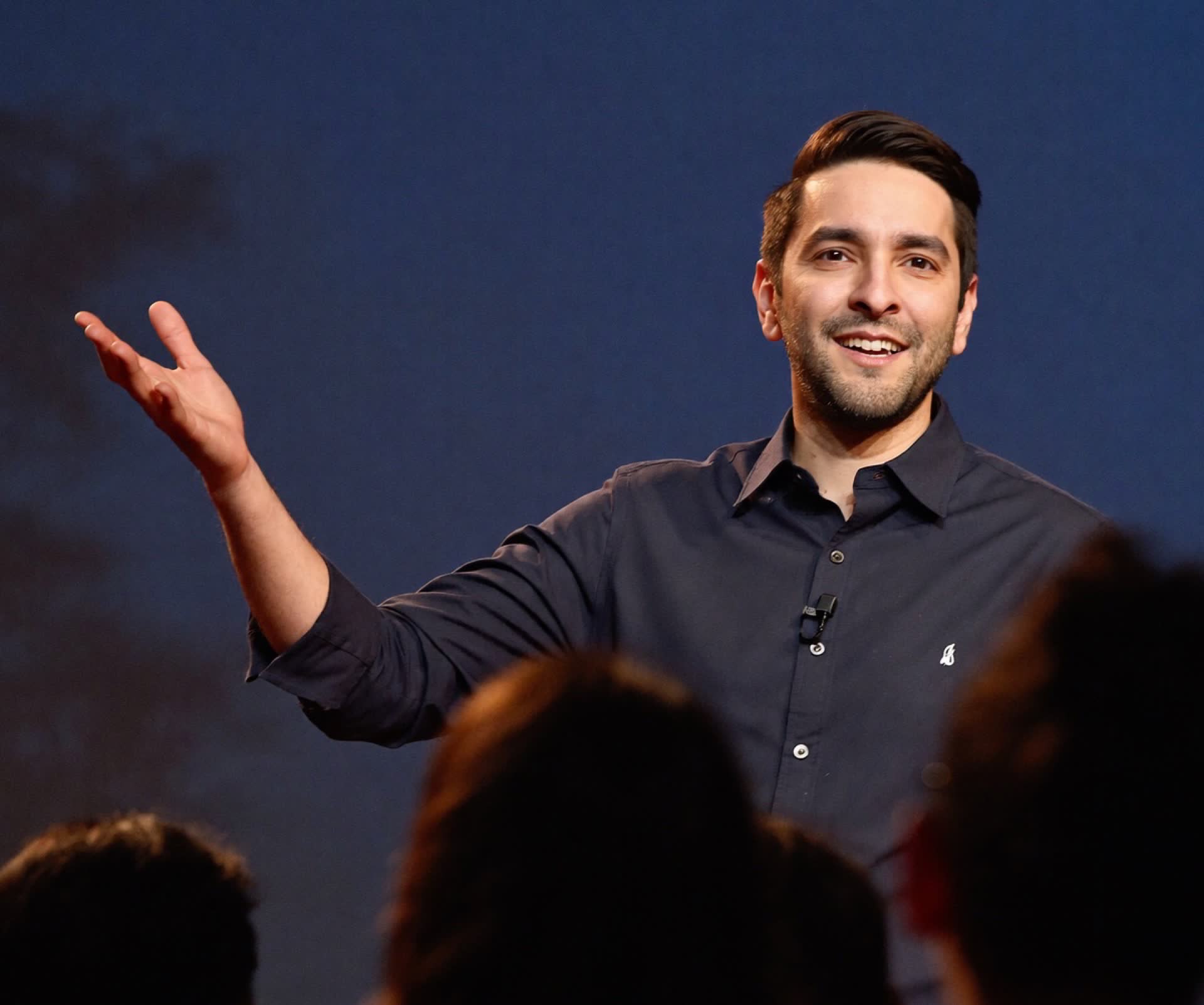
Badar Munir argues Pakistan's freelance economy has hit a wall, and the way through is to stop selling deliverables and start selling business outcomes with AI running quietly underneath.
Why Muzamil pulled Badar onto the show
Muzamil opens by explaining that he had recently shared one of Badar’s videos in his own content, a roughly four-hour breakdown of an entire AI workflow, in Urdu, free on YouTube. The response from his audience was unusual. People kept writing in asking him to share more of it. Rather than keep re-linking, he decided to bring Badar on directly.
What broke a belief system for Muzamil was the audience response. Videos of four and six hours were pulling four and five hundred thousand views. “There’s clearly a hunger for this kind of content,” he tells Badar. He had assumed Pakistani audiences would not sit through anything that technical or that long. The rest of the conversation, he says, is about getting “insights straight from the horse’s mouth.”
Badar’s own path is compressed: born in a village behind Faisalabad, moved to Lahore where he has been for five to six years, started as a graphic designer and video editor at seventeen for pocket money, pushed into software by an older brother studying at COMSATS, and then, when ChatGPT arrived in 2022, decided to start publishing on AI while already working as an engineer.
What actually changed when ChatGPT arrived
Muzamil pauses to ask a question he knows most of the audience is silently asking: AI already existed, machine learning, data science, the whole thing. What actually changed in 2022?
Badar’s answer is about access, not novelty. The old AI required a four-year degree, industry experience, and a team of expensive developers before anyone could put a product in front of a user. “Developers used to charge a lot of money, and many people fell behind because of that,” he says. The new tools, he names Lovable, Replit, Cursor, collapse that. You give a prompt and a full website or app is built in front of you. Someone with even light technical knowledge can now ship in half a month what used to take a year.
This is the ground for the rest of the conversation. If the barrier to building has collapsed, the value of building has collapsed with it.
”AI won’t replace you. It will replace the people who don’t evolve.”
Muzamil pushes on the anxiety point directly: everyone is worried, everyone is confused, everyone is being told to learn AI, but very few people can point to a case study where AI actually made them money. How does Badar think about that?
His frame is sharp. “AI is not going to replace us. AI will replace the people who don’t evolve with the market.” He walks through his own former craft as an example. A thumbnail designer used to spend a day or two producing three variations for A/B testing and charge a real fee. Today, with Nano Banana or similar tools, “literally within one to two minutes, 100 variations are in front of you.” The same job, improved.
But he draws a line. “You cannot say you have no skill and you’re using AI and you’ll make a lot of money.” The people benefiting are people with an existing craft who embed AI into it. He gives his own operational example: connecting Claude to his Meta Ads account via MCP so he gets daily reports on which campaigns are performing and which aren’t. The AI didn’t create the ad-buying skill. It compressed it.
Ahmad Nimas and the argument for volume
Muzamil raises the point most explicitly relevant to his audience. Everyone is learning AI, everyone is learning to sell, but “if there’s one buyer and 100 sellers, even if you do everything Alex Hormozi taught you, the sale is still only one.”
Badar accepts the framing and answers with a story about a student called Ahmad Nimas, an FSC graduate with zero tech background who walked into his office six months earlier. He wanted to become a video editor, a field everyone told him was saturated. Badar told him to pick a niche and go door-to-door. Ahmad picked cars. He shot a free video for a Lahore showroom called Wandala. PakWheels saw it and hired him. From editing he moved into animation, then into SaaS animation for startups, then into cold outreach on LinkedIn and X targeting founders. “The kid who used to earn $100 went to $2500 per video,” Badar says. SaaS app animation videos, $5,000.
The sequence he keeps returning to: skill first, credibility built through free work second, outreach third, paid clients only after that. He cites Hormozi’s number, 100 outreaches a day, 3,000 in a month, as the volume most people refuse to do. “It is unreasonable that not one of 3,000 will respond.” The bottleneck, in his read, is not the market. It is that people quit after forty messages and pivot to whatever’s trending next.
Why “I’ll build you a Shopify site” doesn’t work anymore
Later in the discussion, Muzamil pushes Badar on where service delivery is going. Badar’s frame is the one that gives this episode its title: the entire Pakistani freelance industry is built on selling deliverables, a Shopify site, a thumbnail, a video edit, and that model is being crushed from both sides.
His margin argument is direct. A pure deliverable, build a Shopify site, cost Rs. 30, sell for Rs. 100, invites a race to the bottom. Nothing stops the next person from doing it for Rs. 70 with a Rs. 35 margin. Nothing stops the one after from doing it for Rs. 40 with a Rs. 5 margin. “The margins will keep shrinking, there will be a price war, and eventually the market will fully saturate.”
The alternative, which he says YC is now calling product-led services, changes the pitch. Instead of walking up to a client and saying “sir, I’ll build you an AI automation for $500,” you walk up and say: “sir, I’ll increase your customer retention by 30%, I’ll bring your customer response rate from three hours to five minutes, I’ll charge you $2,000 a month plus 5% of every additional dollar you make.” Behind the scenes, you’re running a custom-built automation and a person in Pakistan monitoring it. The client doesn’t need to know or care whether it is AI. What they’re buying is the business outcome. “Your win is my win. As long as you keep winning, I keep winning.”
The academy and the “why is it paid” question
Muzamil takes an unusually long detour to address something head-on. Badar runs an academy with around 15,000 students, a three-month program on agent automation combined with what he calls a founder mindset. Muzamil, unprompted, tells the audience: “First, Badar didn’t pay me for this podcast. Second, Badar is not my cousin. Third, go verify everything I say.”
He then makes an argument that clearly matters to him. “What is missing between Pakistan and Pakistani success is exposure and education. Very simply.” He recounts being told repeatedly by well-off Pakistani operators that the talent is not there. His counter: teach a thousand people, hire the best hundred yourself, throw the other nine hundred into the market, everyone benefits. The refusal to do that, in his read, creates the vacuum that lower-quality educators fill.
Badar’s response is grounded. Most of his content, including the six- and eight-hour deep-dive courses, is free on YouTube. What people pay for in the academy isn’t the information. “Education by itself is not the value. The value is accountability. The value is the people around you.” He also mentions a comment that keeps appearing under his long-form free videos: “Bhai your videos are great but too long, who will watch such long videos, make them shorter.” His reaction, flatly: I gave you the whole course for free and you’re still complaining I should spoon-feed you.
Four cycles: digitisation, software, automation, intelligence
The most ambitious stretch of the conversation is Muzamil’s, a long, thinking-out-loud reading of the last forty years as overlapping twenty-year cycles.
1980, he argues, was digitisation. A company with a computer versus one without had a massive productivity gap, and Microsoft, Apple and IBM rode that wave until it matured in the late 1990s. Marginal value from a new machine started shrinking; a hardware bubble popped in 2001. The 2000–2022 cycle was software, SaaS, cloud, mobile apps, with basic automation layered on top. That cycle, he argues, is now saturated. Almost every American SME already has a POS, QuickBooks, four or five integrated tools. Adding one more gives you a small marginal lift.
“The next 20 years is an intelligence cycle.” When he consulted for Volvo Cars through Teradata around 2015, the same business intelligence work he did on multi-million-dollar Fortune 500 contracts is now, thanks to AI, available to a corner shop. He cites 33 million SMEs in the US alone that need an intelligence layer built over the next twenty years. “Someone has to do it. Either me or you. There’s no doubt about that.”
His conclusion, delivered as an apology for the length: he does not see jobs disappearing in the great scheme of things. He sees old jobs contracting in the short term and new ones emerging. The people who understand inevitabilities early, the way people who pushed businesses onto websites in 2005 look now, capture the cycle.
Badar agrees and adds the technical texture. Context engineering, he says, is becoming its own discipline. Token optimisation is becoming its own discipline. “Making two automations is easy. Making a graph is very complex.” He references a company he had seen that day, 60 employees, 25,000 agents in production. “Ask any person today to map that architecture, their brain will explode.”
Sixty percent of the internet is already agents
Towards the end, Muzamil asks for a five-year read rather than a twenty-year one. Badar’s answer is grounded in a number he calls out plainly: as of a couple of weeks before the recording, roughly 60% of internet traffic is officially agent-first. Elon Musk’s brother, he says, projects that will hit 99.9% by 2030. Human interaction on the internet is thinning. Agent-to-agent interaction is thickening.
For cold outreach specifically, he thinks Pakistan is still early, the inbox isn’t fully saturated with AI messages yet, so people who do outreach seriously can still land clients. But he expects that window to close. “LinkedIn’s homepage right now is just AI-generated slop,” Muzamil observes, and Badar doesn’t disagree.
The hardware wave, robotics, Badar treats as the next sub-cycle, roughly five to six years out from mainstream, at “the iPhone 1 moment.” Muzamil describes his own vertigo in San Francisco: catching a Waymo at 3:30 AM and looking around at the next four signals, driverless car, driverless car, driverless car, driverless car. “It’s dystopian. It’s terrifying. You don’t realise. Cars are moving and no one is telling a story.” A new world, he says, is being generated.
What the near future looks like on the ground
Muzamil ends with a story from a Pakistani services founder he had met a day earlier. Before AI, that founder was running roughly ten projects a year at $500 each. Now he’s running around 250 to 300 projects a year at $5,000 each. Same country, same team category, radically different economics.
The founder told Muzamil the shift required rebuilding the company. Half the old staff couldn’t work in the new setup, the job stopped being “sit and code for a month” and became “monitor a factory of agents, make decisions all day.” They had to be let go and replaced with people ready for that kind of work.
That story compresses Badar’s argument into one line. The old model, Pakistani freelancer sells a fixed deliverable to a Western client for dollars, is compressing on both ends. The replacement is not “learn AI” as a slogan. It is: build a real skill, embed AI into it, sell outcomes not outputs, and treat the next twenty years as a single cycle you have to position for now. Muzamil closes by thanking Badar for the free Urdu-language AI education he is putting into the market, and asks his audience, including anyone who has taken Badar’s paid program, to report back honestly in the comments. It is, he notes, exactly the accountability loop Badar was describing.


Never miss a conversation.
New episodes and the thinking behind them, straight to your inbox. No hype, no spam, no pitch.