Thought Behind Things
Why Ehsan Elahi built a time tracker to escape time trackers
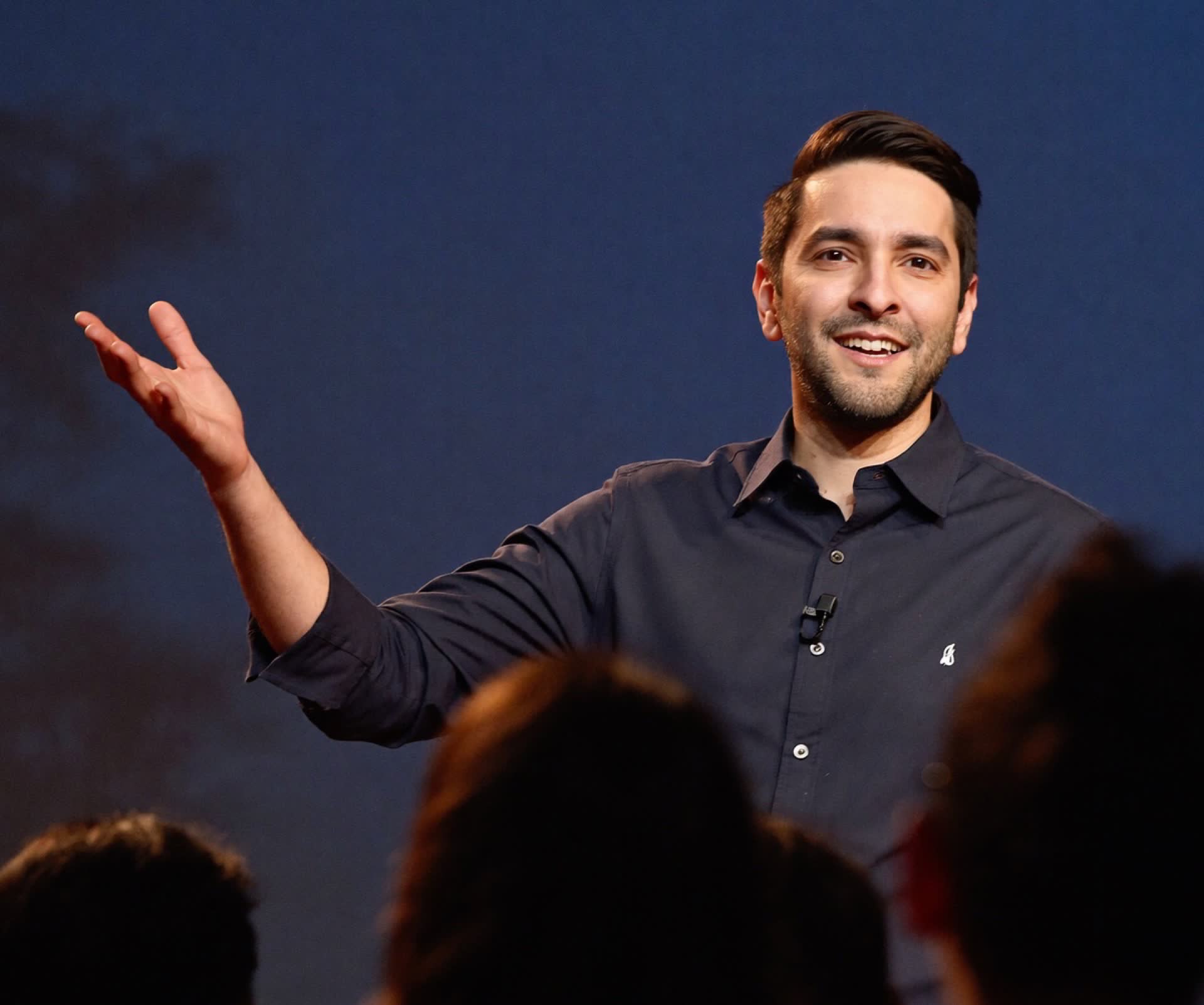
Ehsan Elahi, founder of timegram, traces a winding path from a banned PayPal account at age twelve to running four companies — and explains why privacy-first tracking, outcomes over hours, and human personality are the only things that survive the AI noise.
From a banned PayPal account to four companies
The episode opens with Muzamil framing the conversation around a question he says he keeps returning to: how do digital services and dollar-denominated exports actually scale out of Pakistan, and who is doing it in practice? His answer, for this episode, is Ehsan Elahi — founder and CEO of timegram, and simultaneously running two services companies and a second product company.
Ehsan’s origin story is not a straight line. Born and raised in Karachi, he moved through four universities without completing a degree — IBA, then FAST, then Iqra — each exit driven by a combination of academic failure, personal chaos, and, eventually, a broken collarbone and a cracked skull during what he describes as a prolonged dark period. “Honestly,” he says, “I pretty much spiralled into severe depression. It could be a variety of things that you cannot even pinpoint. This was just one of those things.” His family only found out about the full extent of it in 2018 or 2019, years after the fact.
What ran in parallel to all of that was freelancing. Ehsan started making money online from around class eight or nine — roughly 2003 — through a subscription website he built on WordPress with a cousin, selling money-making e-books for seven dollars a week on the Warrior Forum. Within the first month they had earned the equivalent of fifteen hundred to two thousand rupees in dollar terms. Within the same month, ICANN banned their domain and PayPal banned the account — which belonged to his aunt. “That chapter,” he says, “we had to close.”
The land-and-expand playbook that built his career
After leaving the content agency Logicos in 2016, Ehsan moved into the software industry as a marketing hire — not as an engineer. His pitch was years of experience and the quality of his content. The company that took him on was a US-incorporated data-quality software firm that had just opened a five-person office in Karachi. He was the fifth hire. They now have over 150 people.
His method across every engagement was what he calls land and expand. “I land as a content strategist, I drive results, and then I say: give me a team, give me resources, and I will give you these results within the next twelve to twenty-four months.” He did this for multiple companies simultaneously — Pricing Excellence, Data Ladder, Advanced Coat — building their marketing teams, their offices, their pipelines, while remaining a full-time employee of each. “Nobody cared how many hours I was working. Objectives were being hit. That’s what really matters.”
The defining financial moment came on Upwork, where he moved from ten-dollar articles to a four-thousand-dollar-a-month retainer as a content strategist for a US data-quality company. “That was the point,” he says. “That was a defining moment.”
Why timegram exists: the problem with watching people work
The idea for timegram came directly from Ehsan’s own frustration as a manager. Every company he worked with required time tracking. Upwork’s own tracker takes random screenshots. Employees game it — second monitor off, Netflix on the other screen, active window pointed at something that looks productive. “We have consistently seen that cheating is just basic,” he says. “You’ve introduced a system that compels people to cheat.”
The result, he argues, is that employees stop being productivity-driven and start being time-driven. Their entire focus shifts to making sure forty hours show up on a dashboard, not to whether anything was actually delivered.
timegram’s answer is to be privacy-first by design. The desktop engine tracks activity locally but does not send screenshots or keystrokes to employers in real time. Instead, at the end of the day, the employee reviews what the tool recorded, selects which activities belong to which task, and logs that. The employer sees outcomes, not surveillance footage. “TimeGram will never take screenshots. TimeGram will never record your keystrokes. Your data will not be sent in real time to your employer.”
The platform also defaults every new organisation to a thirty-two-hour work week. Employers can change it to forty, but the product does not suggest it.
AutoML, ChatGPT, and where AI fits into tracking
Later in the discussion, Muzamil raises the question of whether generative AI could eventually replace the human logging step entirely — an AI layer that watches activity, identifies what was productive and what was not, and reports a summary without ever exposing raw data to a manager. Ehsan confirms that timegram is already moving in that direction, and was doing so before ChatGPT existed.
“We used AutoML — Google is providing it. We started doing exactly this: the tool automatically identifies, based on semantic analysis, which activity maps to which task. It classifies everything and checks whether the activity matches the task name or description. Then it asks you to confirm.” The conversational AI feature, he adds, is already under development.
His broader point about AI and technical marketing is more cautious than the hype cycle suggests. “Generative AI has only done one thing for technical marketing: the supplementary external research part arrives a little faster. That is it. That’s a very small part. The biggest part — 80% of technical content — is learning the product.” The noise problem, however, is real. Upwork proposals that used to take days to accumulate now hit fifty within five minutes of a job posting. He ran an experiment: created a fresh profile with zero earnings history, submitted proposals with genuine personality and human thought, and got responses on every single one.
His conclusion is not that AI has devalued the work. It is the opposite. “If they were paying $45 an hour before, now they will pay $60 an hour — as long as they are dead sure that this is not GPT-driven. They want a human on the driving seat, not the AI.”
How to actually find clients without relying on Upwork
Muzamil pushes Ehsan directly on the question that matters most to the freelancers and agency owners watching: if Upwork is pocket money, how do you build real demand?
Ehsan’s answer has two parts. The first is relationships. Every client he has ever worked with well is still a source of work. He has never had to chase Upwork aggressively because the pipeline from past relationships is consistent. “I still get work from all of those. I don’t have to run after Upwork.”
The second is what he calls data-driven outreach — but not the kind that sells. As an example, he describes a campaign timegram ran where they reached out to potential users asking them to participate in a survey on time-tracking approaches: traditional versus outcome-based, invasive versus privacy-first. Participants got early access. The research itself contained a call to action. “We are not selling at all. We are sending you research. You see the button yourself, you come to the website, you buy.” He applies the same logic to services: reach out with genuine value, understand the problem, prove you can solve it, and the relationship closes itself. “The idea is not to sell hard. You build trust so that the person says: I want to work with you. That is how it has always worked.”
He is equally direct about the risk of platform dependency. “If a client raises a dispute on Upwork and you have millions of dollars of business on that account, everything is gone. You cannot rely on any single platform.”
Staying in Pakistan, paying in dollars, and the family constraint
Muzamil asks why Ehsan is still in Islamabad rather than Dubai or Singapore, given the obvious financial friction of running a dollar business from Pakistan. The answer is layered.
On the practical side, Ehsan pays his team in dollars through Wise accounts, bypassing the PKR conversion problem entirely. “Dollar value is the same. Your savings are in dollars. You get every benefit.” He credits this with a 100% employee retention rate across all his ventures — something he says he is genuinely proud of. “I have never had a single person leave.”
On the personal side, the answer is family. He describes a month he spent in Dubai evaluating whether to relocate. Intellectually it was the most productive month he had had in years — conversations about where generative AI is going, which areas are opening up, how global business actually operates. “My mental growth in that one month was enormous. I came back expanded.” But he could not imagine doing it permanently. “I am not willing to compromise on my family. That is my priority and I hope it always will be.”
Muzamil, who had recently stepped back from a position at DevSync for similar reasons, echoes the point directly. The two agree that going abroad makes sense at the scaling stage, not the foundation-building stage — and only when you need it, not for the sake of it.
Pakistan 2050: perspective over education
By the end of the conversation, Muzamil asks the question he puts to every guest: how do you see Pakistan in 2050, when both of them will be around sixty?
Ehsan’s answer is careful. He does not offer a prediction so much as a condition. The shift that needs to happen, he argues, is not primarily about education — it is about perspective. “The most educated people can do the dumbest things. Our older generations who shaped this country were educated.” What he is seeing instead, particularly among young couples, is a different way of operating: partners who are genuinely building together, who reject inherited norms, who have clear roles and shared ambition. “They are building an empire together.”
His prescription for the present is simple: “Do what you can at your own level. Start doing that. Shift your mindset. That is the biggest thing.” He believes the economy follows the mental shift, not the other way around. Whether Pakistan reaches somewhere close to Dubai’s level of development by 2050, he cannot say. But he thinks the direction of travel among the generation now in their thirties is meaningfully different from what came before — and that is where his hope sits.


Never miss a conversation.
New episodes and the thinking behind them, straight to your inbox. No hype, no spam, no pitch.