Thought Behind Things
The Ericsson CEO who still lives in his village
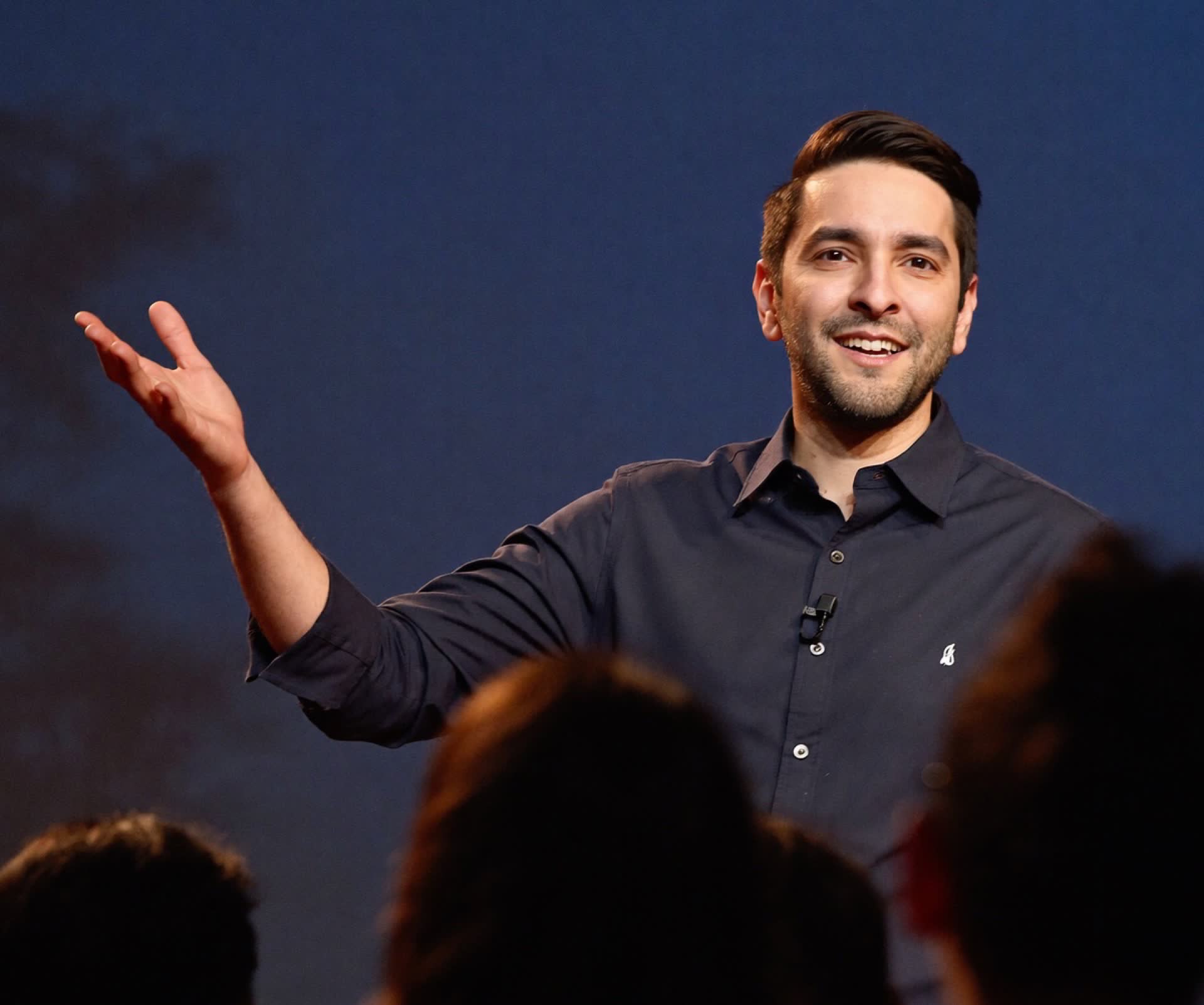
Amir Aasan Khan grew up in a farming village, sold land to pay for university, and became CEO of Ericsson Pakistan. This conversation covers 5G, Iran, Iqbal, and what it means to build a life with purpose.
The village that never left him
The episode opens with Muzamil introducing his guest with unusual candour: “One of the most fascinating minds I’ve met in recent times. I’m not saying this about everyone.” The guest is Amir Aasan Khan, CEO and President of Ericsson Pakistan — and the first thing he establishes is that he still lives in the same house his family has occupied for seven generations, in a village near Attock, commuting daily into the city.
“I am one of those dinosaurs,” Amir says. “I spend my corporate life in the city during the day and in the evening I go back to the village.” It is a detail that sets the tone for everything that follows: a man who has run regional operations across Pakistan, Iran, Sudan, Turkey, and beyond, but has never relocated his centre of gravity.
His schooling began in the village itself, then moved to an Air Force school in Kamra — a ninety-minute van ride each way, the van picking him up first and dropping him last. On his very first exam, the principal pulled him aside to explain that while his score had technically placed him first, the position would go to an officer’s child. “That was a lesson for me in life,” Amir says. “Sometimes you have to get to terms with reality.” He does not say it with bitterness. He says it the way someone says it who has already metabolised the lesson and moved on.
Getting into GIK when the maths teacher said don’t bother
The path to GIK — Ghulam Ishaq Khan Institute of Engineering Sciences — was not straightforward. In eleventh grade, Amir contracted malaria, which severely affected his memory and nearly destroyed his academic standing. A mathematics teacher, seeing his results, told him plainly not to dream of GIK. “She had made up her mind,” Amir recalls. “This kind of boy will only go so far.”
He moved to Pindi for a month to attend an entry-test academy — the first time he had ever lived in a city. He applied to NUST, FAST, and GIK. He got into all three. He chose GIK partly because of proximity, partly because something about the campus felt different when he visited.
The cost was staggering for a farming family. Fees were one and a half lakh rupees per year in the year 2000. Four years meant six lakh rupees. “My father had to sell a piece of land for my education,” Amir says. “And for a farmer to sell a piece of land is like selling part of your body.”
He arrived to find that 60 to 70 percent of his batch were A-level students from major cities. First year was, in his words, “excruciating pain.” His GPA barely cleared 2.1, the minimum to avoid probation. But by third year, once he understood the underlying concepts rather than trying to memorise, he was taking master’s-level courses in his fourth year. A psychology professor who mocked his shalwar kameez — predicting it would slip out from under a corporate suit — inadvertently gave him clarity. “Who have I been dressing up for?” Amir says he asked himself. He stopped performing and started studying.
From a government job he walked away from to Ericsson’s door
After graduating in 2004, Amir spent a year and a half as a teaching assistant at GIK, then moved to Islamabad to teach at the International Islamic University while preparing for the CSS exam. He applied to a government department called the Department of Communication Security, passed all tests, and was offered a Grade 18 position. On joining day, the officer in charge pulled him aside, sent the other two recruits through, and told Amir to “explore other options.”
Walking out onto Constitution Avenue, Amir called a friend and asked what had happened to his CV at Ericsson. That call started a chain of events that led to him joining Ericsson on January 9, 2007, as a business developer — a presales role covering enterprise exchanges and early mobile applications like email clients sold to Telenor and Warid.
Ericsson at the time was not just selling hardware. It was managing close to 70 percent of Warid’s towers, running charging and billing systems, and operating the network on the operator’s behalf. “The telco company essentially becomes a marketing company,” Muzamil observes. Amir confirms: “We were custodians of the network.”
What 5G is actually for — and why Pakistan’s data pricing is a trap
Later in the discussion, the conversation turns to 5G. Muzamil presses on whether Pakistan even needs it, given that a large portion of the population is not yet fully on 4G speeds. Amir’s answer is careful and structural.
“Five g is a lot about enterprises,” he says. “It is beyond consumers.” The use cases he describes are not about faster YouTube. They are about a crane operator at a shipping dock who currently sits in a physically dangerous position and could instead operate remotely from a comfortable room with a large screen — provided the latency is low enough. They are about autonomous mining trucks where a single driver manages four or five vehicles simultaneously, with sensors triggering maintenance only when actually needed rather than on a fixed five-hour cycle. They are about Ericsson’s own 5G factory in Texas, which runs on 30 to 40 percent less energy because robots handle repetitive assembly while humans move into planning roles.
“Our calculation is that on average any increase of 10% in connectivity — and it doesn’t have to be 5G — results in 1% on GDP,” Amir says.
But he is equally direct about the trap Pakistan is in. Data in Pakistan is among the cheapest in the world. Operators are not making enough money to reinvest. Unlimited packages, which seemed like a consumer win, are quietly destroying the industry’s ability to upgrade. “We cannot go to 5G with the packages and the mindset of 4G,” he says. If current pricing is applied to 5G data speeds, it will ruin operators. The solution is differentiated charging — pricing by service type, by latency requirement, by use case — rather than flat unlimited bundles.
He also raises the Norway model: the government gave operators free spectrum in exchange for a committed minimum speed obligation. Fines applied only if they fell below it. “Revenue generate karna hai,” Amir says, “but there are ten other ways to generate revenue — and maybe more efficient ones.”
Security, private networks, and the limits of what Ericsson will do
Muzamil raises the question of network security — from Pegasus-level surveillance to enterprise private networks. Amir draws a clear line. Ericsson’s position is that upholding human rights is non-negotiable. “In some cases we have decided to not even go into areas where we believe it might eventually lead into intrusion into human rights or someone’s privacy.”
For enterprises wanting secure connectivity — he uses the example of a large fertiliser company with staff spread across Pakistan — the current practical solution is private LTE: the enterprise deploys its own network, signal ends at the gate, and devices roam onto public networks only when staff leave the compound. Security forces and defence-related organisations are already doing this.
On the software layer above the hardware, Ericsson is open to partnerships. “We’ve put the lock on. Whether you use the key or not is up to you.” The platform is theirs; the applications on top are for developers and partners.
Iran: cashless, self-sufficient, and deeply misread
Amir spent three and a half years in Tehran after the 2015 nuclear deal lifted sanctions and Iran became a significant market for Ericsson. What he found confounded his expectations entirely.
Iran makes its own cars. Its domestic banking system is fully digital — Amir says he did not use cash or a cheque book for the entire three and a half years, paying by debit card everywhere from supermarkets to vegetable sellers. Roads and infrastructure were strong. Women drove taxis. Female workforce participation at Ericsson Iran was 25 to 30 percent. In the most sacred mosque in Mashhad, during Ramadan, he prayed in the Sunni manner and nobody stopped him.
“The level of tolerance and cultural respect is simply amazing,” he says.
The Farsi language itself, he notes, has no gendered pronouns for he and she — a conscious decision made roughly twelve hundred years ago. Iran’s relationship with Iqbal was another surprise. “If I said I was from Pakistan, they would say: ah, from the country of Iqbal-e-Lahori.” Iranians, he found, had studied Iqbal far more deeply than most Pakistanis. Khomeini used Iqbal’s concept of khudi during the revolution, and it remains in use.
Then Trump tweeted. Sanctions returned. Ericsson’s Iran operation of 700 people had to be wound down. “I made the commitment that I’ll be the last foreigner to leave the country,” Amir says. “It was a very emotional experience.”
Iqbal, Rumi, and the five elements of a meaningful life
Muzamil asks what built this personality — someone who chose Turkey over Dubai or Europe, who reads a different historical figure every year, who returned to Pakistan when he could have stayed abroad.
The answer begins with a story Amir has never fully left behind. In 1992, when he was eleven years old, his family was returning from a hunting trip when their jeep was ambushed. Three men opened fire with Kalashnikovs. The jeep was hit by more than ninety bullets. Amir stood up to check on his family. A bullet grazed his right shoulder. “I was ready at that point. This is it.” That experience, he says, permanently changed his relationship with time and with questions.
He reads Iqbal not as a national symbol but as a fellow traveller in self-discovery. Iqbal at thirty, writing Stray Reflections, was uncertain and searching. Iqbal at fifty had found clarity — a deep sense of belief, a refusal to compromise his identity even after years in Europe, and a commitment to writing in Urdu and Farsi rather than the languages of his education. “His sense of identity was very clear,” Amir says. “He knew who he was.”
Rumi attracts him for a different reason. Rumi was a competent scholar until Shams of Tabriz challenged him in ways he had never been challenged. “Maulvi hargiz nashud Maulana-e-Rum, ta ghulam-e-Shams-e-Tabrizi nashud” — the scholar could not become the master until he accepted the discipleship of Shams. “Shams could be an idea as well,” Amir says.
By the end of the conversation, Amir has distilled his thinking into what he calls a five-element model: the depth and quality of your beliefs; the quality of your relationships; the care of your physical health; creativity and novelty — the purple cow, the thing that is different and therefore beautiful; and finally, work. Work is last on the list deliberately. “We give it too much attention,” he says.
Pakistan in 2050, and the conference of birds
Muzamil asks the question he asks all guests: where do you see Pakistan in twenty-eight years?
Amir reaches for Attar of Nishapur’s Conference of Birds. In the poem, the hoopoe leads all the birds on a journey to find the Simorgh — the mythical bird, the great leader they believe exists somewhere beyond them. When they finally arrive, they discover that “si” means thirty in Farsi and “morgh” means bird. The Simorgh was always them.
“The answers are all with us,” Amir says. “The ideals are all with us. The inspirations are all with us. We just keep looking for them very far away.”
His optimism for 2050 is high. His concern about the present is also real. “What I see on the ground is a lot of polarisation. Our tolerance has become very low. We have forgotten our roots.” He does not blame schools or governments alone. He points to homes. “Until we sit in our homes and begin there, we cannot change what is outside.”
He returned to Pakistan, he says, because watching from abroad — on Facebook and Instagram — has a limit. “We have to come back and do something. And that requires us to take risk as well.”


Never miss a conversation.
New episodes and the thinking behind them, straight to your inbox. No hype, no spam, no pitch.