Thought Behind Things
You can't have 32 logistics players all surviving
Daraz's Ehsan Saya on rebuilding Pakistan's e-commerce trust problem from scratch, and why 32 logistics players can't all survive.
Growing up between three continents
Ehsan Saya was born in Karachi and left at four or five, when his father moved the family to Saudi Arabia during an unsettled period in the city, around 1991 or 1992. From there the family scattered further: Saya went to elementary school in Saudi Arabia and in Athens, Georgia, then high school split between Houston and Saudi Arabia again, finishing his last semester in Canada. “I have a very complicated” history, he told Muzamil Hasan. “I had never lived for more than three years in any place until university.”
Muzamil pressed him on whether that constant uprooting was a cost or a gift, framing it against his own decision to raise his children across multiple countries. Saya didn’t hedge. “I think it was one of the best things that happened to me,” he said, adding that it wasn’t easy: his Houston years overlapped with the aftermath of 9/11, and he moved through what he called two opposite ends of “conservative, conservative too” without a stable peer group. What it built, he said, was the ability to read people quickly and adapt without the luxury of holding out for familiar ground. His graduating class in Saudi Arabia, he recalled, had roughly 35 nationalities among 70 to 80 students. That exposure, layered across Houston and Canada, shaped what he now treats as a working principle: in a world swinging between globalization and localization, adaptability isn’t optional.
”Comfortable being uncomfortable”: the return to Pakistan
Saya had no plan to move to Pakistan. He was running his own startup in Canada, after a career in investment banking, when Daraz approached him. The feedback from people around him was blunt: don’t go, you’ll fail. Saya’s response became something close to a personal doctrine: “You should be comfortable being uncomfortable.” Failure, in his framing, wasn’t catastrophic. “Worst case scenario, I’ll come back,” he said. “It’s not the end of the world.”
What tipped the decision was less a business calculation than a question he put to himself directly, translated here from his own words: “If I don’t do it now, and I don’t do it, then who will, and when will it happen?” His father, whom he described as a die-hard patriot, backed the move. Saya framed Pakistan’s appeal in terms of leverage: a smaller, higher-friction market gives an individual more room to change something than a mature one does. “If your own house isn’t clean, no one else is going to clean it,” he said. “You have to do it yourself.” He described being moved to tears at Daraz’s annual seller summits, hearing directly from people whose livelihoods had shifted because of the platform. It’s the kind of impact, he argued, that’s much harder to manufacture inside a Canadian or American career.
The bearded 32-year-old managing director
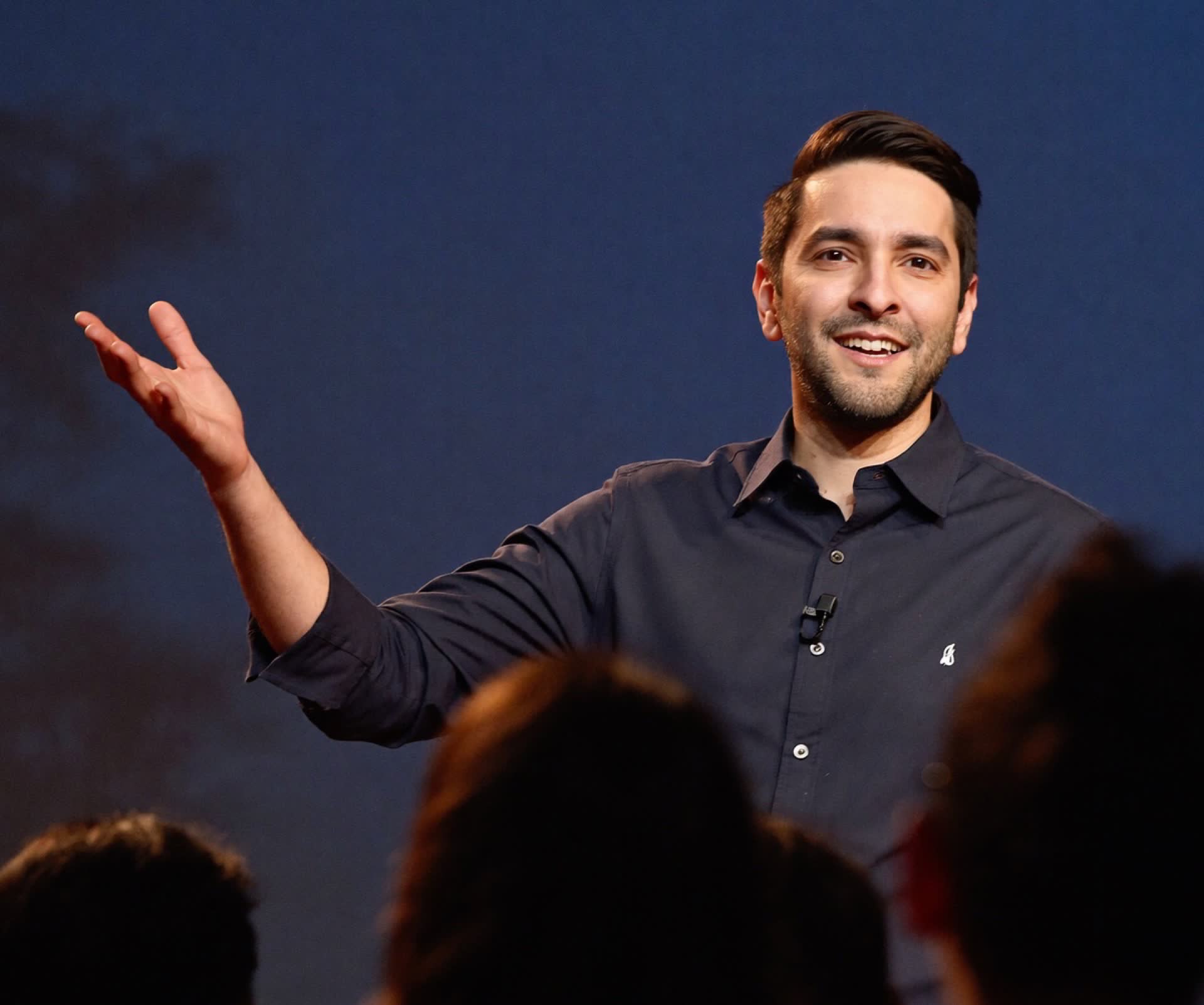
Saya became Daraz’s managing director at 32, young enough that Muzamil asked directly how he handled a market where age and seniority are treated as near-synonyms. Saya’s answer opened with a joke that wasn’t entirely a joke: “Step one, I had to grow a beard, so that I would look a little bit older.”
Inside the company, age wasn’t a liability, since Daraz’s own workforce skewed young and the culture rewarded people who asked why something couldn’t be done differently. Outside the company, particularly with government counterparts, it was a different story. Saya recalled sitting in the back of a National Assembly session with Daraz’s global CFO, both of them visibly younger than everyone else in the room, working through a tax issue while, in his telling, people stared and asked who these two kids in sneakers were. He treated that friction as productive rather than discouraging: a Gen Z instinct, in his phrase, to ask “why can I not change the system?” rather than accept that commerce in Pakistan had to stay cash-based, dukaan-bound, and unreviewed. He credited Daraz’s tolerance for failure, as long as people learned quickly, as the reason a young team was willing to keep pushing into logistics, payments, and customer experience rather than treating them as fixed.
From 15,000 sellers to more than 100,000
Saya’s headline numbers trace the scale of what Daraz has built since 2018. The seller base has grown roughly sevenfold, from about 15,000 to more than 100,000, all of whom, he said, sold something in the prior three months. Daily app traffic runs between 2 and 2.5 million people on a normal day, a figure Muzamil reacted to on the spot: “That’s crazy by the way.” Saya expects that number to climb toward 6 to 7 million during Daraz’s annual 11.11 sale.
He described the growth as showing up in three places at once: sellers becoming more sophisticated about pricing, data, and even manufacturing their own goods rather than just trading them; consumers using the app to compare prices and discover products unavailable offline; and Daraz itself getting sharper about segmentation, showing a fashion buyer fashion and a discount-sensitive buyer discounts rather than treating every user identically. Underneath all three, he credited Alibaba’s ownership for advantages Daraz wouldn’t otherwise have, from underlying technology to the accumulated lessons of Alibaba’s own mistakes.
Saya was explicit that a single seller today rarely operates alone. Beyond packing and sourcing, sellers now manage keyword bidding on Daraz’s internal search, decide which campaigns to join, and read an “opportunity center” dashboard that shows Daraz’s own demand data, which products shoppers are searching for and at what price. Daraz’s obligation, as he framed it, is to convert that visibility into a sale once a seller has priced and stocked correctly, which is why personalization matters at the scale of 20 million listed products: a buyer searching for one category shouldn’t see another. It’s also why a single seller relationship has grown into something closer to an agency function, with account management layered on top of the original job of simply listing a product.
Selling from Karachi, delivering to Chichawatni
Muzamil’s specific interest was in geography: how much of Daraz’s business still concentrates in Karachi, Lahore, and Islamabad, versus the rest of the country. Three years ago, Saya said, KLI accounted for about 65% of volume. Today it’s closer to 45 to 50%. Within Punjab, he noted, the gap between top cities and smaller ones is narrower than in Sindh, where the drop-off after Karachi to a city like Hyderabad is steep.
The mechanism, in Saya’s telling, is straightforward: assortment that simply doesn’t exist locally becomes available regardless of geography, and infrastructure has to be built to match it. He pointed to Daraz’s distribution centers in Karachi and Lahore, which he described as the most advanced in South Asia outside India, capable of sorting roughly 2 million packages a day with minimal manual handling. Last year, he said, Daraz delivered to around 4,540 towns and villages. The advantage for a buyer outside a major city isn’t price alone, Saya argued, it’s access to things that simply aren’t sold nearby at any price.
Building Daraz Express because someone had to check if couriers were telling the truth
Daraz’s decision to build its own delivery network, Daraz Express, in 2018 wasn’t born from ambition to become a logistics company. It came from a narrower, more frustrating problem: third-party couriers would report a failed delivery or a return, and Daraz had no way to verify whether that was true. “If we wanted to do it properly, we had to do it ourselves,” Saya said. Today, Daraz Express handles roughly 70 to 80% of the company’s own deliveries and has expanded into last-mile delivery for other businesses, running through 90 to 100 hubs and stations nationally with 3,000 to 4,000 riders, whom Daraz calls heroes, active during peak periods.
Saya walked through the physical path a package takes: from warehouse to sort center, then to a regional hub, then to the rider, with sorting, not warehousing, as the part of the chain Daraz has invested in most heavily, since Pakistan’s cheap labor makes warehouse automation a weaker return than it would be in a high-wage market. Building a return journey from scratch was its own project. Before Daraz Express, he said, cash on delivery meant a rider effectively begging for reimbursement from his own pocket if something went wrong; today, a returned cash-on-delivery item is quality-checked at the local hub and refunded to a customer’s wallet or card the same day. He argued that the logistics backbone Daraz built has had a spillover effect on the whole market, since brand-owned websites and standalone e-commerce operators now lean on the same delivery infrastructure rather than each needing to solve it themselves.
”Innocent until proven guilty”: policing trust at scale
Trust, Saya said, isn’t a Pakistan-specific problem, but the tools to manage it have to be built locally. Daraz’s operating principle, in his words: “My principal assumption is you’re innocent until proven guilty. But then if you’re guilty, you’re not welcome to play in my playground.” A seller who ships a plastic bottle after a customer ordered a thermos faces a financial penalty, a de-listed product, and a drop in visibility across the platform; the punishment escalates with repetition, up to permanent removal. The same logic applies to buyers, since Daraz also monitors acceptance and rejection rates on the customer side to identify people who are gaming returns rather than sellers failing to deliver.
Roughly 5,000 sellers a month go through Daraz University, a training program Saya described as mandatory for anyone accumulating enough demerit points to risk suspension. Making returns easy, he argued, is a trust mechanism in itself: a 14-day return window, doorstep pickup by a Daraz rider in the 15 cities where that’s available, and same-day refunds once quality control clears a returned item locally rather than at a central warehouse. For less dense markets, Daraz runs a “logistics marketplace” model, letting a local operator in a smaller city run deliveries under Daraz’s technology and training standards, almost as a franchise, while also serving other companies’ packages in the same territory.
Why Daraz opened its delivery network to 32 competitors
Pakistan now has roughly 32 companies competing in last-mile logistics, a number Saya and Muzamil both treated as unsustainable. Muzamil pushed the comparison directly: in the US, thin retail margins can absorb the cost of returns and free replacements; in Pakistan, a 10-rupee item is barely selling for 10.5 rupees, leaving no room to absorb failure. Saya agreed with the underlying thesis. “It’s not only a razor-thin margin business, it’s a very thankless job,” he said, since almost no customer publicly praises fast delivery, but plenty complain when it’s slow.
His argument for consolidation rests on the difference between fixed and variable cost. Daraz has already paid for its sort centers and rider network; every additional volume it carries for outside clients only adds variable expense, which keeps falling as density rises, while a newer competitor still has to raise capital for the fixed infrastructure Daraz already owns. That’s the logic behind opening Daraz Express to businesses that don’t sell on Daraz at all, launched publicly in the days before this conversation. Saya framed it plainly: “I don’t need to do it. My cost per package will be lower than if I don’t.” The same efficiency argument, he said, extends into payments: about 80% of Daraz orders are still cash on delivery, with only 20% of order volume on cards or wallets, and Daraz has begun testing “digital on delivery,” a push notification sent an hour before a rider’s arrival that lets a cash-on-delivery customer switch to a card or wallet payment before or at the doorstep. He credited the Raast payment rail with removing transaction fees that previously made digital payments more expensive than cash for thin-margin sellers.
11.11: an economy-wide ritual Daraz built from scratch
Pakistan’s biggest annual shopping event, the November 11 sale, is a Daraz invention that other platforms have since copied. Saya said Daraz typically targets 10 to 20 times its normal daily volume on the day itself, a scale he called an operational nightmare, but one that only works because it has become a whole-ecosystem event: brands time product launches around it, banks compete on discount financing, and offline retailers now run their own 11.11 promotions in parallel. When Daraz first ran the sale, November wasn’t traditionally a buying month in Pakistan. It is now. Saya described spending the weeks beforehand personally negotiating SKU-level pricing with brands, adding that he hadn’t had a full night’s sleep in the two and a half months before the event.
The sale matters beyond Daraz’s own balance sheet, in his telling, because every side of the ecosystem plans around it. Sellers wait an entire year for the volume spike; consumers hold off big purchases, appliances, wedding-season fashion, knowing prices will bottom out. Asked what the day means to the riders who carry the load, Saya recounted asking one directly during a hub visit. The rider’s answer, translated: “11.11 is Eid for us. There are so many packages, it’s a chance to actually make money.” Saya also noted that consumer spending carries its own seasonality independent of 11.11, tracking wedding season, Eid, and summer appliance demand, and that Pakistan’s 2022-era economic downturn visibly showed up in the data: brands shrank pack sizes and product tiers, such as a smaller-capacity air conditioner replacing the standard one-ton unit, so that a fixed household budget could still afford a version of the same category. He said that pattern has begun to reverse as spending picks back up, with Punjab currently showing more of that recovery than Sindh.
Managed marketplaces, exports, and betting on AI to leapfrog
Asked about the rise of curated and managed marketplaces in fashion and electronics, categories he named specifically as areas where niche players have emerged, Saya said Daraz’s response has been to treat every category as bought differently, building category-specific expertise rather than assuming a single storefront logic covers groceries, mobile phones, and fashion equally. He was clear that Daraz won’t productize its underlying technology, since it was largely adapted from Alibaba rather than built in-house, but logistics is a different story: that’s the expertise Daraz considers genuinely its own. He was equally direct about private label, saying Daraz had tried its own house-brand products before and hadn’t done it particularly well, and had decided to stay focused on the marketplace and logistics roles it’s actually good at rather than move into manufacturing and design. On exports, he said Daraz sees an opportunity in categories like modest fashion and textiles, where Pakistan has a cost advantage over China or Vietnam, but called it “a bit of a distraction” for now. “We really need to crack Pakistan,” he said, “and then, inshallah, we’re going to go into other countries too,” putting a realistic timeline of 18 to 24 months before that becomes a priority.
On AI, Saya described Daraz already training models to place fashion products on AI-generated Pakistani models rather than requiring sellers to shoot their own photography, and an AI support bot that resolves basic seller questions before a human needs to step in. He framed the bigger opportunity around the roughly 98% of Pakistani sellers whose business is still offline and who don’t know how to write an English product title or optimize a listing. AI, in his view, closes that gap directly. He tied this back to national strategy: Pakistan, he argued, cannot catch up to other economies on a straight line and needs AI to produce what he called a step-function jump rather than slow, linear progress, comparing it to how countries that invested in manufacturing decades ago leapfrogged others.
Closing on Pakistan’s outlook to 2050, Saya rejected the premise that optimism required ignoring the country’s problems. “If you become hopeless, there is no way that you’re going to solve the problems,” he said. “You have to maintain hopefulness.” He pointed to Pakistan’s young, large population, north of 225 million people, and what he called globally competitive talent as reasons for confidence, arguing that the choice to focus on what’s fixable, rather than cataloguing what’s broken, is itself a discipline worth practicing deliberately. As digital payments spread and seller maturity compounds, he expects e-commerce penetration in Pakistan to keep climbing, not because any single policy forces it, but because a seller now earning half their revenue online has every incentive to protect that channel by getting customer experience right.


Never miss a conversation.
New episodes and the thinking behind them, straight to your inbox. No hype, no spam, no pitch.