Thought Behind Things
The new programming language is English
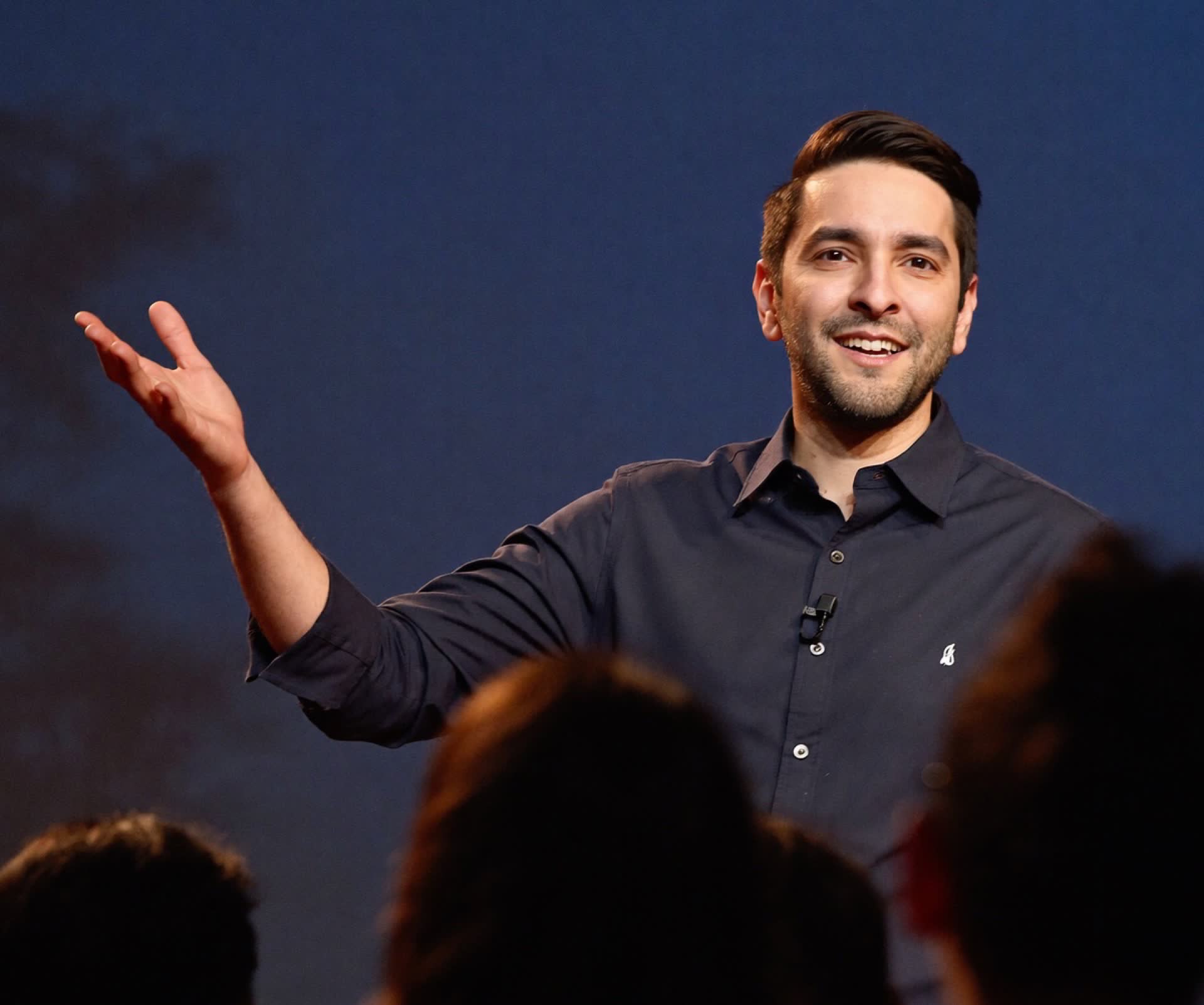
Saaid Khan, Microsoft's VP of Gaming AI and a LUMS graduate, on why extreme AI predictions are wrong, why non-technical people may win the AI decade, and what Pakistani talent gets wrong about money.
A Pakistani VP inside the machine
Muzamil opens from Seattle with the backstory that makes this conversation unusual. Saaid Khan was a LUMS graduate working at MCB in Pakistan when his wife applied to Microsoft on his behalf without telling him. Microsoft called, and by 2007 he was in Seattle. Six years at Microsoft led to Groupon in its hypergrowth years, then Careem in Dubai from 2016 to 2018, a return to Seattle, three years at Meta, and now a second Microsoft chapter as Vice President of Gaming AI, after a stint advising the company’s CTO. Muzamil’s framing is deliberate: everyone notices Indians at the top of big tech, but senior Pakistanis are there too, and their insight rarely reaches the people at home who need it. His agenda for the conversation is simple: cut through the AI noise for the Pakistani graduate trying to prepare for a post-AI world.
Extreme views are usually wrong
Muzamil starts with the influencer discourse: jobs are finished, or nothing will change. Khan rejects both poles from experience. “The world will change. There is no question in my mind,” he says, comparing it to mobile and cloud, but “extreme views are usually wrong in most cases.” His summary of what actually gets automated is the episode’s sharpest single rule: “If there is a repetitive task which humans do, AI will take that up. And that up-levels what you are doing.” Jobs will change their nature, and he expects a huge number of new jobs to emerge, not a net disappearance.
Start with problems, not solutions
Asked which skills cannot go redundant, Khan puts critical thinking first, with a specific diagnosis: “I have seen this in my career, that people start with solutions and don’t start with problems.” Products get built because a technology is exciting, not because a problem is understood. The reason problem-definition now beats syntax comes from his own company’s leadership. He cites Microsoft CTO Kevin Scott: “The new programming language is going to be English.” If AI can write the code, the valuable human act is telling it precisely what to build, which requires understanding the problem well enough to express it, in English, Urdu, or any language. His second skill is understanding the technology itself, because knowing what AI can and cannot do turns noise into opportunity, and even shapes better questions: “If you ask a better question, you will get a better answer.” The third is time horizon. Most people optimize for the immediate deal, but this technology cycle will run a decade, and ecosystems change when someone thinks long, the way cloud and mobile made a company like Facebook possible.
The non-technical advantage
Muzamil raises the 85 percent of Pakistani graduates who are not technical and assume this revolution excludes them. Khan’s answer inverts the assumption: “AI is going to be the opportunity for non-technical people.” AI is an abstraction layer over the complexity, and he expects the next five to seven years to produce non-technical founders executing big ideas that once required engineering teams. He gives the example of an accountant who asked whether automating his own bookkeeping workflow and offering it to ten other companies was a good idea: exactly right, and nothing to do with the software industry. Like the cloud before it, AI will permeate every industry, and he sees the language barrier itself dissolving within five to seven years, removing one more excuse.
Is 38 billion dollars realistic?
Muzamil brings his services-export thesis, and Khan’s response is blunt: “I would think it’s actually conservative.” Getting there needs three macro moves. First, upskilling across every pocket of society, from people learning out of immediate need to those who can afford long horizons. Second, institutions, public or private, that standardize the boring processes, like company registration and compliance, so builders stop burning time on paperwork; Muzamil argues the private sector should own this, and Khan agrees the opportunity exists in every domain. Third, opportunity identification, the skill he watched Careem execute when it saw ride-hailing’s opening and changed mobility across the region. One crank of the wheel, he says, starts the snowball.
What Pakistani talent gets wrong
Asked why capable Pakistanis stall at 300-to-500-dollar freelance ceilings, Khan names motivation before skill. “At the start of your career, that is not the thing you need to optimize for. You need to optimize to learn. And I promise you, you will make up for the later part of your career if you learn properly.” Job-hopping every year for a small raise means never staying long enough to learn anything. Second is accountability, committing to work and finishing it properly rather than leaving it halfway, an attitude he says he does not see enough of. Third is ambition with sacrifice: prioritizing professional growth sometimes costs comfort and personal time, and he admits he under-weighted that himself early on.
The end of labor arbitrage, not of headcount
The two dig into what AI does to Pakistan’s outsourcing model. Khan is direct about companies built on repetitive external projects: that business model is in trouble, and the big services firms will have to move up, perhaps by building AI agents and products themselves, because “individual projects aren’t going to cut it anymore.” On remote work, he notes big companies cannot easily scale foreign workforces past process barriers like taxation, but smaller firms priced out of H-1B hiring absolutely will hire Pakistani talent directly. And against the doomsday scenario he stakes a clear position: “My belief is headcount will go up. People will be more productive. The nature of their work will change.” India’s real advantage, he adds, came from upskilled people cycling back to build institutions and standards at home, a loop Pakistan has yet to close.
Advice to a 16-year-old, and Muzamil’s Corolla
Muzamil closes the interview with a caricature: a 16-year-old middle-class Pakistani with a phone, patchy schooling, and five years before the workforce. Khan’s answer is intentionality. The standard life script, school, university, job at fixed ages, deserves questioning when the ground is moving this fast: “Question everything in the light of what is changing,” including what university is actually for, which may be human interaction more than computer science. “You have to challenge the conformity to the norm.” After the interview, Muzamil gives his own takeaway to camera: the jumping between 50 opportunities is the disease, and the cure is picking one direction, defining a one-year goal, and holding it through the noise for compounding results. Then he shows his car, a 2003 Corolla, in an era of influencer Teslas and Range Rovers, and explains why: the accomplished people he meets never judged him by clothes or car. Spend on material things if you like, he says, but invest in your skill set first, because respect comes from substance, not from what you drive.


Never miss a conversation.
New episodes and the thinking behind them, straight to your inbox. No hype, no spam, no pitch.