Thought Behind Things
Can consuming less tea solve Pakistan's forex crisis?
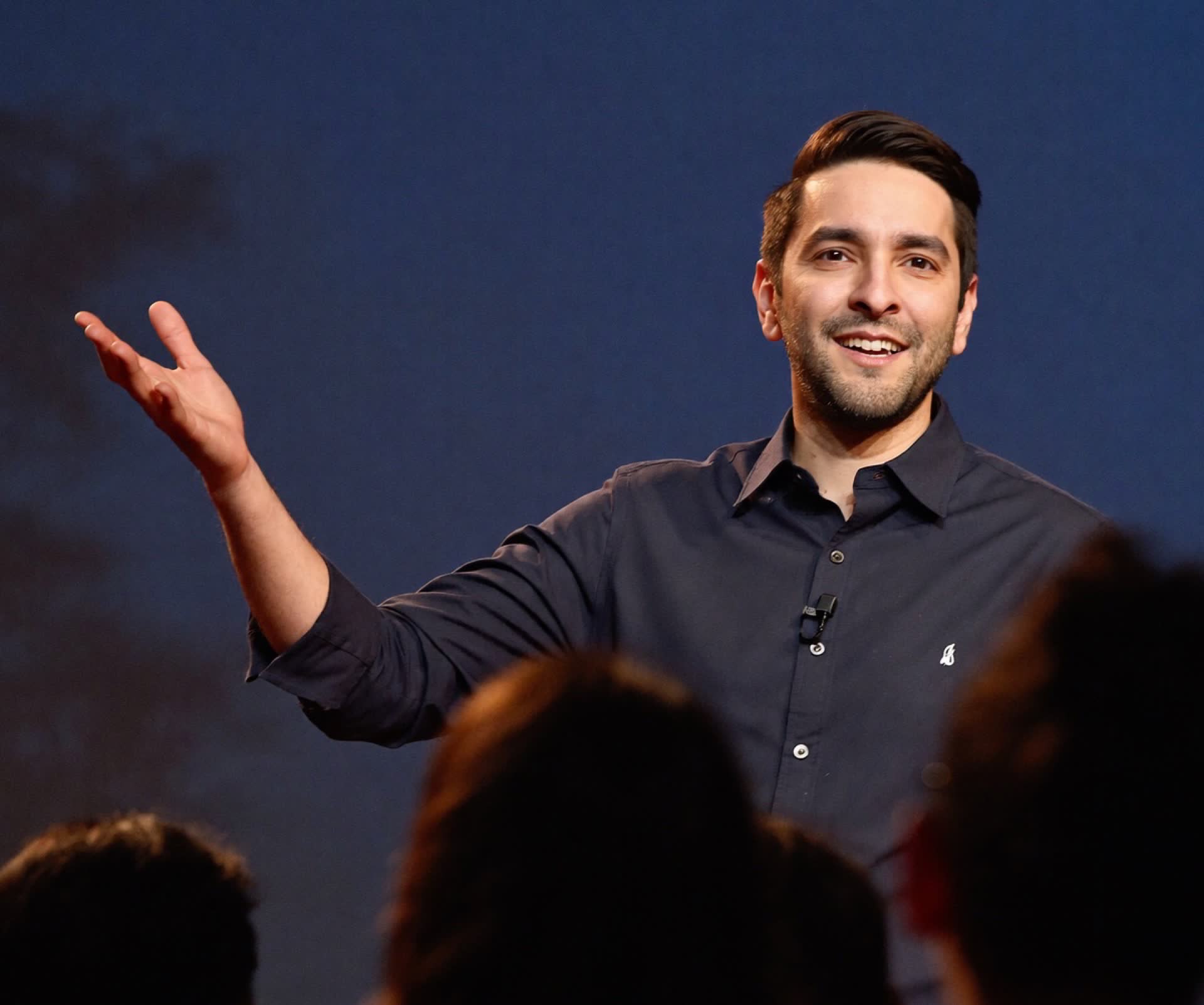
Fahad Yousaf, head of business at Nescafe Pakistan, talks about switching careers three times before finding his footing, why processed milk still holds less than 10% of Pakistan's dairy market, and what it actually takes to shift a nation of tea drinkers toward coffee.
Failing the CA exam three times — and what it revealed
The episode opens with Muzamil asking Fahad Yousaf about his early life in Lahore, and the conversation quickly lands on a formative failure. After completing his FSC at FC College in 1994, Fahad followed his elder brother’s advice and attempted chartered accountancy — a credential that, at the time, was seen as a guaranteed path to employment.
It did not go well. “Ek tax ka paper hota tha. I couldn’t pass that,” Fahad recalls. “Even today mujhe apni salary mein se tax kaise deduct hota hai — nahin samajh aata.” He attempted the second CA paper three times over two and a half years, studying eleven-hour days, and still could not clear it. The experience was, by his own account, a serious blow to his self-esteem.
What he took from it was not bitterness but a clearer sense of aptitude. He completed a private BSc in economics and journalism, did internships at Unilever and elsewhere, and eventually applied to LUMS for an MBA. The CA failure, in retrospect, was the first signal that his strengths lay elsewhere — in communication, problem-solving, and people.
The LUMS interview: fifteen minutes late, one fabricated story
The LUMS admission story is one Fahad says he tells often. He arrived late to his interview — having turned back halfway to retrieve forgotten documents — only to find the panel had already left for the day. A receptionist persuaded them to return. When Fahad walked into the room, three senior faculty members did not invite him to sit. They told him directly that arriving fifteen minutes late was not how one earned a place at LUMS.
Fahad’s response was immediate. He told them his car had broken down on the way, that he had left with a full hour’s margin, and asked them what they would have done in his position. The interview proceeded. He received his acceptance letter the next day.
He later confessed the story to one of the professors, a marketing faculty member named Ahsan Ullah. “Unhon ne mujhe kaha keh yaar, I don’t care — because the way you responded under pressure, that was the key. That was the point we decided keh yaar nahin, the guy knows how to handle a pressure situation.”
Muzamil notes that Fahad’s path to LUMS was not the typical one — no elite private school, no straightforward trajectory — and asks how he responds to the perception that LUMS is a bubble for Pakistan’s privileged. Fahad pushes back firmly. The institution, he argues, is built around diversity: students from Quetta’s rural areas sit alongside those from Lahore’s Defence Housing Authority, and women in full niqab coexist with those who dress very liberally. “By the time you spend two or four years there, ek acceptance develop ho jaati hai — which is actually what Pakistan needs most.”
Mobilink, Zong, and the startup feeling
After graduating in 2004, Fahad moved to Islamabad and joined Mobilink as an assistant brand manager for Jazz — skipping the management trainee rung that most MBA graduates start on. The role gave him access to large budgets, major directors, and prominent artists. His first project was finding a new Jazz Girl for the brand’s campaigns.
Two years in, he moved to Zong — then being relaunched after China’s takeover of Paktel. The team was small, the office modest, and the brand name, when it was revealed, caused collective dismay. “Hum saare ek kamre mein sar pakad ke baith gaye the — yaar is naam ke saath hum kya kar sakte hain?”
What followed was one of the most consequential periods of his career. Fahad was sitting in engineering meetings, directing where cell towers should be placed, coordinating a full company launch rather than just a marketing campaign. “It was literally the whole company launch,” he tells Muzamil. Within the first three months, Zong hit five million subscribers. The experience gave him something the Mobilink years had not: the conviction that he could build something from scratch.
“Pehle aap soch rahe the yaar achha main yeh kar sakta hoon, main isse zyada nahin kar sakta. Phir yeh hua keh yaar, I can do this as well.”
Why processed milk is still less than 10% of Pakistan’s market
After returning to Lahore for family reasons — his mother had been diagnosed with cancer — Fahad joined Nestle Pakistan and spent a decade in the dairy business, including nearly five and a half years as marketing manager for Everyday, the tea whitener that is, as he puts it, present at every occasion in Pakistani life regardless of income, gender, or mood.
Muzamil raises a question that has long puzzled him: despite decades of investment by companies like Nestle, why does packaged milk still account for less than 10% of the market? Fahad’s answer is layered. In smaller cities and rural areas, milk is a home-grown business — the local supplier extends credit, collects payment at month’s end, and operates at a price point that packaged milk cannot match. There is also the practice of stretching milk with water, which further reduces cost. “Affordability becomes a key,” Fahad says, and when inflation rises, consumers who were using both loose and packaged milk simply shift back to the cheaper option.
The generational dimension matters too. Fahad describes his own father, who had used packaged milk for years, reverting to a local supplier after retirement — drawn back by the taste, the cream on top, the familiar ritual. “Humari generation mein people who are used to the dabbe wala — wo wapas nahin kar pa rahe taste ki wajah se.” Some market shifts, he concludes, happen only generationally.
Tea, the forex crisis, and why local production is harder than it sounds
Later in the discussion, Muzamil raises the debate that had been circulating online at the time of recording: that Pakistanis should drink less tea to reduce the import bill and ease pressure on foreign reserves. Fahad acknowledges the import burden is real — Pakistan does not grow enough tea domestically to meet demand — but is candid about the limits of his knowledge on the agricultural specifics.
What he does offer is a market-logic argument. If growing tea locally were straightforward and profitable, someone would already be doing it at scale. People build dairy farms, chicken farms, and sheds when the business case exists. “Toh chai ke case mein bhi agar if it’s so easy to do, then you would see everyone.” The absence of a domestic tea industry suggests the conditions are not yet conducive, though he stops short of diagnosing exactly why.
Coffee’s slow capture of Pakistan’s moments
Fahad moved from dairy to lead the Nescafe business, and Muzamil asks him to explain what it actually means to try to build a coffee culture in a country where tea is, as Fahad puts it, “DNA mein hai.”
The answer is not about replacing tea. It is about moments. “Aap jab doston ke saath kahin bahar ja rahe hote hain toh aap hamesha kehte ho yaar, let’s go out for coffee.” Nobody says that about tea. Coffee has acquired an association with professional settings, social mobility, and a certain kind of aspiration — partly driven, Fahad acknowledges, by what young Pakistanis consume on Netflix and YouTube. “Hum logon ne — let’s admit it — hum goron se inspired hain. Har cheez mein hum waise hi banana chahte hain.”
The cafe culture expanding across Karachi, Lahore, Islamabad, Hyderabad, and Multan is, paradoxically, both a challenge and an opportunity for Nescafe. Rising cafe prices push some consumers toward affordable at-home options like the three-in-one sachet, which retails at around thirty-five rupees and is manufactured locally in Pakistan even though the raw coffee is imported. “Even price hoke ek aam aadmi bhi chalis rupaye mein, paintees rupaye mein khareed sakta hai.”
On Nescafe Basement, Muzamil and Fahad agree that the platform’s value was its restraint. Unlike Coke Studio, which became ubiquitous, Nescafe Basement retained an indie credibility that served the brand well. “It gave the brand a big hipster feel,” Fahad says. Many artists who later appeared in mainstream music had their start there. Whether the platform returns is left open — “hopefully soon” — but Fahad is clear that its distinctiveness was not accidental.
The vocational school built in his mother’s memory
By the end of the conversation, Muzamil asks about something entirely separate from Fahad’s corporate career: a school he runs in Lahore. The origin is personal. Fahad’s mother, who had co-founded a school in Gulberg when he was young and spent her life working for underprivileged women, was diagnosed with cancer at a late stage and died within a year. He and his brother, who works for Pepsi and was posted in Hong Kong at the time, wanted to do something that honoured her mission.
In 2015, they learned that a school in an impoverished Lahore neighbourhood — one that had been running for fifteen to twenty years before closing when its elderly founder could no longer manage it — was available to restart. The original staff was still reachable. Within a month and a half, Fahad had it running again.
The school offers vocational training: tailoring, embroidery, beautician courses. The neighbourhood it serves has high rates of street children, substance use among youth, and domestic abuse. Fahad describes women who arrived unable to state their own names with confidence and who now run home-based beauty parlours or tailor shops, some of them employing other graduates of the same school. He shared one such story at a TED talk.
The school is funded through friends, family, small fundraisers, and — when nothing else comes through — Fahad and his brother’s own money. During COVID, they continued paying staff salaries even while the school was closed. “Jab aap logon ke liye bagair kisi material benefit ke koi kaam karte hain na, toh aapke raaste aise khulte hain keh aap imagine bhi nahin kar sakte.”
His ambition for it is not scale but sustainability — connecting the school’s graduates to retail vendors who could use their products as a backend supply chain, generating income that eventually makes the institution self-funding. “Jo cheez main nahin chahta woh yeh hai keh jitna yeh school pehle band ho gaya tha — woh nahin hona chahiye.”
Muzamil closes by asking Fahad — correctly guessing him to be around forty-two — how he sees Pakistan twenty years from now. The answer is optimistic, grounded in what he observes in the generation below him: twelve-year-olds already thinking about income streams, traditional business families beginning to think beyond Pakistan’s borders, and an ecosystem of incubators and startups that did not exist when he was that age. “Despite all the troubles — dollar going haywire, fuel going haywire — I am very hopeful and optimistic that it is headed in the right direction.”


Never miss a conversation.
New episodes and the thinking behind them, straight to your inbox. No hype, no spam, no pitch.