Thought Behind Things
When you look after people, they look after you
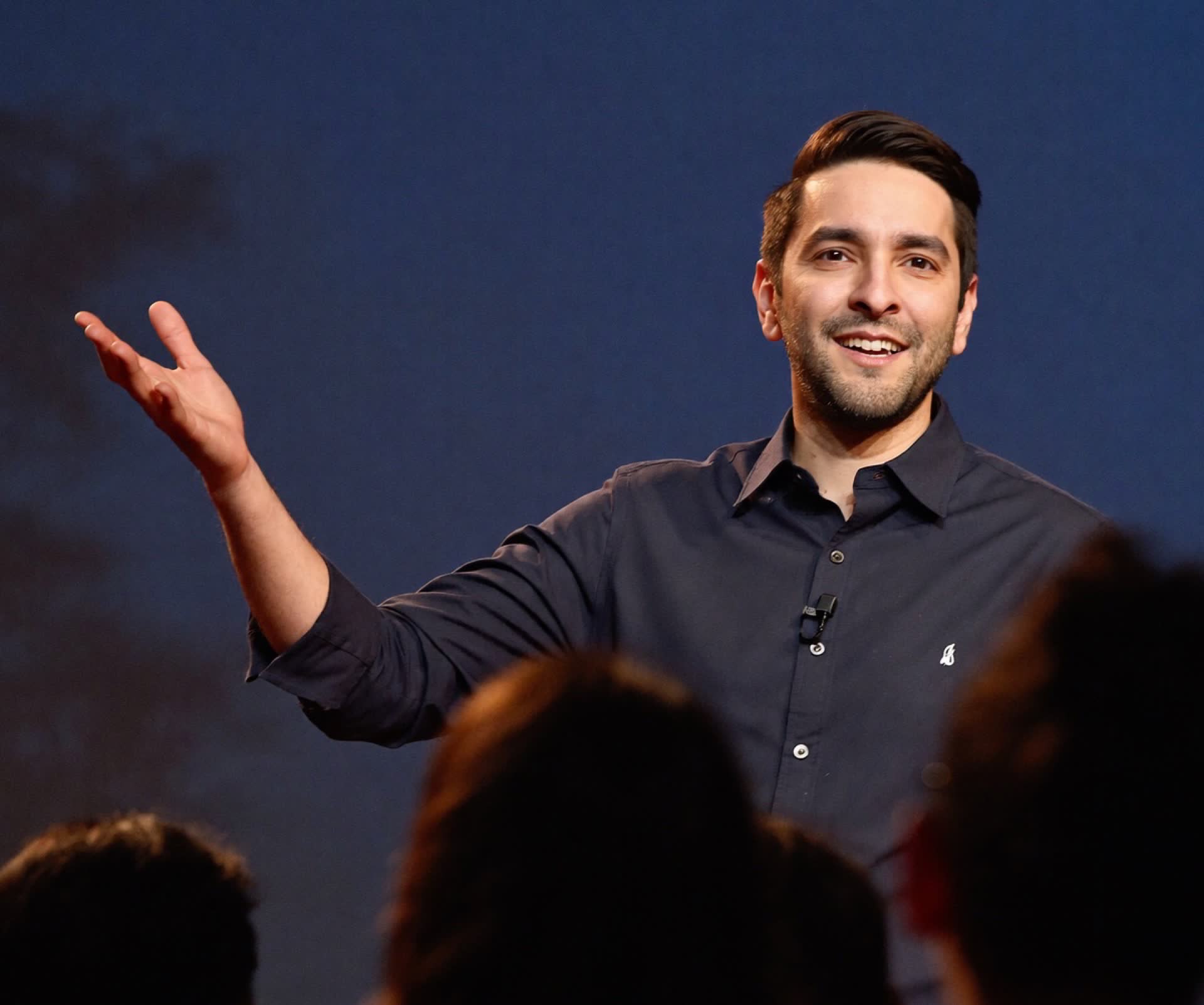
Unilever Pakistan's CEO and education reformer Shehzad Roy argue that paying workers more than the minimum wage is a commercial decision, not charity.
A vicious cycle: inflation outpaces incomes
Muzamil opened the conversation with a question he said had been on his mind for a while: not the top-down economic indicators everyone was quoting, but what those numbers actually meant for the ordinary Pakistani, the majority who live rural or peri-urban and who, in his words, were never given a fighting chance to begin with.
Amir Paracha answered first, in his capacity as CEO of a company whose products reach what he called the last mile of the country. “Prices have actually doubled,” he said. “But people’s wages, or their businesses, haven’t grown by that percentage.” The result, he explained, is that low-income households cut everything down to bare necessity, businesses lose sales as a consequence, and the workforce behind those businesses gets hit in turn. “The situation is tough, but I’m hopeful that, God willing, we’ll come out of it,” he said, describing the country as caught in a vicious cycle rather than a single bad year.
The fear isn’t collapse, it’s stagnation
Shehzad Roy took the question somewhere more personal. He referenced a line of poetry he said had come back to him: “My worry isn’t how this country will run. My worry is that it keeps running exactly like this.” Through Zindagi Trust and his newer organization Durbeen, he said, he’d had the chance to meet Pakistan up close, and the country struck him as one of extremes: people who will show up for a stranger’s crisis without being asked, sitting next to uneven growth so stark that a gleaming hospital and an open sewer can share the same city block.
From there Roy pivoted to how he came to fair living wage at all. He said he knew what minimum wage was, and that nobody would argue against paying it. What he hadn’t understood, until conversations with Paracha, was that fair living wage could be pursued as policy, built into law, rather than treated as a slogan. He described his own instinct as an activist through what he called his four A’s: analysis of a situation, action through changing a law, advocacy to shift the wider mindset, and agitation as the last resort when nothing else has worked, the route he said Zindagi Trust took to get corporal punishment criminalized. Paracha’s argument, as Roy relayed it, was different: a law without buy-in from business and civil society first sits unenforced, and any change imposed from the top before people believe in it stays cosmetic. Roy said he came around to that view only after reflecting on Pakistani mindsets he’d seen elsewhere, like a man who holds a door for an elder and then argues with that same elder minutes later in traffic: the goodness is there, he said, but the understanding isn’t.
The commercial case: what Henry Ford proved in 1913
Pressed by Muzamil to explain the “magic” he’d used to bring Roy around, Paracha told a story from 2013, when he moved from marketing into sales at Unilever and found the company’s distributor-employed sales force, roughly 7,000 to 8,000 people, was losing 45 percent of its people every year on wages of around 12,700 to 13,200 rupees against a minimum wage of 14,000. Two years in, the entire sales force had turned over. There was no institutional knowledge left to retain.
He said the case that convinced him came from a book about Henry Ford, who in 1913 doubled the wage on his Model T production line from $2.50 to $5 a day after losing half his workforce annually. The rest of the auto industry called it reckless. Attrition at Ford dropped to near zero, productivity climbed, and the Model T became the best-selling car in America by 1915, netting Ford ten million dollars that year. “When you look after people, they look after you,” Paracha said. He applied the same logic at Unilever over three years: doubling sales-force pay, then adding health insurance through a company called Naya Jeevan, then extending coverage to parents and children’s education. Total spend: 100 million rupees. Sales, he said, doubled, and outpaced what the prior 60 years combined had produced. Attrition fell to a fraction of its former rate. “Leave morality aside,” he said. “This is a commercial case.”
Minimum wage vs. fair living wage, city by city
Roy asked the obvious follow-up: what actually separates the two figures? Paracha explained that a global body called the Fair Living Wage Network calculates cost of living city by city, adjusted for purchasing power, rent, and inflation, unlike Pakistan’s statutory minimum wage, which he said sat frozen at 1,400 rupees from 1969 until 1993 with no real revision for 31 years. By the network’s numbers, Islamabad’s fair living wage runs around 57,000 rupees, Karachi and Lahore sit near 50,000 to 51,000, the rest of urban Pakistan is closer to 40,000, and rural areas fall to roughly 35,000. The gap against the legal minimum wage, he said, runs somewhere between 1.8 and 2 times.
Paracha grouped employers into four categories: willing and able, willing but unable, unwilling and unable, and unwilling but able. Unilever Pakistan, he said, has pledged to move all 17,000 people tied to the company, of whom only 1,000 sit on its own payroll and 16,000 are third-party contractual staff with no legal claim on the company at all, to a fair living wage by 2025, on a costed, McKinsey-advised roadmap that had already lifted pay from the low-20,000s to 35,000 rupees within a year. “We are willing and we are able,” he said, framing the goal as ethical compliance that goes beyond what law requires, not legal compliance alone.
Beyond the paycheck: human resource or human capital
Muzamil turned the question toward Roy: why does this matter beyond the money itself? Roy answered with an image from a trip to Dubai the month before. In the same week, he said, people were dying in queues for subsidized flour costing 2,400 rupees a bag, while others stood in line to spend 1,200 rupees on coffee, roughly the same amount, spent by two different people, on opposite ends of survival. “That is less than the minimum wage for one person,” he said of a domestic-worker couple he’d separately picked up on an Islamabad road late one night, working eleven-hour days for a combined 20,000 rupees between them. “Who regulates that?”
Roy connected this to his education work, describing the difference between charity and reform: charity, he argued, gets people to a point of “something is better than nothing” and stalls there, while reform changes the underlying system. He said Zindagi Trust had shifted its own framing years ago, from worrying about children who never reach a classroom to worrying more about children who spend ten years inside a state school and emerge with no critical thinking, no skill, and no job. Converting people into what he called human capital, not just human resource, requires investment that outlasts a single act of generosity. He said he’d put the same question about the country’s future to roughly 350 people across different industries on his podcast tour, and the answer he kept hearing back was that Pakistan’s youth population, at around 65 percent, is treated as a strength by default, when an uneducated, unhealthy youth population becomes a weakness just as fast.
On his own household staff, Roy said he’d stopped giving money to strangers as his main form of charity and instead raised his house staff’s pay directly and extended them medical coverage his own family relied on, arguing that incentivizing people already working hard matters more than handing money to whoever happens to ask. He was blunt about the alternative: bargaining down a fruit seller by 30 rupees and then giving 500 rupees to someone unemployed further down the road doesn’t move anyone’s life forward, it just makes the giver feel generous.
Durbeen and the teacher licensing gap
The conversation had turned toward AI and tools like ChatGPT, with Muzamil asking whether Pakistan’s education system could realistically prepare children for a future built on critical thinking and creativity rather than rote learning. Roy said the debate around AI was too large for him to speak to directly, but that early childhood development, roughly up to age five or six, still depends on human interaction no technology replaces; content and apps become useful supplements only after that foundation is set. He then turned to Durbeen, asking rhetorically how far technology and apps could substitute for reform in a country with patchy electricity and little content in regional languages, and argued the deeper problem sits further up the system: Pakistan, he said, had decided teachers don’t need a real degree, only a short test, treating the profession as unlike medicine even though a child’s brain development is just as exacting a science as a body’s.
Durbeen, he said, is the only Pakistani organization to partner with Oxford University to design a teacher-training program, and it now runs a four-year, tuition-free Bachelor of Education at the Teachers Training College in Hussainabad, Karachi, in exchange for a three-year commitment to teach in government schools at what he called a starting banker’s salary. Licensing itself, he said, sits with a three-way public-private structure: Aga Khan University, Durbeen, and the government’s STEDA, so that no single party can shortcut the standard. “This is what Durbeen is,” he said, adding that he considers himself a systems replicator rather than an educationist by training.
Making the movement contagious, not mandatory
Both guests returned repeatedly to the same mechanism: change spreading through example rather than mandate. Paracha, describing himself as a marketer by profession, framed fair living wage as a brand going through its own adoption curve, currently at the awareness stage rather than the policy stage. He argued Pakistan’s real problem shows up in its human development index ranking, which he said had fallen to 161st out of 184 countries, down from 150th three years earlier and lowest in South Asia, even as GDP figures looked comparatively better in some periods, because concentrated wealth without redistribution doesn’t move the standard of living for anyone outside a narrow group.
His prescription rested on a distinction he drew explicitly: efficiency means squeezing the same output from fewer people, while productivity means getting more output from the same people, and Pakistan, he argued, needs the latter, not the former, to fund higher wages. Raise productivity first, which creates room to pay people properly, then ask government for tax credits on top of that for firms bridging workers to a fair living wage, since taxes exist to fund the same public services those workers would otherwise queue for. Roy pushed on the trust required for that kind of model to work, and Paracha agreed it depends on employees believing an employer’s promise that a share of future profit will reach them. He said roughly eight to ten other companies, including Bank Alfalah, Bank of Punjab, and Jazz, had already joined the effort, calling it a movement rather than a Unilever initiative, deliberately built city by city so that pay expectations track local cost of living rather than a single national number.
A turning point, if Pakistan can navigate it
Closing the conversation, Muzamil asked Paracha for his read on where the current economic situation goes from here. Paracha called it the hardest stretch he’d seen in his lifetime, describing a first-time confluence of political, economic, social, and climatic uncertainty hitting simultaneously, where historically only one or two of those had gone wrong at once. He drew a parallel to Bangladesh’s 1991 turnaround and Indonesia’s 1997 recovery, both of which he said started from worse positions than Pakistan faces now, and closed with a line he attributed to the writer Ishfaq Ahmed: when difficulty knocks on the door, don’t panic, get up and open it, because success arrives having changed its base.
Roy’s closing note looked further out. Asked to describe, without hedging or hope, what Pakistan looks like in 2050, he pointed to population management as the issue nobody treats with urgency, alongside climate change. He described a program tying reproductive health education to marriage registration through Nadra, so that a nikah cannot be registered without a completed course, calling it a near-term reform already in motion. Every other gain, in education, health, or wages, he argued, gets undercut if population growth isn’t managed alongside them. “Technology will uplift Pakistan,” he said of the country’s young population, but only if that basic condition is met first.


Never miss a conversation.
New episodes and the thinking behind them, straight to your inbox. No hype, no spam, no pitch.