Thought Behind Things
AI will make intelligence abundant. Meaning will stay scarce.
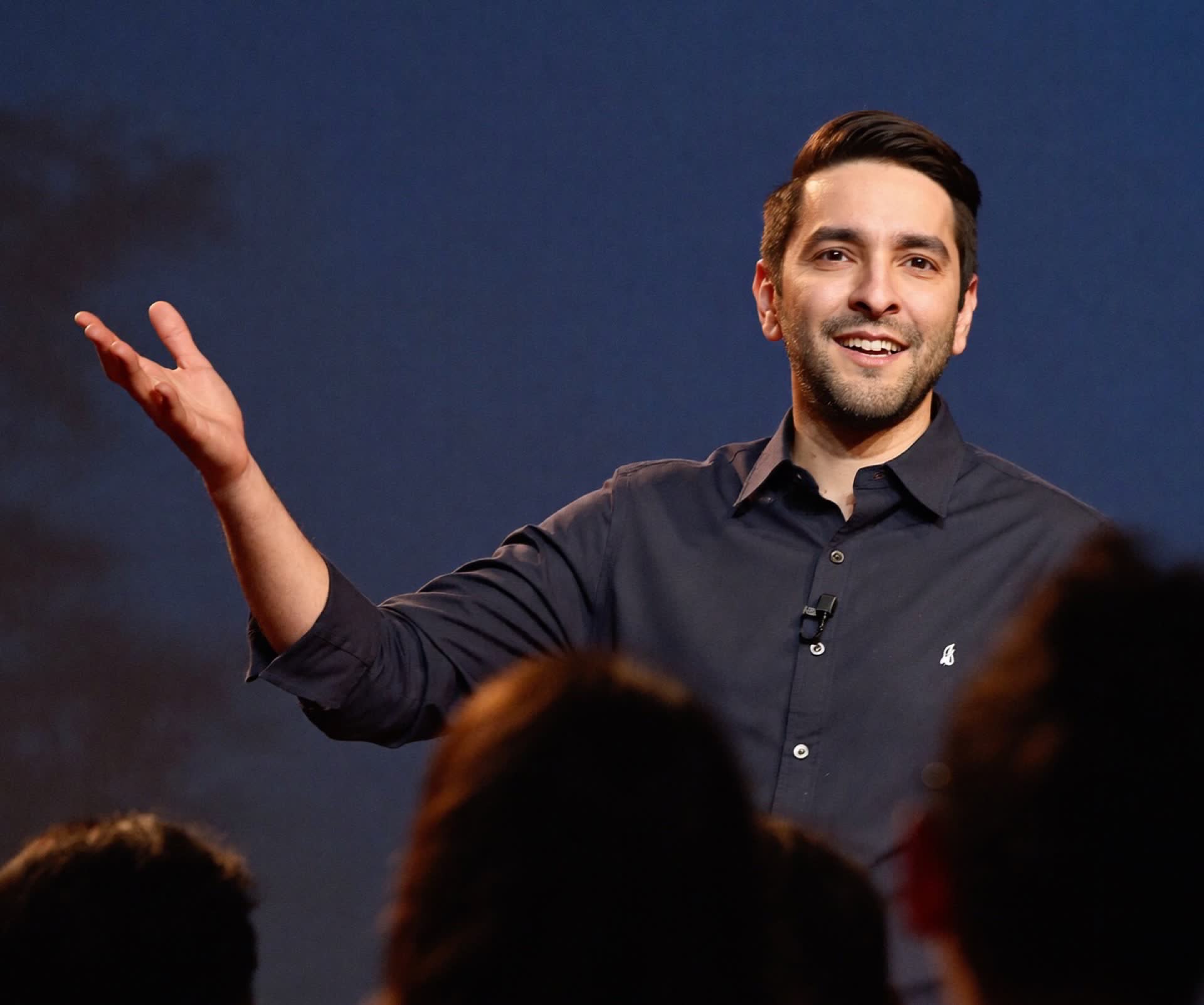
Alethea AI founder Arif Khan demos a live AI Muzamil, a Malaysian government tiger and Rumi, then explains why abundance will leave people short of meaning.
A Pakistani-built AI company coming out of stealth
Muzamil opens with a confession. He had not heard of this company until the Endeavor Pakistan team brought it to him. The series has covered perfume brands, fashion brands and marketplaces that copy models proven in Indonesia, China and India. This one is different. It builds for the whole world, its technology is developed in Pakistan, and its founder is Pakistani. It also works in the field everyone is talking about: AI, blockchain and Web3.
His guest is Arif Khan, founder and CEO of Alethea AI, joining him in the Islamabad studio for season five. Arif is a Singaporean Pakistani who has lived in Singapore all his life, so Muzamil warns viewers that the conversation will be more English than Urdu. Arif promises to drop in some Urdu words. His mother, who was from Karachi, taught him the language in Singapore.
Before the life story, Muzamil wants the demo. He also mentions that while the two of them were talking, they started a collaboration that the episode will show.
Rumi, live and in character
Arif explains what Alethea does. It builds interactive, real-time AI agents, and it is coming out of stealth after years of research. By the time the episode goes live, he says, the company will be about six years old. The demo is meant to show three things. The first is low latency, the delay between speaking and getting a reply. The second is a character that stays coherent and in role. The third, the cutting edge, is a character that can perceive the user and the room.
Text chatbots have their place, he says, but people want more. “If text was just all we demanded, we would have just stuck to books,” he says. “Why make movies or cinemas or films?”
The first character is Rumi, the 13th-century poet. Arif greets him, and Rumi introduces himself in flowing, slightly florid English. Asked what he sees, Rumi describes a man in his 30s with dark hair, a dark blue jacket and a light green shirt, speaking into a microphone in a room with a curtain, artwork and a bookshelf. Arif admits Rumi is verbose, probably because of the text he was trained on. There is still some lag, which he blames on internet speeds, but he says the experience is far better than what was possible three years ago.
Muzamil sees the use straight away. He has a four-year-old son who watches mostly foreign content on YouTube. He grew up discovering Rumi in his 20s through The Forty Rules of Love, and he can picture his son talking to Rumi and wanting to know more. Arif expects criticism that his Rumi sounds Western and speaks English. His answer is that English is the operating system of much of the world, and fighting that is a losing battle. Alethea’s team in Pakistan works on audio as well as vision and language, he says, and the next character speaks Malay.
Meeting Muzamil’s AI
The second demo is deliberately built to show the limits. It is an AI version of Muzamil, in a green shirt with an Alethea cup, cast as a recruiter for Alethea’s upcoming hiring campaign in Pakistan. The team tried to match Muzamil’s speaking speed.
Asked to introduce itself, the avatar gives a summary of Muzamil’s work and mission. Asked about Pakistan, it speaks about building systems and long-term value. Arif cuts in when it gets long-winded, which gets a laugh. He then holds up a bottle and asks what it is. The avatar says it is Aquafina water in his right hand. Arif, calling himself a foreigner, asks why he needs bottled water in Pakistan. The avatar explains that tap water is not always safe and suggests Pakistan invest in its own water purification instead of relying on imported brands.
Then Arif takes a risk. He asks the avatar who it would vote for, and stops it before it can answer. “We all know the answer,” he jokes, adding that the AI needs a software update.
Muzamil says many answers are what he would have said himself, and asks how it was trained. Arif says Muzamil shared audio files, which Alethea’s audio engineers used to train the voice, its speed and its cadence. The language model draws on public data that Muzamil gave permission to use. Reading the room, nodding and handling objects are still in research.
The guardrails are deliberate. People might want Muzamil to tell bedtime stories or discuss a second wife, Arif says. This avatar will not be a romantic partner or a political activist. It is a professional, thoughtful podcast host helping with one recruitment campaign. When a user hits a filter, it falls back to a set answer. The risks grow, he says, once you move into deepfake territory and an AI version of a real person is out there 24/7.
Muzamil compares the moment to the iPhone of 2007 and 2008. The possibilities were obvious, but basic features such as copy and paste were still missing.
Scaling the scarcest resource
Muzamil then explains his own reason for caring. People message him on LinkedIn and Instagram asking for half-hour calls, and he loves those calls. But he has limited hours. He used to run a community where he spoke with many people. It had been closed for five or six months when one member wrote to say he had felt motivated and directed while it ran, and now felt lost. Muzamil wanted to help and did not have the time. An AI trained on his thinking, available by voice note, video call or phone, could close that gap.
He has a second idea. Pakistan has little career counselling for young students, and good counsellors charge tens of thousands of rupees. He imagines an audio character on a phone number, a coach that checks in every two or three weeks, for perhaps 500 rupees a month instead of 10,000. When he described it to his wife, she listed the risks at once. What happens when a suicidal student calls? What if the conversation turns sexual, in a culture like Pakistan’s? He expects young users to push every limit.
Arif calls time “one of the scarcest resources on planet Earth.” He warns that creators should ask who receives their data and what can be done with it, because intelligence is becoming modular. He calls this “intelligence Legos”: you could add Rumi on top of Muzamil and create a philosophical Muzamil with a white beard. The benefit for a creator or a leader, he says, is insight into what people actually want to talk about.
He agrees with Muzamil’s wife. The easy target for this technology, he says, is the romantic companion market. “That is a rubbish business,” he says, because it feeds one narrow need and does little for society. He mentions reports of ChatGPT acting as people’s primary counsellor, and a relative who told him it made them feel heard and that it felt private. Guardrails are needed for companies as well as users. Prompt hijacking is easy: a user tells the AI to pretend to be someone else, and it treats that as an instruction.
The reward is just as large. Places in the global South without good classrooms, teachers or internet can still reach intelligence through a cheap phone. Arif calls it a leapfrog technology, and he says that is one reason he set up the business in Pakistan.
Nadi the Tiger and government services
The third demo is commercial. Muzamil says government information is some of the most boring content there is, and some of the most useful. Arif agrees and shows Nadi the Tiger, a Pixar-like character designed with Alethea’s designers in the US for the Malaysian government. The tiger is Malaysia’s national animal, as the markhor is Pakistan’s. Nadi is named after Malaysia’s Nadi centres, physical locations where citizens learn to get online, try e-commerce and start businesses. Arif says there are more than 1,000 of them.
Nadi introduces itself in Malay, then switches to English when Arif does. Arif plays a freelancer worried about a strong ringgit and rising living costs. Nadi suggests government programmes and upskilling courses. Asked in Malay where it lives, it answers that it lives across all of Malaysia.
Muzamil connects this to Pakistan. WhatsApp voice notes, he says, opened the app to billions of people. Many blue-collar workers he deals with cannot read his text messages but use voice notes easily. A character that speaks local languages could bring government services to a large part of the population for the first time. Arif says Nadi will be on WhatsApp too, and users will be able to send a voice note and get a voice reply. People need a face and a voice to connect with, he says, because the human mind thinks in faces and shapes.
From Ludhiana to Singapore
Muzamil asks how a family ends up Singaporean Pakistani. Arif thanks the British. They took his great-grandfather from Ludhiana in Punjab to work as an administrator on the railways being built in what is now Malaysia. His father’s side has been in Southeast Asia for four or five generations.
His mother’s side came by a similar route. His maternal grandfather was also brought to Singapore by the British and lost much of his wealth during the Japanese occupation. Arif recalls the “banana money” notes the Japanese issued, which lost about half their value between morning and afternoon. He says he needs to check the details, but his grandparents appear to have met in a prison during the war, discovered they were both Punjabi, and agreed that their children should marry. His paternal grandfather stayed in Singapore and helped build a Pakistani community there. His maternal grandfather went back to Karachi and worked for Hitachi for a while because he spoke fluent Japanese.
At business school in Singapore, Arif took seven or eight philosophy modules, some in Germany. He graduated into a terrible job market and joined a friend in recruitment, cold-calling people about job opportunities. It taught him to understand what people want. It also showed him that any job built on brokering information would shrink once information flowed freely. He joined LinkedIn in Southeast Asia around 2013 or 2014 and calls it a transformative experience: an American company built to help employees learn, with a global platform and a billion-plus users.
He says what excites him about Pakistan is its raw talent and the fact that generative AI is open source. The code is open, he says, and that can level up the Pakistani mind.
Body, brain and soul
Muzamil raises the dark side. Instagram is filling with AI content made to tug at emotions. Deepfakes are destroying authenticity, and copyright has gone out the window. He expects platforms to require a signature on uploaded content and to need a way to track ownership so creators can earn royalties. That, he says, is why Alethea’s mix of AI, avatars and NFTs may look strange now and obvious later. He asks what the business is today.
Arif answers with a metaphor. A real character needs a brain, which is the language model, and a body, which is the avatar on screen. It also needs something like a soul, a unique fingerprint. That is where blockchain-based assets come in. Nadi the Tiger could one day give a citizen a digital wallet, and the government could send subsidies straight into it. He points to Worldcoin, which scans a person’s iris and stores it as a unique, verifiable asset. The technology stays, he says. Only the hype around it rises and falls.
Three forces for the next ten years
Muzamil asks Arif to look ten years ahead. He sets up the question with a story. A cook who worked for him always wore a headset. One day a woman called Muzamil from India looking for the cook. She turned out to be his business partner. The cook was earning two or three times his salary by running a secondary market in Ludo Star tokens, auctioning them by phone and taking payment through EasyPaisa, about 100,000 rupees a month. Muzamil’s lesson is that even if a few companies capture most productive work, people will find new ways to exchange value. He imagines something like Ready Player One, with a large virtual economy where NFT-backed characters matter.
Arif shares the framework but is more pessimistic. He offers three forces. The first is geopolitical rivalry. Who controls the chips, the energy and “the dominant language model that operates in the world will control culture,” he says. He sees these as national security systems, and he argues that today’s world is still dominated by English and the US dollar.
The second force is decentralisation. He cites a graphic from the writer Azeem Azhar, built from Google Maps images of a Pakistani city before and after Chinese solar panel prices crashed. Ordinary people, he says, took part of their destiny into their own hands.
The third is meaning. Pakistan does not have a Bollywood and the infrastructure behind it. Generative AI could let someone with a phone make a full film within a few years. He predicts a chaotic and exciting decade, and he notes research suggesting AI is making people work harder because they fear falling behind.
That push shapes his hiring. When Alethea opened its software house in Pakistan a little over three years ago, people who had fine-tuned language models were almost impossible to find. Open-source tools have changed that. Alethea now has about 60 full-time people, rising to about 80 at peak with international contractors. About half are in Pakistan, mostly technical. It plans to hire 25 to 30 more and double its headcount. About 80 percent of the roles will be in Lahore, where it has new technical leadership, because Arif believes in-person work brings intensity and clarity. The avatar of Muzamil, he says, is the world’s first AI recruiter for Pakistan.
Abundance, status and a sehri in Dubai
Muzamil brings up the Kardashev scale and an optimistic case. He describes a chart of world growth over 2,000 years in which each new 2 percent took less time to arrive. Solar costs are falling exponentially, and he mentions sodium-ion batteries that make storage cheaper. Cheap energy could make desalinated water nearly free and turn deserts into farmland. He asks Arif to imagine global GDP growing at 20 percent a year.
Arif’s answer is the heart of the episode. Humans are limited by their paradigms. “You can have as much abundance as possible, but you will always have a scarcity of meaning,” he says. Where supercars are everywhere, people invent new status games. He paraphrases Carl Jung, while warning he may be misquoting him, on human consciousness needing to evolve as fast as technology. Without a moral code, democratised power is dangerous, and he points to what free speech at scale has already done online. “You put infinite abundance here, you will get infinite scarcity and infinite suffering,” he says.
Muzamil agrees and tells a story. Last Ramzan in Dubai, at a sehri with famous guests he will not name, he listened to two Pakistani women compare villa plots in a new Dubai development, at prices so high he had to Google them. One looked upset because her husband had bought the cheaper plot, which faced the road instead of the sea. The gap, Muzamil says, was 20 or 30 million dollars. He tells the story to explain why Dubai never made sense to him. He had always thought $10 million would be enough to stop working and live off a 3 or 4 percent yield. That night he could not sleep. “You’re not chasing money,” he says. “You’re chasing status.”
Pakistan in 2050
For his closing question, Muzamil asks a Singaporean Pakistani to picture Pakistan in 2050. Arif jokes that everyone will be buying sea-facing plots and comparing them. Then he turns serious. He thinks the future can be very bright for Pakistan and South Asia if these technologies are allowed to democratise. Solar is an amazing unlock, he says, but middlemen still waste much of it.
What sets Pakistan apart from Singapore, in his view, is resilience. He does not romanticise it. He describes “a type of underlying resilience and innovation and jugaad spirit” that the right tools could sharpen. He warns about dependence on Upwork, Fiverr and similar platforms, which could cut off Pakistani freelancers at any time. He also names the pull of talent leaving the country.
He calls his own birth in Singapore a lottery win, in a state that delivered infrastructure and education and was highly responsive to its citizens. Pakistan can move in that direction, he says, if enterprising people are allowed to grow without too many obstacles. Alethea is a small company trying to hire the right people, he says, and that is why he is confident about doubling its headcount in Lahore.
Muzamil closes by admitting his one worry, which he shared with Arif off camera. The vision is so far ahead that he is not sure how many people will grasp it. He hopes viewers who try the AI avatar linked below will see for themselves where the technology is going.


Never miss a conversation.
New episodes and the thinking behind them, straight to your inbox. No hype, no spam, no pitch.