Thought Behind Things
Technology reshapes politics when people become experts
Rehan Allahwala argues technology enables political change. But grand visions fail. Real impact comes from activating individuals as shadow policymakers, one podcast at a time.
Audio-only episode. Listen here:
A 35-Year Journey Through Pakistani Tech
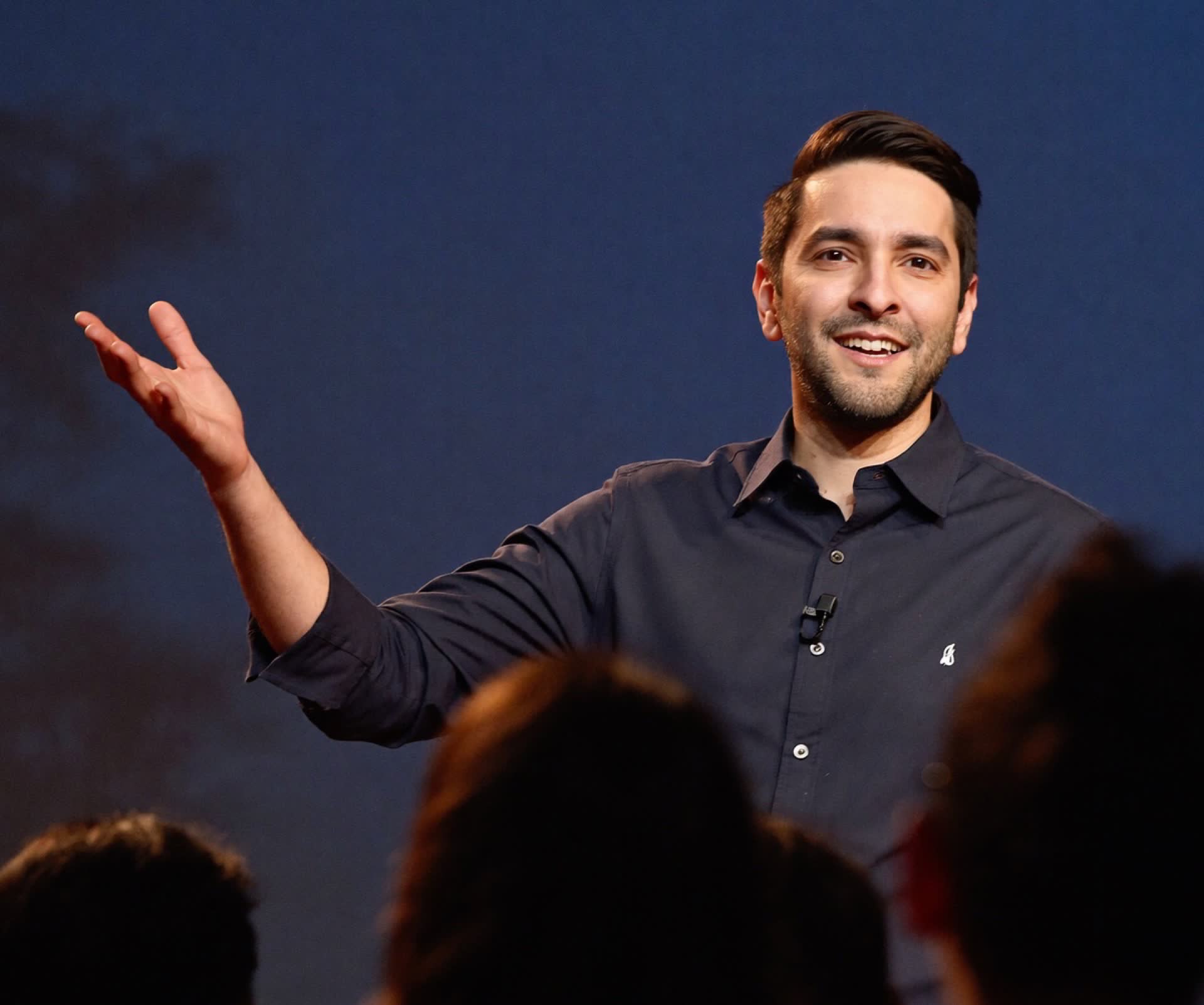
Rehan Allahwala arrived in Muzamil’s studio carrying the weight of three decades in Pakistan’s digital space. He began not with politics but with Commodore 64s and bulletin board services in the 1980s. When America wouldn’t grant him a visa for eleven years, he turned constraint into competitive advantage: sitting in Karachi, he scaled a business serving customers across 100 countries. “I worked in the entire world,” he says. “I saw what I could do, and what I could do, people could do.”
That conviction shaped everything that followed. When YouTube launched, Rehan was already making videos. When email was revolutionary, he taught freelancing online. By 2010, he’d transitioned from commerce to impact, asking himself a harder question: how do you scale poverty alleviation? He attempted to create a million micro-entrepreneurs, failing in the process. But failure taught him something more durable than any business plan: individual psychology drives systemic change.
The Laptop Experiment
Rehan’s breakthrough came from an accidental insight. He announced 500 free laptops to anyone who would connect with 500 Facebook friends. One person took the challenge. When Rehan examined the results, he didn’t see a consumer. He saw a transformed human being. The exposure to global networks had rewired how they thought, spoke, and dreamed. “When your friends are different, your mindset starts to change,” Rehan reflects. He gave away 500 laptops from his own pocket and measured the impact obsessively.
What he discovered: information density matters far less than network composition. You don’t become a millionaire by reading; you become one by knowing five millionaires. “You’re recognized by the company you keep. You change yourself when your friends are different.”
From Entrepreneurship to Politics
This principle eventually drove Rehan into politics. He founded the Insan Party in 2020, not as a traditional vote-seeking vehicle but as a training and activation engine. The core model is radical in its simplicity. Passionate individuals volunteer to become “shadow ministers” for specific policy domains. Over two years, they train obsessively: listening to podcasts, interviewing experts, studying both global best practices and local conditions, building networks. By year two, they rival PhD-holding specialists.
“Two years after we will have such a human being prepared,” Rehan says. “Which is a real expert. Which is chairman, solar, blah blah blah. We should say that we go to this party and go to the end.”
Muzamil presses him on the friction between technical expertise and political reality. You can train a shadow solar minister, but government procurement is broken, corruption is endemic, and technocrats have tried this before without moving the needle. Rehan’s answer: focus on what you control. “If I become successful, my impact is probably 10 years ago. The result is probably 3 years ago. It doesn’t have a difference. But in today’s world, 3 years are like 30 years already.”
Technology as a Mindset Tool
The heart of Rehan’s argument is this: technology doesn’t change politics. Changed minds do. And technology accelerates the psychology. When 70 to 90 million Pakistanis now use the internet, why don’t public service messages teach them to learn from MIT courses or YouTube tutorials? “Have we heard a public service message today that you can see TED and you can grow up on your TED?” Rehan asks.
Muzamil counters that messaging matters, especially for the bottom half of Pakistan’s income distribution who speak Urdu, not English. Rehan agrees: the infrastructure exists (YouTube, free bandwidth, smartphones), but the gap is cultural. “Until you have no content availability yesterday I was talking with my team that we are making English in a factory. You are sending English to school and you are learning English.”
The Spiritual Pivot
Late in the conversation, Rehan reveals a philosophical shift. He spent years chasing scale and ambition. Then he read Romy’s quote: “First I was smart, I tried to change the world. And then I became wise and I tried to change myself.” He’s since embraced Taoism, the principle of wu wei, non-forcing action. “Just go and fetch water and chop wood. Do nothing. Meaning, what you’re doing, you’re doing your job and the rest of all things will go.”
This isn’t pessimism. It’s acceptance that mega-projects fail, grand promises disappoint, and the real work is unglamorous and local. Muzamil respects this intellectual humility, especially after years of Pakistani technocrats promising unicorns and 10-digit GDP growth that never materialize.
Why It Matters
The episode illuminates a fundamental tension: can technology fix politics, or does politics have to fix itself first? Rehan’s answer is both and neither. Technology is a tool for organizing curiosity, connecting isolated thinkers, and giving regular people a platform to develop expertise. But it only works if you accept that change is slow, that 1% activation is a win (2.5 million Pakistanis), and that your job is to serve as a germinator, not a messiah.
Pakistan remains poorly managed because individuals lack critical thinking and platforms lack reach to those who speak local languages. Rehan’s Insan Party is an experiment in reversing both at once, one shadow minister and one podcast conversation at a time.


Never miss a conversation.
New episodes and the thinking behind them, straight to your inbox. No hype, no spam, no pitch.