Thought Behind Things
YouTube's five-year lag is Pakistan's opportunity
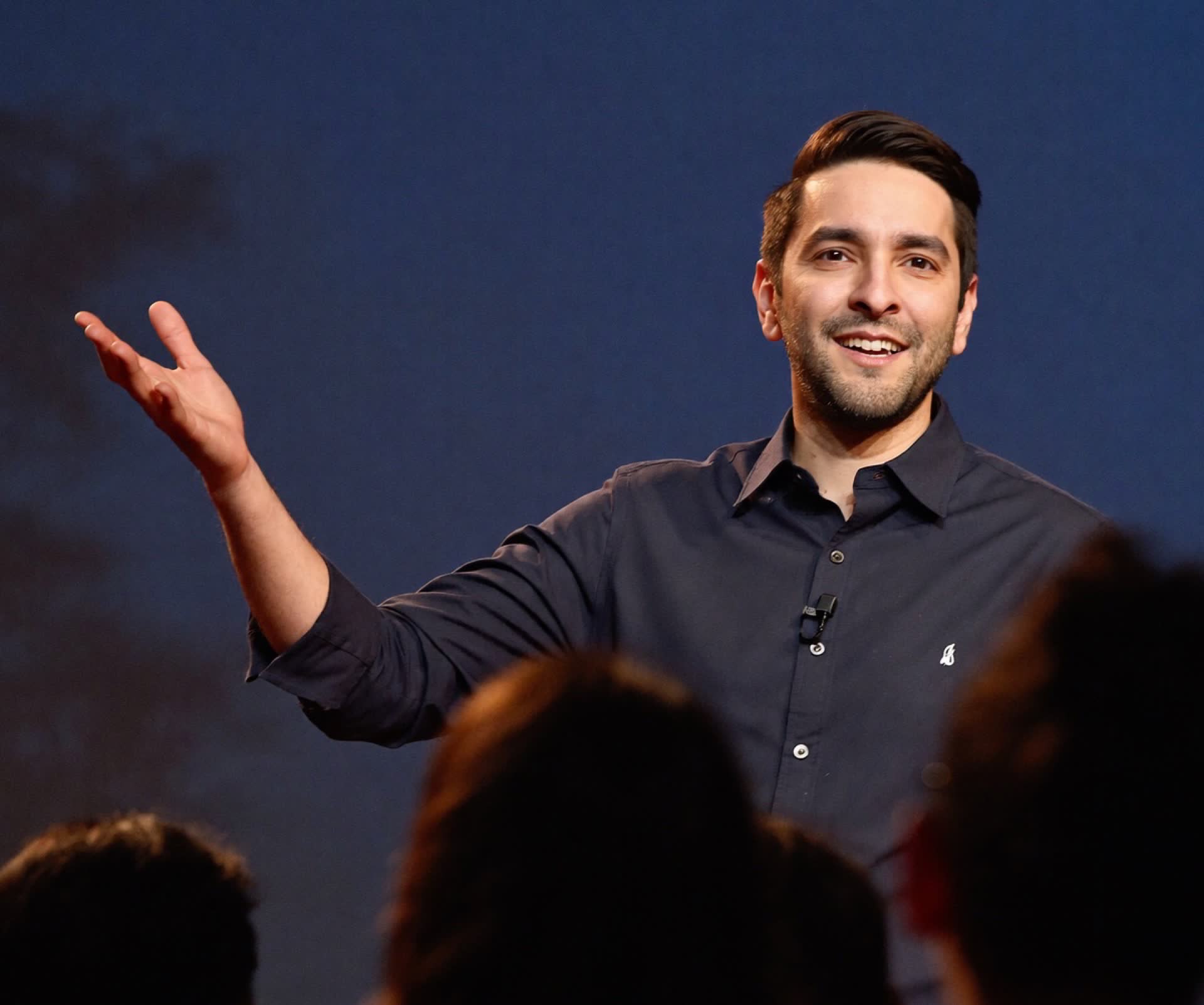
Humza Amin, a 22-year-old medical student with 198,000 YouTube subscribers, explains why Pakistan's digital lag is actually the creator economy's opening window.
Audio-only episode. Listen here:
How the YouTube Ban Held Pakistan Back
Muzamil opens by asking the question that shapes the entire conversation: where does YouTube stand in Pakistan versus the wider world. Humza’s answer is structural. “The biggest problem was it really set us behind five years,” he says. “Five years in digital space is so much. YouTube now in for example in the US and UK it’s so advanced that these social media people are like real-life celebrities.”
Pakistan, by contrast, is stuck in 2014-2015 Western YouTube. That gap is not just about subscriber counts or production value. It’s about the business side. Creators in the U.S. can make a full living from the platform. In Pakistan, the question of whether a creator can go full-time is still genuinely uncertain, and that uncertainty filters down through every decision a creator makes.
Starting at Fourteen, Committing at Twenty
Humza’s journey shows how the constraint became the thing that shaped his work. He watched YouTube starting in 2014 when the platform opened in Pakistan. “It’s such a glamorous life,” he recalls. “They’re doing crazy things in their houses and backyards, and I was like, I have to do this one day.” But he was in A-Levels exams at the time. He made two videos, then stopped, telling himself he would start for real once university began.
The actual start came not from ambition but from failure. In his second year of medical school at Shifa, Humza bombed an exam in one block. “I got scared,” he says, “and I was like, I think I need to re-evaluate my priorities.” YouTube became the output of that reevaluation. He started posting in February 2019, and committed to treating it like medicine: rigor, consistency, volume. “I wanted to post as much as I could so I can reach there,” meaning 100 videos, the benchmark all the big creators talked about. He reached 113 videos in just under two years.
Personality Over Production
Muzamil asks Humza to explain what makes his vlogs different from the other vloggers who came before him in Pakistan. Humza’s answer is direct: he doesn’t do cinematic shots or drone footage or voiceover production. “I’m not a professional videographer,” he says. “I don’t know anything about cameras. What am I doing?”
Instead, he watched American vloggers like David Dobrik and MrBeast, not for their technique but for their personality-first approach. Humza brought that model to Pakistan. His videos are him and his friends on the road, roasting each other, joking, being present. It feels like reality TV, not a short film. Muzamil reflects that viewers want to feel they are there with the friends, not watching a beautiful landscape. That difference matters. When Humza went north with his friends, the content was intimate and unpolished. When another creator does the same trip, it’s a macro-level experience with professional lighting and sound design. Both work. But Humza’s version hits different for his audience.
The Monetization Ladder
By this point in 2020, Humza has 198,000 subscribers and significant engagement. Muzamil pushes him on monetization. What’s the path?
Humza’s first income came from YouTube AdSense. He remembers his dream: “When I get my first paycheck, I’m going to give it to my mom.” He did exactly that, on camera, and calls it his favorite video. But he’s been selective about sponsorships. “I’d say 90% of the brands and sponsors that reach out, I don’t take them, because they don’t feel really really real to me, or it doesn’t seem worth it to me financially.”
Instead, merchandise was the breakthrough. Humza saw that many creators could not sustain themselves through AdSense alone because of copyright claims. “If I wanted to use that model here,” he says, “I saw that Bollywood songs, so many creators, 40 videos have copyright claimed.” So he launched merchandise, and it worked. That move bought him creative freedom. He could now spend time on content, not hustle for brand deals.
Muzamil points out that affiliate marketing is next, the gap Humza has not explored. Humza agrees. The mechanics are straightforward. When he wears a shirt or uses a product, a link in the description sends viewers to buy it, and he gets a cut. Muzamil advises: “You need a manager.” Humza pushes back. Muzamil’s response is clear. A manager handles the business so the creator can stay creative. They translate between brands who want to give you a script and your actual life, which may or may not align with their talking points.
The Third Generation
Humza names the rising vloggers he sees as peers: Maruk Sethi from Peshawar, Zainab Fatma from Lahore with her hijab content. He says, “There’s so many that have come up.” Muzamil notes that in a country with 80 million internet users, naming five vloggers is almost nothing. For Humza, that’s the opportunity. The space is open. “Any creator that starts today,” he says, “it will be new because it’s such a big explore.”
The tone is collaborative. Humza doesn’t see these other creators as competition. “It’s like, wow, that’s great. I’m so happy for you.” The goal is collective: to take the whole YouTube space forward in Pakistan over the next five years.
The Brain Drain Flipped
Muzamil brings up something personal. Humza was born in the U.S. and could easily have stayed. He was there for eight years, in Michigan next to Canada. Two years ago, would he have chosen Pakistan? “No,” Humza admits. “Two years ago, I probably would have said that I want to go to America.”
The shift came from making content. “When you interact with the ordinary Pakistani, you get a comment section. You get out of your bubble. We live in an upper middle class bubble. When you talk to average Pakistanis, you see a lot of realities of this country.” That exposure changed him. He stopped seeing Pakistan as a place to escape and started seeing it as a place that needed him. “That’s the concept of brain drain,” Muzamil says. Humza nods. For him, the answer became yes to staying, yes to Pakistan.
Politics and the Next Generation
As the conversation turns to Gen Z’s political mood, Humza’s optimism stands out. Yes, millennials had hope with Imran Khan and PTI. That hope was disappointed. Gen Z has seen politics betray itself, but Humza doesn’t sound defeated. “I’m very pro the future,” he says. “Irrespective of the politics.”
His reasoning: government is only 15% of a country’s growth. The rest is the people, the vision, the education level of the youth. In Pakistan, he sees more young people raising their voices on social issues, tagging officials directly, demanding accountability. “People aren’t taking oppression easy anymore,” he says. And when he looks at his generation, Humza believes one of them will eventually say, “This is wrong. I can do it better.” Not as a politician necessarily, but as a different kind of leader. A creator, a voice, a builder.
Muzamil laughs and nominates him for chief minister. Humza laughs back. But the conviction is real.


Never miss a conversation.
New episodes and the thinking behind them, straight to your inbox. No hype, no spam, no pitch.