Dil ki Baat
The Netflix subscription that would crash Pakistan
Muzamil Hasan runs a thought experiment: if every Pakistani smartphone user bought a Netflix subscription, the economy would collapse. The reason reveals why Pakistan cannot afford the future without sovereign AI.
The thought experiment that breaks the economy
Muzamil opens with something ordinary. Pakistan has roughly 100 million smartphone users. Imagine every one of them buys the cheapest Netflix plan — Rs. 1,000 a month, about $3.6. The person has the money. They are paying in rupees. “Everything is fine,” Muzamil says. Then he flips it: “Pakistan’s entire economy would completely crumble.”
The arithmetic is unforgiving. At $3.6 across 100 million users, that is around $360 million a month, or roughly $4.3 billion a year. Muzamil sets that against Pakistan’s roughly $30 billion in goods exports, and a net dollar retention after imported raw materials of perhaps $15-20 billion. “Approximately 12 to 13 percent you’ll be spending on Netflix. Your entire economy will choke.”
The point is not Netflix. The point is that a rupee-priced subscription is quietly a dollar transaction. “It looks to us like a rupee transaction, but Netflix is an international company. It extracts all its revenue in dollars.” Mastercard converts the rupees, the dollars leave, and the same mechanism runs through Spotify, OneDrive, iCloud and every app-store subscription.
Why the free market always prices out the many
From here Muzamil widens the lens. The dollar shortage silently rations everything. Take cars. Pakistanis complain that cars stay unaffordable, but imports are capped by available dollars. If only 50,000 cars can enter the country in a year, the free market finds its price at whatever the top 50,000 buyers can pay. Everyone else is quietly priced out.
That, he argues, is the pattern for almost every good thing in Pakistan. “Our bottleneck has always been the dollar. Until we solve the dollar problem, we cannot improve any kind of economic growth or any kind of standard of living in Pakistan.” The Netflix example only makes a familiar constraint suddenly visible.
The four ingredients of an economy
Muzamil then lays out a frame he says he will keep repeating “until it settles in your head.” An economy is built from four things: intelligence, labour, raw material and energy.
Pakistan has raw material — food grows locally, minerals exist, marble is mined, cement is made at home. Pakistan has labour in surplus, with roughly 5 million children born each year and a long history of exporting workers to the Middle East. The problem has always been energy and intelligence.
How energy got dollarised
On energy, Muzamil is blunt. Oil has always been imported and dollar-denominated. Gas, which Pakistan did own, was cheap and could have been steered toward productive industry. Instead, under Musharraf, it was rolled out as CNG for cars — “the boys would go around in their Mehrans” — and burned as lifestyle. When domestic gas ran out, Pakistan started importing dollar-priced LNG from 2015 onwards.
Then he sharpens the argument on electricity. The IPP contracts signed from 1994 onwards were structured in dollars, even though the investors were mostly Pakistani. “Literally 90 percent of them were all Pakistanis — big groups. Sometimes Nishat Chunian Limited, or Gul Ahmed’s power plant, Engro is in there — everyone is in there.” Local investors demanded returns in dollars from a rupee economy. The consequence is the capacity payment structure Pakistanis pay for today: two trillion rupees a year in capacity payments, roughly two-thirds of the current cost of electricity.
He also explains why the government cannot simply cut taxes on electricity. If power gets cheaper, people consume more. If they consume more, the government must buy more fuel — in dollars — and the currency comes under pressure. Taxes on electricity, he argues, are often demand-suppression tools disguised as revenue tools. Along the way he cites Hafeez Pasha, who “recently in a video categorically repeated that your exports are suffering again because you’ve foolishly pegged the dollar again.”
The scarcity of intelligence, and the brain drain reframed
Historically, Muzamil says, Pakistan never built its intelligence base because it never educated its population properly. What little intelligence was produced — through private schools, through personal effort — was drained abroad. But he reframes what that drain actually was. The developed world was not doing Pakistan a favour by absorbing its immigrants. “They were importing intelligence so that their economies’ wheels could keep turning.”
Now that same developed world has hit an immigration wall, and it has found its substitute in AI. Intelligence, the scarcest of the four inputs, is about to become abundant. Muzamil notes that even last year “seven lakh educated Pakistanis” left — but once AI becomes mainstream, that outflow becomes easier to absorb, because the intelligence they carried can be replaced at software prices.
The school that cannot afford teachers
To make it concrete, Muzamil walks through a small example. Try to open a school. Parents in most of Pakistan can pay perhaps Rs. 4,000-6,000 a month. Twenty students at Rs. 4,000 is Rs. 80,000 a month for one class. Out of that you must fund a campus, electricity, infrastructure, and six or seven high-quality teachers for a third or fourth grade class covering Urdu, English, science and geography.
“The problem is that you have a scarcity of intelligence,” he says. “Because intelligence is so scarce, its price is very high.” Good teachers cannot afford to teach at those prices, so the masses cannot be taught. AI, once abundant, breaks that equation. Education is only one use case. “There will be hundreds of thousands of new use cases.”
The dollar trap is about to repeat itself
This is the pivot. Muzamil argues the mistake made with IPPs in 1994 is about to be repeated with AI. If in 1993 someone had insisted on structuring the power sector as local investment in local currency, Pakistan would not be trapped in capacity payments today. Nobody had the foresight. The contracts were dollarised.
Now a new industrial revolution is arriving and one of the four economic variables — intelligence — is about to enter massive abundance. If Pakistan lets that intelligence be delivered dollarised, from foreign clouds, priced per token in USD, the country will be locked into the same trap for another generation. The Netflix experiment scales up: every business, every school, every government program paying dollars for tokens.
The alternative he sketches is direct. Imagine Netflix running on local data centres, operated by a local company like Jazz. A hundred million subscribers at Rs. 1,000 would be no problem, because the money would circulate locally — creating jobs, growth, with only electricity as the meaningful outflow. Dollarised, the same subscriber base becomes a weapon pointed at the currency.
What sovereign AI actually requires
Muzamil then lays out three things Pakistan needs. First, local data centres. Second, open-source models — specifically the ones China is releasing generously — deployed inside those local data centres rather than licensed from Western providers. Third, an application layer built locally and sold locally.
He notes that “sovereign AI” has become a fashionable phrase. Satya Nadella at Microsoft, the Palantir CEO, and Jensen Huang at Nvidia have all championed it. Each has an incentive — Nvidia sells more cards, Microsoft breaks the OpenAI-Anthropic monopoly. Pakistan’s incentive, he says, is more direct: economic survival. “This is not just for technology people. This is not just for the freelancers in the services people. This is for the future of Pakistan.”
He points to Gul Ahmed investing “upwards of $50 million” into a Pakistani data centre as a signal. “They are not doing it out of trust in Allah. They are not doing it for the collective good of the nation. Although the collective good is happening. They are doing it because they understand this is a fantastic opportunity.”
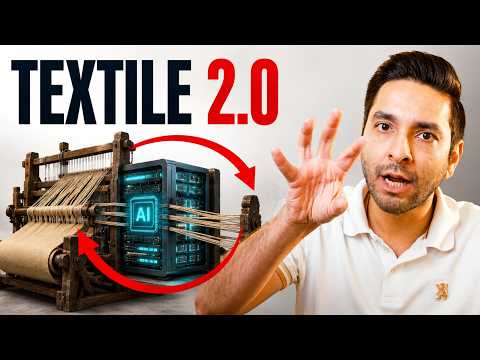
If Pakistan does not build this locally, Muzamil warns, its services sector will end up like textiles — 60% of the cost imported as raw material in dollars, a thin margin added locally, and the illusion of $10 billion in exports where only a dollar or two per sale actually stays in the country.
What the government must — and must not — do
Muzamil is careful about what he asks of the state. He is not asking for guarantees or subsidies. He wants the government to do only what a government can do: provide 24-hour electricity, provide proper bandwidth, and stop the theatrics. No shark-ate-my-cable stories. No shutting down links during rallies. No performative internet outages. He suggests placing data centres inside special technology zones and telling operators: “the generic, upside-down things we do to ourselves as a country will not apply to you. Sit quietly and do your work.”
At the end, Muzamil anticipates the sceptical comment: if Pakistan cannot pay its electricity bills, how will it build data centres? He promises the economics in a follow-up, along with a breakdown of Pakistan’s total token demand and a layered walk from the application layer down through models, hardware and finally energy.
His closing frame is the one the whole episode has been building toward: “Without the hardware layer we will always be colonised. We will always be dollar-pegged. And we will always be stuck the same way we were stuck with electricity.”


Never miss a conversation.
New episodes and the thinking behind them, straight to your inbox. No hype, no spam, no pitch.