Dil ki Baat
Pakistan's biggest problem is an ideology it never defined
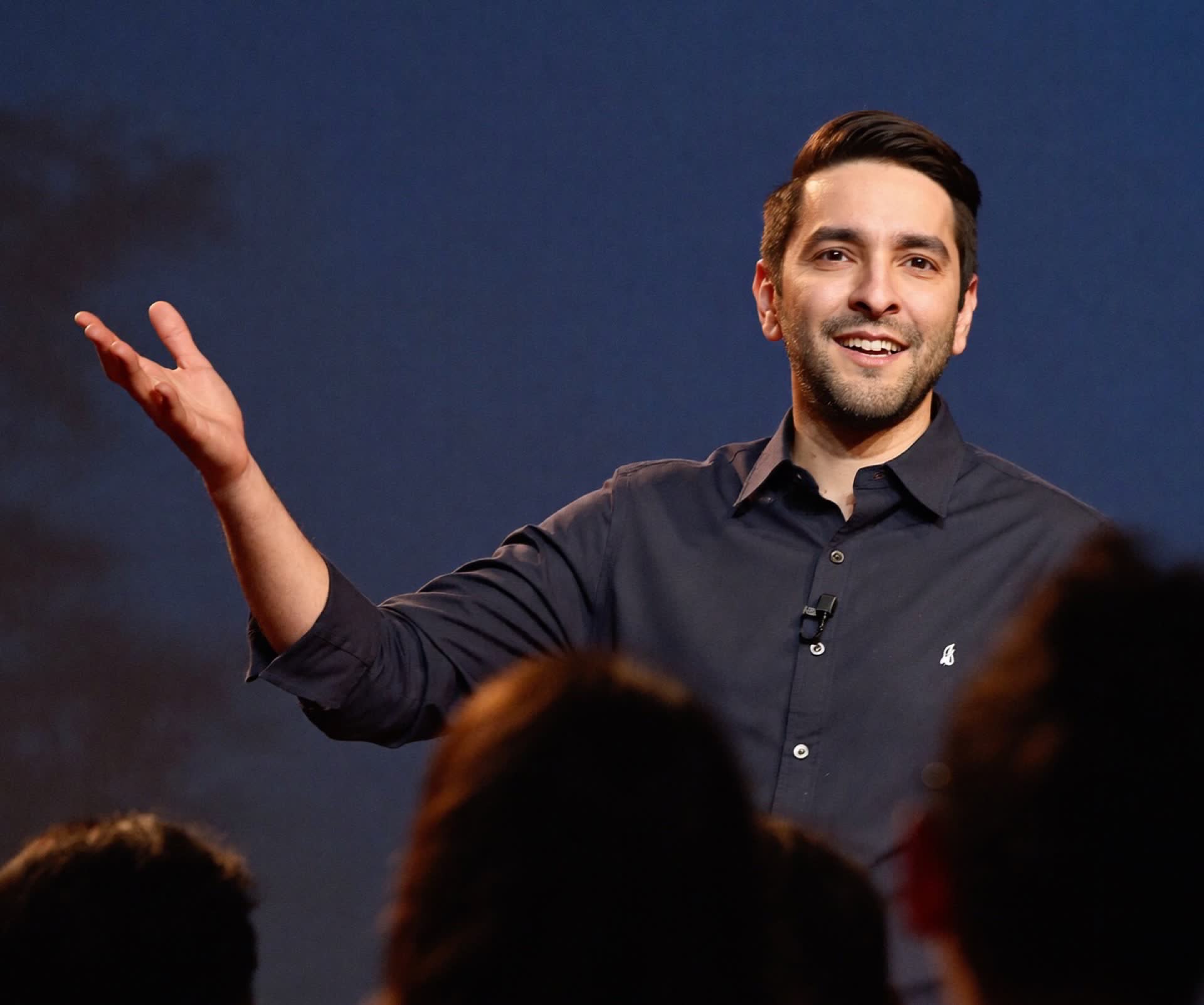
Muzamil argues that Pakistan never agreed on its ideology or national identity, and this gap sits behind its intolerance, culture wars and stalled growth.
The argument behind every drawing-room debate
Muzamil starts with a familiar scene. In drawing rooms across Pakistan, someone always announces the country’s single biggest problem. It is education, or corruption, or something else, but it is always the biggest.
The arguments that follow have a pattern. Pakistan should be secular. Pakistan should be an Islamic republic with Shariah. Pakistan should be free-market capitalist like the countries that pulled ahead. Capitalists ruined the world, so Pakistan needs socialism. We are copying Arabs. We are trying to become Turks after watching Ertugrul. Anyone who speaks English is ashamed of being Pakistani.
He says all of these are connected. They are arguments about a nation’s ideology and identity. “My thesis today is that Pakistan’s ideology and Pakistan’s identity have never been properly decided or defined to this day.” In his view, that is why so many people fight each other, why everyone tries to grab their own share, and why unity is missing.
He asks viewers to watch with patience and an open mind. He is not trying to impose one ideology. His point is that Pakistan is very diverse, and finding a common framework for a country like this is hard and necessary.
What ideology and national identity mean
Muzamil reads out two definitions. An ideology is a system of ideas and ideals, especially one that forms the basis of economic or political theory and policy. It is the aspirational answer to where we want to go, what kind of system and what way of life we want. Once a society has that, it can build economic and political policy around it.
A national identity is a sense of a nation as a cohesive whole, represented by distinctive traditions, culture and language. He stresses that the question sits at the national level. How Sindhis, Balochis, Pathans or Punjabis live is a separate matter. The question is which cultures, customs and traditions are common to every Pakistani, wherever they live.
He adds a line from Dr. Fazlur Rehman, whom he describes as a well-known Islamic philosopher and thinker: where science tells us what is, ideology tells us what should be.
A simple test: ask the people around you
Many viewers will say Pakistan already has both. The ideology is “Pakistan ka matlab kya, La ilaha illallah,” and the identity is obvious: we are Pakistani, we watch cricket.
Muzamil suggests an exercise he did himself. Ask the people you meet, a friend, a waiter, a shopkeeper, two questions. What is Pakistan’s ideology? What is Pakistan’s identity? He says you will be surprised by how varied the answers are. Each person brings forward what is unique to their own culture and tradition.
That diversity is not bad, he says. It is Pakistan’s strength. But a country he describes as the world’s fifth-largest, and by his estimate around the 40th-largest economy, needs some unifying factor that everyone can stand behind.
Why a nation needs a north star
“Ideology gives you a North Star,” Muzamil says. “It gives you a direction, a sense of purpose for the whole society.” When people agree on the direction, they push the same way, whether they act alone or through institutions, and growth speeds up.
He describes what he sees when he looks at the past 75 years. “People are pushing Pakistan outward from all four sides, and Pakistan is still standing in the same place.” A unified push around a single agenda, in his view, does not exist.
That is also why he calls the “biggest problem” debate pointless on its own. Without a framework that says where the country wants to go, you cannot judge whether any policy is right or wrong. Any new idea will have one camp calling it the best thing in the world and another calling it a disaster.
Secular versus Islamic, and the common ground both sides miss
Some will say the ideology is clear because Quaid-e-Azam wanted a secular Pakistan where minorities could live. Others will say he wanted an Islamic state. Muzamil says neither position is simply right or wrong, because nobody knows exactly what the founding fathers had in mind. There are books and quotes for every argument.
“Whatever your argument is, it is an argument, and it may well be correct,” he says. “But don’t argue it as a fact.”
He traces the same split through Pakistan’s history. Since Pakistan was created, a religious side has pushed for Islamic laws and stayed in a fight with the government. A secular side has said religion belongs at home and the state should focus on development. He does not call either side foolish. “All of these people were technically right. They had different ideas. The problem was that we never listened to each other.”
Pakistan has room for the religious and the liberal, he argues. The question is what Pakistan itself should be. He notes that communities in parts of Sindh and Balochistan are, he says, quite secular, and that the Kalash are different again. A modern nation state cannot banish them or tell them to change. So he proposes putting the slogans aside and asking what people actually want: a peaceful state, safety for women, education, development, rule of law, an end to theft and corruption. Those, he says, can be common ground for every side, and the same method works for debates between capitalism, socialism and communism.
How other countries write theirs down
Every country has an ideology, Muzamil says, and many write it into a founding document. The United States has its constitution and bill of rights, which carry the founders’ principles of freedom and democracy. The UK has no single book; laws, rules and traditions together define it. China has the Communist Party manifesto, with additions from the thinking of Mao, Deng Xiaoping and Xi Jinping. He singles out Deng as the leader who opened China to trade and laid the base for “capitalism with Chinese characteristics.” Germany has its basic law. Pakistan has a constitution.
These documents give stakeholders, from bureaucrats to teachers to police, a sense of direction for their daily work. They are also what holds modern nation states together. Muzamil points out that many borders, Pakistan’s and much of the Middle East’s, were drawn by the British under deals with little logic behind them. A nation state survives when the people inside its lines share a sense of purpose. When that breaks, new lines get drawn.
With that in place, he sorts modern states into rough types:
- Theological states, built around religion, such as Israel and Iran.
- Monarchical states, such as Saudi Arabia under the House of Saud. He uses it to explain how a conservative country could suddenly open up: the core ideology is the monarchy’s, not theology.
- Socio-territorial states, such as Switzerland, where tribes in a strategic spot formed a loose alliance centuries ago and neutrality became the national idea.
- Economic states, such as capitalist America and communist China.
- Liberation states, such as Algeria and South Africa. He says South Africa speaks up for Palestine because opposing apartheid is part of its DNA.
- Hybrid states, such as Pakistan, India and Indonesia, which mix theological, economic and territorial threads and are still discovering their direction.
The hazards, and the oath nobody can define
Muzamil accepts that ideology has risks. A defined ideology will always serve the majority, and in a democracy 51 percent can decide while 49 percent object. That is why he calls inclusivity the hardest and most important part. “You cannot achieve peace, development or growth by fighting people and pushing them away.”
He then raises the point at the center of the episode. MNAs, senators, the Chief Justice and the Army Chief all swear to protect and safeguard nazriya-e-Pakistan. “Is there any document in Pakistan that defines what nazriya-e-Pakistan is?” he asks. His own research found none. He invites viewers to correct him.
If it is undefined, he argues, anyone can twist the constitution and the law in its name, and it has been kept arbitrary because Pakistan is so economically, culturally and ethnically spread out. The cost is division. He is careful to say Pakistan does have a loose sense of ideology. Pakistanis abroad find each other whatever their ethnicity. What is missing is a shared, discussed understanding.
He believes the class, cultural and religious conflict of today grows from that gap. The memes and online fights feel like entertainment, he says, but they breed hatred and drain the mental calm that could go into roads, homes, food, technology and education. He suggests the time may have come for a new constitution or social contract, built from a shared discussion that “the majority, if not all, Pakistanis can agree to.”
What comes next
Muzamil admits the topic can feel dry and says this episode lays the ground for the four to six that follow. Without an agreed core, he argues, projects like schools, AI or new factories stay random interventions. Long-range planning, the kind he associates with China’s five, 10 and 15-year plans, starts with agreement on that core.
Next he plans to look at frameworks for building an ideology. One is the history of the people on this land over 2,000 to 5,000 years. Another is the two-nation theory of the last 200 years, with a close look at partition and the 50 years before it. He closes by asking viewers to debate respectfully in the comments, to share their own thoughts on what Pakistan’s ideology could be, and to disagree with facts instead of from above.



Never miss a conversation.
New episodes and the thinking behind them, straight to your inbox. No hype, no spam, no pitch.