Dil ki Baat
Pakistan's viewers will grow out of vlogs and into infotainment
Muzamil answers the hate around Ducky Bhai and family vloggers with data: a three-stage model of how new internet users move from curiosity to infotainment.
The question behind the title
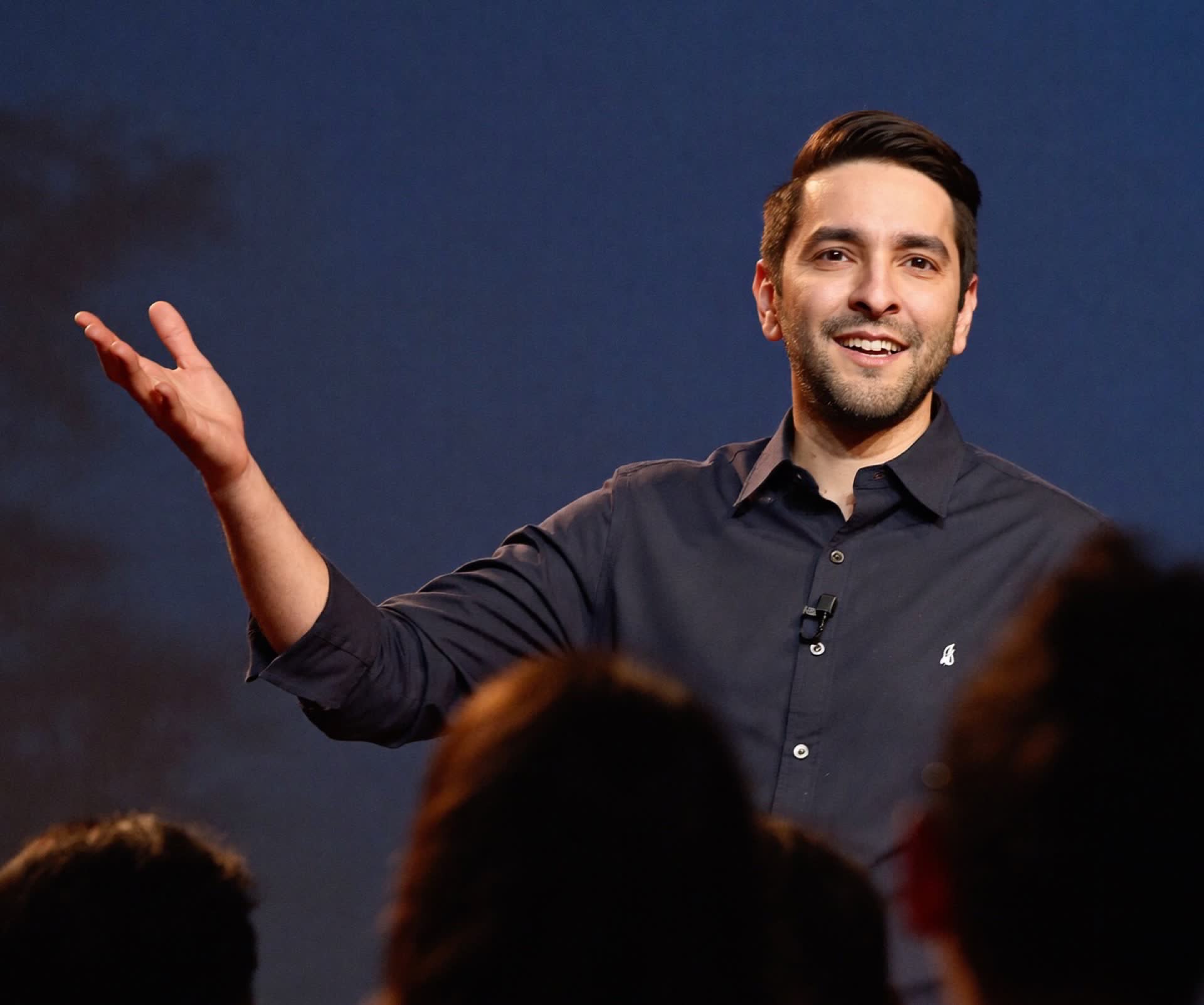
Muzamil opens by apologizing for the title. People who clicked expecting an online feud will not get one. “I am an educated man,” he says, “and I will deconstruct these questions in an educated way.” Spicy titles bring views in Pakistan, he admits, so he borrowed one.
The real questions are these. Is Saad ur Rehman, known as Ducky Bhai, ruining Pakistan’s youth? Are family and daily vloggers such as Ducky Bhai, Maaz Safdar and Sistrology selling their families for views? Is Pakistani content empty compared with India, where Dhruv Rathee became famous in Pakistan almost overnight after India’s 2024 election? And what is behind Ducky Bhai’s fame?
The comparison that falls apart
Muzamil first takes on a habit he dislikes: praising one creator by putting others down. Viewers often tell him he is underrated while the nation makes vloggers famous. He appreciates the praise but not the comparison. “If you are praising me in comparison with someone else,” he says, “I personally don’t like that praise.”
He calls most Pakistan versus India comparisons “apples to oranges.” Compare Indian CEOs with Pakistani CEOs, and Indian extremists with Pakistani extremists. Having analysed both countries, he finds them much the same. They share the same problems and the same strengths, and their people connect easily abroad.
Then he checks the numbers. Ducky Bhai, Pakistan’s top vlogger, has about 7 million subscribers. India’s top YouTuber, CarryMinati, has 44 million and makes the roast videos Ducky Bhai started with. India’s leading daily vlogger, Sourav Joshi, has 24 million. Before the election, Dhruv Rathee had about 13 million. So India’s daily vlogger had roughly twice the commentary channel’s audience, and the roast channel about four times.
In Pakistan, Faisal Waraich’s commentary channel has about 2.5 million subscribers against Ducky Bhai’s 7 million, close to three times. The ratio of entertainment to informational audiences is almost the same in both countries, Muzamil concludes. The difference is scale, since India’s population is about five times larger, and timing.
He also defends commentators people use as punchlines. Viewers who praise Dhruv Rathee’s freedom of expression mock Shahzad Ghias and Syed Muzammil Shah at home. Muzamil says he has many disagreements with both, and that is exactly why he defends them. When one side becomes dominant, the country will need voices like theirs to keep it in check.
Where the hate comes from
Muzamil reads the hate as part of a wider problem: attacking things that have nothing to do with you and were not made for you. In a free country, if a creator breaks no law, let them make their content. If viewers break no law watching it, let them watch.
He is honest that he feels the pull himself. He spends heavily on equipment and research and still gets fewer views than someone filming on a phone. “It is understandable that I would also start hating,” he says. He also admits a fear. A friend told him he could reach 2.5 million subscribers if he went more mainstream. He worries that once he becomes famous, people will turn on him for doing it for views and money.
But real life is not wall-to-wall education, he points out. People watch comedy, memes and relatable clips, and educational content when they have time. Television has music, news, cartoons and documentary channels side by side. Pakistan has about 150 million internet users, and one study puts active YouTube users at 80 million. The biggest Pakistani channel has only recently crossed 10 million. There are more viewers than creators, and room for every kind of content.
The three-stage model
Muzamil has worked in content since 2010 and was on Facebook making comedy until 2015. Trained as a data analyst, he then spent 2015 to 2019 studying how content markets evolved in India, the US, the UK and Turkey. He looked at when each country’s mass market came online, what the top channels were in the first three years, and what changed every three to five years after that. He also split audiences into rural and urban, and older and younger.
His starting point is mobile broadband. Wired internet was slow and costly to roll out. 3G towers removed the barrier. Commercial 3G launched in the US in 2001, in India in 2008 and in Pakistan in 2014. Cheaper Chinese phones and data then widened access further. Adjusting for that, his estimate is that Pakistan is about five internet years behind the US and three behind India.
From the data he built a three-step model.
Curiosity, the first one to two years. New users explore what society kept from them, often privately on a phone. He notes that India topped rankings for adult searches after 2008 and Pakistan did the same after 2015, and each was mocked for it. In his reading, both were just new users being curious.
Entertainment, roughly years two to seven. Funny videos, pranks, roasts, epic fails, daily vlogs. Low effort and no expectation, mostly to kill boredom. When Pakistan’s mass market arrived in 2014, language and culture kept it from Western creators. Local creators such as Nadir’s P4 Pakao and Ducky Bhai filled the gap.
Infotainment, after six or seven years. Users start to value their time and want something back. Muzamil describes the moment it clicks: a young viewer corrects a loud uncle at dinner using facts from a video, and the family praises him. That social reward pushes him toward more of the same.
Testing the forecast
He built the framework around 2018. If Pakistan’s mass market came online in 2014, then two years of curiosity and five of entertainment pointed to 2021 and 2022 as the start of infotainment.
He tested it in two ways. In 2019, on his old channel LOL Studios, his team made a series called Kaam Ki Baat: short comedic videos of six to eight minutes explaining the economy, taxation and why universities exist. He says about 20 to 25 videos drew more than 100 million views.
Then he tested the driest format he could think of, the long-form podcast. He started late in 2019 and into 2020, when episodes got 300 to 400 views and friends called him mad. “My data said we will peak in 2022,” he says. By his recollection, in May 2022 a podcast with Imran Khan went viral and made the genre mainstream. Before that, guests asked what a podcast was. After it, everyone wanted to do one.
The opportunity people are missing
The audience keeps coming online. Pakistan had about 10 million internet users by 2014 and now has about 150 million. About five million children are born each year, so millions more will follow the same path. At any time, some users will be curious, some entertained and a growing share ready for infotainment.
That makes the comparison with India a map, he says. “Instead of falling into an inferiority complex, see it as a potential opportunity.” What works in India today will likely work in Pakistan in about three years. A Pakistani Dhruv Rathee will rise in a Pakistani context, he predicts, and commentary channels will become very big.
He points to one gap in particular. Some of the highest earners on YouTube make content for small children. With about five million births a year, Pakistan has roughly 25 million children up to age five, and almost no Urdu content made for them. They watch Indian or American content instead. He mentions Gluco’s nursery rhymes as one exception his son loves. Urdu, Pashto, Punjabi and Sindhi content for kids is wide open.
Entertainment will still top the charts, as MrBeast does in the US and CarryMinati does in India. That is normal. Entertainment is evergreen, and he wants it too.
Character over follower counts
Muzamil closes with a request. Critique a specific video if it bothers you, he says, but writing off a creator entirely is “a very childish approach.” If you think something harms children, keep your own children from it. Trying to control what society watches invites society to control you.
He also asks fellow creators to stop virtue signalling about vloggers who “sell their wives” for views. “It just reflects poorly on you,” he says. Putting others down to lift yourself is unethical and shows insecurity.
He is happy with his own audience of about 300,000 subscribers and happy for those with millions. He has met Ducky Bhai many times and calls him a good friend. He names Raza Samo, Rana Hamza and Muhammad Wasif of 8 by Wasif as people of integrity. “Fame, money, these things do not make you higher or lower,” he says. “Quality of character does.” Fame and money come from God, he adds, and can vanish as quickly as they arrived. So live with humility, and spread less hate.



Never miss a conversation.
New episodes and the thinking behind them, straight to your inbox. No hype, no spam, no pitch.