Beyond the Bubble Podcast
Trust inflation is making B2B go-to-market human again
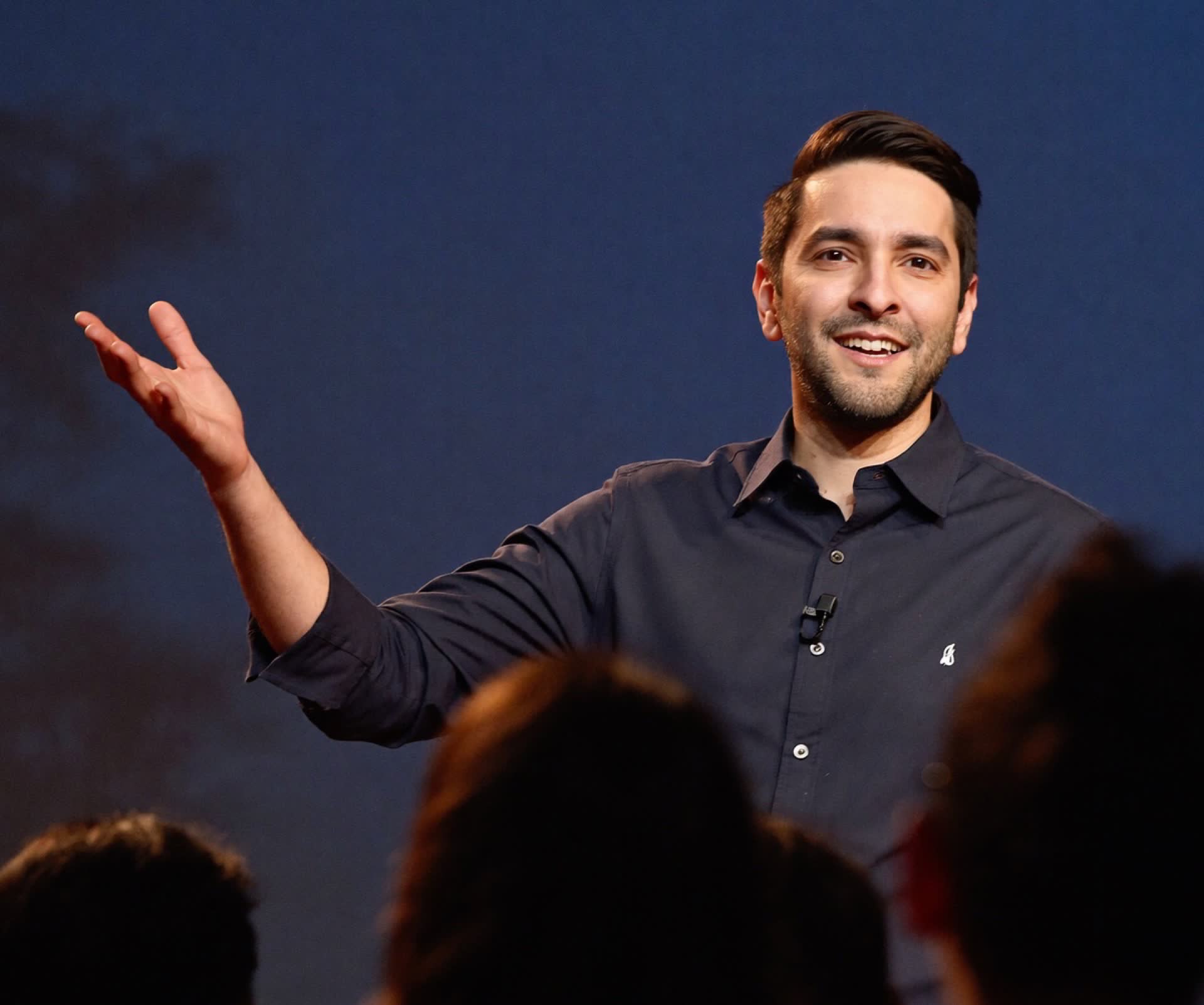
Matt Volm, founder of Eventful, argues that as AI floods digital channels with noise, trust has become expensive and the room is the only place left where B2B sellers can earn it.
Solve a problem you actually live with
Muzamil opens with the framing that anchors the show: building software is nearly free now, but distribution and product judgement are not. That is why he wanted Matt Volm, a three-time founder, on the podcast.
Matt’s first company, launched in 2017, tried to solve legal timekeeping with voice assistants like Alexa and Siri. The pain was real. His wife, an attorney in private practice, tracked her day in six-minute increments on post-it notes and sat at their kitchen table on Thursday nights doing data entry into the billing system. But it was not Matt’s pain. “I was trying to solve a problem that someone else had that I haven’t experienced myself,” he tells Muzamil.
Funnel IQ, his second company, had the same flaw in a subtler form. Matt was a business operator, not a revenue operator day-to-day, so the problem was adjacent rather than lived. Eventful is different because after running hundreds of webinars, dinners, and the RevOps AF conference, Matt was personally cloning HubSpot workflows, spinning up Zaps, and Googling venues on repeat. “When you live that a couple of times, you are just like, I need to, this needs to get fixed.”
His advice to first-time founders is blunt: you do not need to be an engineer, you do not need a specific background, but you do need a problem worth solving and you need to have felt it.
What actually changed after AI
Muzamil asks the obvious question. What is different about building now versus building in 2017?
Matt is disciplined about the answer. Yes, he can go from idea to a working local prototype in hours instead of weeks. But he refuses the easy version of that claim. “It’s a lot easier to build product now, but that doesn’t mean that it’s any easier to build the right product or build one that actually solves people’s problems.”
What compressed is the iteration loop. You ship, you learn it is wrong, you fix it, faster. Product-market fit still comes from the same cycle it always did, it just runs at a higher clock speed. “It’s not because you can vibe code something or build something over a weekend and bring it to market and like, well look, I have a business.”
The human moments thesis behind Eventful
Eventful’s tagline, a platform for every human moment in B2B go-to-market, is where the conversation gets sharper. Muzamil asks Matt to unpack it.
Matt argues that go-to-market has spent a decade optimising for volume: how many emails, how many target accounts, how many integrations firing in which direction. Useful, but downstream of the point. “At the end of the day, what actually matters is what you and I are doing right now, which is two people having the conversation, connecting.”
The irony he draws out is that AI’s real job in go-to-market is not to send more messages. It is to automate the machinery so humans can do the part that was always meant to be human. Badge scanning, calendar invites, list uploads to CRM. “That’s not something that a person should have to do and certainly not something a person should have to literally have a job, a full-time job dedicated to.” Strip that out and what is left is the room, the dinner, the conversation.
Trust inflation
This is the phrase that anchors the episode. Muzamil describes his own recent behaviour. He does not trust text-based content anymore, does not trust polished emails, and after moving to Atlanta went to meetup.com looking for in-person events because the digital world had become too noisy to parse signal from AI slop.
Matt has a name for it. “What you’re describing is what I like to call trust inflation, which is it’s a lot more expensive these days to develop trust with another person.”
The implication reframes what “scale” means. Matt walks through the trade: bucket A with a thousand leads at 5 percent ICP match, bucket B with a hundred leads at 100 percent match. Everyone knows the right answer, but most teams have been trained on bucket A math for years. He would rather show up to a dinner where fifteen of twenty people in the room are strong ICP fits than blast ten thousand emails. “Scalable does not and should not mean easy.”
Where AI actually earns its keep in events
Muzamil asks how much of this is theory versus product. Matt gets concrete.
Venue sourcing used to mean hours of Google searches and phone calls. In Eventful, you tell an agent your requirements, city, and budget and get five options back within minutes, with a venue confirmed the next day. Event discovery works the same way. Eventful builds an ICP report from your website, does deep research, and returns six to ten conferences where your buyers will be, each with an enriched data view.
Matt is careful about the boundary though. “There’s still a lot of judgement involved, like taste. You could give an agent all of the requirements in the world, but if I go to a website I can basically immediately just tell, like, yeah this is the vibe, or nah, this is not it.” The agent’s job is to hand you a shortlist. Your job is to look at the sponsor list and the site and decide.
MCP as the new API
Muzamil raises the infrastructure question. As agents proliferate, are the highways there for them to transact? Are venues, conferences, and CRMs exposing themselves in ways an agent can consume?
Matt’s answer contains the sharpest strategic claim in the episode. “MCP is kind of like it’s the new API. If you’re building a technology company, you’ve got to have it.” Eventful does not ship MCP capabilities yet, but it is on the roadmap.
What that implies is a full inversion of the SaaS playbook. “Pre-AI, you were trying to figure out like, okay, how can I build a product that people have to go to every day or every week. And now today, like your product actually has to do a thing without someone ever having to go into it, and that is very different.” The winners, he argues, will be the ones who lean in first, MCP-first, data-open, comfortable with users deriving value via Claude or ChatGPT without ever seeing the login screen.
Copycat products versus copycat businesses
Toward the end, Muzamil offers a thesis: in a world where any product can be cloned in a week, the billion-dollar venture outcome may be giving way to a proliferation of lifestyle businesses doing $2 to $5 million in revenue, with fifty competitors sharing a market by geography or niche.
Matt agrees on the funding half. Eventful has essentially been bootstrapped for three or four years and he wants to keep funding it with revenue as long as possible. But he pushes back on the product-cloning half. “While it might be easy to build copycat products, that doesn’t mean it’s going to be easy to build copycat businesses. You could build a product that does exactly what DocuSign does today, that doesn’t mean that you’re going to be able to build a business that’s a replica of what they have.”
His list of what is actually hard is the point: how you get the first customers, whether you use outbound or network, how you price, whether the motion is high-velocity or long-cycle, how you handle paid, AEO, webinars, thought leadership, conferences, dinners, support, retention, and whether you can keep building the product while doing all of that. The product is one line item.
Uncharted territory, and cold calling still works
Muzamil closes with the frame the show is built on: the dystopian AGI-takes-everything narrative on one side, the utopian productivity-for-all narrative on the other, and the historical pattern of extreme takes fuelling bubbles that push capital in the wrong direction.
Matt does not live on either end of the curve. His analogy is cold calling, invented with the phone and still in daily use in 2026. Things change, they do not necessarily go away. His honest answer on whether this bubble looks like the dot-com one is that he does not know yet. “We may think things are crazy right now, but something new is going to happen in a month, three months, that we’ll look back on and be like, that wasn’t crazy at all.”
What he does rule out is the extreme dystopia. Beyond that, he keeps his read open and works the problem in front of him. For a founder whose whole thesis is that humans still need to be in rooms with other humans, that posture tracks.


Never miss a conversation.
New episodes and the thinking behind them, straight to your inbox. No hype, no spam, no pitch.