Beyond the Bubble Podcast
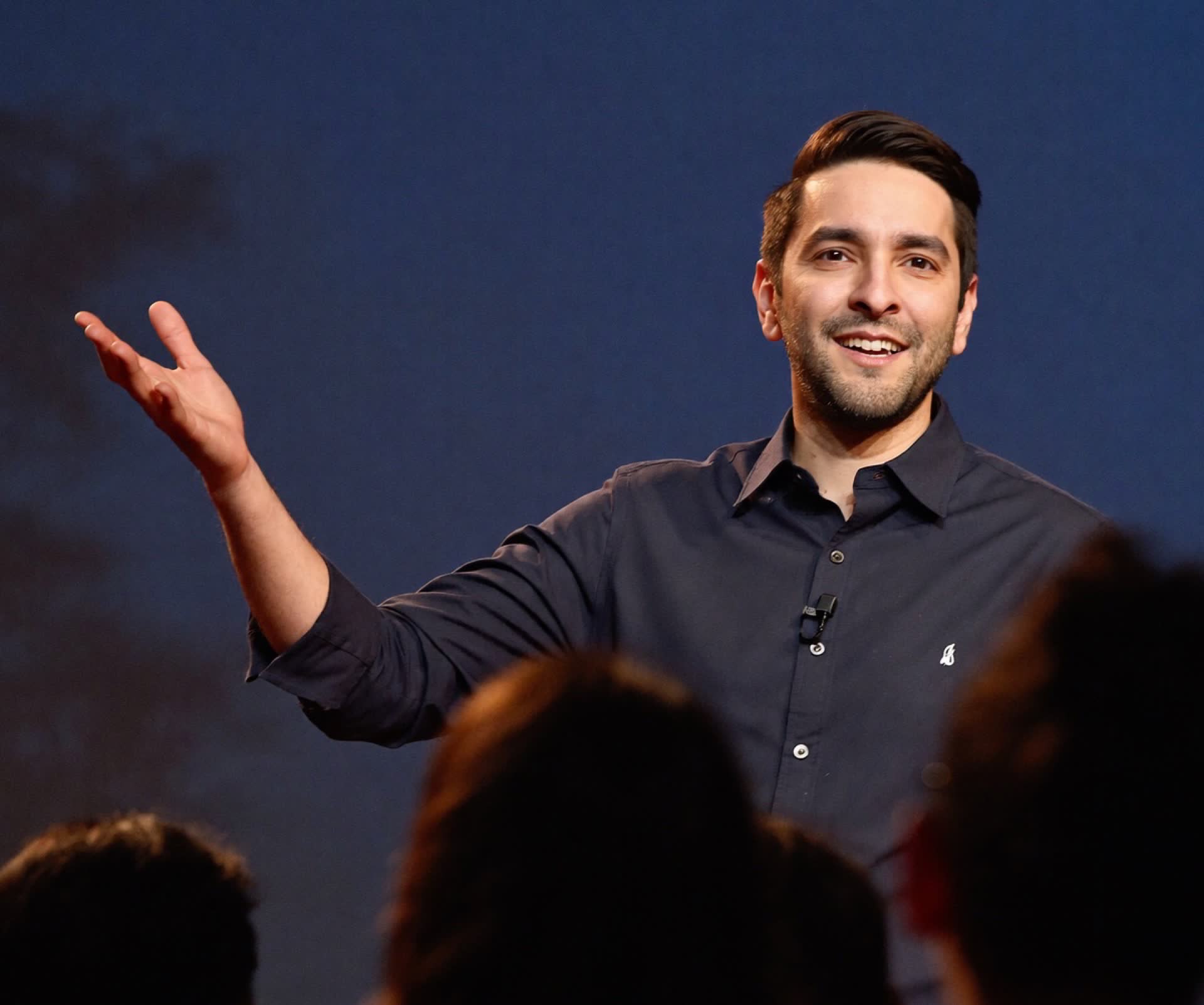
Salman Syed: travel is becoming an AI-to-AI conversation
Salman Syed, EVP at Nuitée, argues that travel is quietly shifting from static search boxes to AI agents negotiating with AI agents, and that the winners will be the infrastructure players who make that conversation possible.
The infrastructure bet under a two trillion dollar industry
Muzamil opens the episode by framing why an API company belongs on a show about AI past the hype. Infrastructure businesses used to be invisible. In an agent-driven internet, they move to the centre. He points to Stripe’s acquisition of a company he describes as having a couple of hundred million in revenue for around seven billion dollars as a signal of how much long-term value sits in the pipes, then asks the same question about travel: a two trillion dollar market today, projected to reach five trillion by 2035.
Salman picks up the thread by naming what Nuitée is actually trying to be. “Every industry has a goto API,” he says, and travel does not. Nuitée’s founder Mehdi Ben Mansour came out of payments and saw the absence. Salman describes his own move from adviser to full-time operator in simple terms: “If you can solve a big problem in a big marketplace, that’s hugely exciting.”
The Google hackathon and what “selling travel” actually means
Muzamil pushes on the obvious question: isn’t Expedia already doing this? Salman answers with a story from a hackathon Nuitée ran with Google in London. Around 40 developers came together. One of them ran marathons and always struggled to find hotels with the right facilities near a start line. He wanted to build a marathon app that tracked races globally and let people book hotels in the same workflow. He did not want to sell travel. He wanted to build a great app for runners and have the travel part just work.
That is the shape of Nuitée’s customer. “We are not a B2C app,” Salman says. “We are the infrastructure for companies other companies that want to sell travel.” Banks. Super apps. Loyalty programmes. Anyone whose product already holds the user’s attention.
Why old search fields cannot capture how people actually travel
Muzamil then gives his own example. He is a late millennial with young kids. He wants to spend a month in Europe over the summer. He wants his son in a football camp nearby. He wants daycare for his one-year-old. He wants to keep working during the day and experience Spain in the evenings. Expedia cannot plan that trip.
Salman’s response reframes travel search entirely. The way travel has been bought for 25 years is a handful of fields: origin, destination, dates, price, headcount. “That was fine 25 years ago,” he says, but it captures maybe 10% of what someone like Muzamil actually wants.
His replacement framework is personas. “Every one of us now has a lot of personas. You have a persona with your family. You have a persona as a friend. You have a persona with whoever you play sports with.” In any given year, a single traveller might book six or seven trips against six or seven personas. The old search box collapses all of them into one shape. AI does not. Salman uses another Nuitée customer as illustration: an app that lets movie lovers find hotels where their favourite films were shot.
Trust and personalisation as the two things that do not change
Salman keeps returning to two constants. “Trust is number one and personalisation is number two.” Travel is one of the few purchases where you cannot try before you buy, and a bad decision costs a full two-week window rather than an hour of an evening.
Muzamil pushes back usefully. Trust, he argues, was partly solved by mass reviews on Google. Time was already being optimised by dynamic pricing that behaves like a stock market. Salman agrees but layers on what Nuitée does differently. Reviews are aggregated into a sentiment signal across sources rather than trusted from one. Search is live across as many as 15 different sources for the same property, so the same Hilton in Heathrow gets priced from whichever supplier is sharpest on those dates. “Information is not a problem, but the interpretation of it is a challenge.” The platform runs more than two billion searches a day across roughly three million properties and 700 plus airlines.
The shift from OTAs to point of sale
Muzamil asks about disruption, which is the polite way of asking whether travel agents die. Salman answers by naming the single strategic trend he thinks matters most in travel over the next five years, and it is not about agents. It is about where the transaction happens.
“The way travel has been bought for the last 25 years, which has been frankly fairly static, that is in the process of shifting.” Shifting to where? Closer to the end user. If you already use Grab for groceries and taxis in Singapore, why do you not also buy travel from Grab? If you run marathons, why is your marathon app not also your booking flow?
The current experience, he points out, is fragmented in a way people have stopped noticing. You book the marathon on one site, the hotel on another, the flight on a third. Nuitée’s bet is that this fragmentation collapses, and the assembler will not be a travel company.
Real-time replanning and the AI-to-AI conversation
Muzamil raises the harder version of the problem. Booking six months ahead is easy. What happens when he is already in Turkey, unhappy with his hotel, and needs a replacement in two hours? That is not search. That is live rerouting.
Salman’s answer is where the episode gets to its sharpest claim. The future travel buyer is not a human hitting a search bar. It is an AI agent that “knows everything about Muzamil,” including when his family goes on holiday and what he actually likes. That agent builds the itinerary, then negotiates with the travel provider’s agent to fulfil it.
“That AI to AI conversation is technology,” Salman says. “For that to take place, that infrastructure of the guardrails and the content and the normalisation and the search and the supplier network needs to be live.” Nuitée has AI-enabled five million property images so they can be searched by attribute, not just by name. If a user’s agent wants hotels where James Bond films were shot, a traditional travel agent will never have that data. The infrastructure layer will.
Muzamil brings in an outside data point: 60% of internet traffic is already bots, with some analysts projecting 99.9% by 2030. He asks whether Nuitée sees that shift in its own traffic. Salman does not name a percentage but says the last six months have brought a wave of AI-native customers, naming Odysseia among them.
Aggregators of aggregators and the Pakistan question
Muzamil asks whether smaller, undigitised markets like Pakistan need a middle layer, someone who aggregates 500 operators in Skardu and plugs them into Nuitée as a single supplier of suppliers. Salman confirms this is exactly the shape of a large part of their supply.
Nuitée has a direct contracting team across more than 30 countries that signs the global chains like Hilton and Best Western, regional chains, and independent hotels. On top of that, it aggregates over 200 other sources of supply. Many of those are destination management companies. “I am a destination management company in Dubai, let’s say, and in Dubai I provide transport services, I provide this and, by the way, I also have 10 hotels that I’ve got really super sweet deals with.” Nuitée normalises across all of them, optimising the same property across 10, 20, or 30 sources for a given date.
Staying in the lane when every founder is tempted to sprawl
Muzamil raises something that has become a real question in the AI era. Building is cheap now. Every company is drifting into adjacent products. DoorDash ships an agentic OS. Spotify releases developer tools. Why would an infrastructure company like Nuitée not also launch a consumer app, given how deflated the cost of trying has become?
Salman’s answer is disciplined. “We would not move into a B2C space because we’re not solving the right customer problems.” Nuitée’s customers are the B2B providers. Building a consumer site would put Nuitée in competition with the businesses it powers, which is exactly the trap that legacy players are stuck in. He also notes the freedom of not being legacy: “For us, it’s all net new revenue. So for us, we don’t lose sleep because it’s net new revenue. For legacy companies, it’s a very turbulent time because they’re cannibalising on their existing revenue.”
The one indulgence he allows is the engineering team building things over weekends. Some ship, some don’t. That is the tolerable version of scope drift. Onboarding sits on the other side of the same discipline: developers can set up API access without talking to anyone, some enterprise fintechs have gone from start to finish in two weeks, and hackathon teams have shipped end-to-end applications in two hours.
What travel looks like in 2035
Muzamil closes by asking Salman to describe travel a decade out without the technical jargon. The answer is consistent with everything he has argued. The buyer will trust a non-travel company to assemble the trip. Bookings will be organised around experiential categories, not dates: learning to cook across three countries, weekend Harley-Davidson riding, a school reunion. A single person will maintain many personas and expect the system to serve whichever one is active. The connected trip, where deciding what to do triggers every other component into place, finally gets built.
Muzamil adds a hope of his own: that by 2035 the digitisation reaches the places still off the map, including Pakistan and much of Africa, so the diversity of what is bookable matches the diversity of what is worth doing.


Never miss a conversation.
New episodes and the thinking behind them, straight to your inbox. No hype, no spam, no pitch.